
Make Life Easier: 25 Practical Fixes for Everyday Problems
Short answer: most everyday headaches have a five-minute fix. This page collects 25 of them, grouped by what’s bugging you: home, phone and tech, money and paperwork, food, and getting out the door. Each fix says what you need, the steps, and the official source behind it. Tap “Save to My fixes” on any of them to build your own short list on this device, check them off as you go, and print it. No account needed.
Want to browse every Kalm Kode guide and tool instead? That’s Life Hacks. This page is for doing one useful thing right now.
Last checked November 10, 2026. Every fix links to the agency or company that published the guidance, listed again at the bottom. Kalm Kode is an independent guide.
My fixes
Tap “Save to My fixes” under any fix below to build your list. It’s saved only on this device.

Not sure where to start? Pick by situation
You don’t need all 25. Start with the group that matches what’s going on right now:
- Just moved or about to: change your address with USPS (16), check your ID before you fly (24), search for unclaimed money under your old addresses (17), put your new number on the Do Not Call Registry (12), and plan the truck permit if you’re moving in DC (25).
- Bills feel out of control: cancel subscriptions the way that sticks (13), check your credit reports (14), freeze your credit (15), search for unclaimed money (17), get a free library card (18), and compare unit prices at the store (22).
- New to the home, or it’s been a while: run the toilet dye test (1), do the water meter check (2), clean the dryer lint filter (3), test the smoke alarms (4), look at the HVAC filter (5) and check the fridge temperature (19). For the whole year, use the Home Maintenance Checklist.
- Trip coming up: download offline maps (9), turn on Find My (10), check tire pressure (23), check your ID (24), and know what to do if the power goes out while you’re gone (20).
- Phone keeps buzzing with junk: report spam texts (11) and register for Do Not Call (12).
Save the ones you pick with “Save to My fixes,” and the list will be waiting next time you open this page on the same device.
Around the house
1. Find a silent toilet leak with food coloring
You need: food coloring or a dye tablet, 10 minutes.
A toilet can leak from the tank into the bowl without making a sound. The EPA’s WaterSense program gives a simple test:
- Put a couple of drops of food coloring in the tank (the back part, not the bowl).
- Wait 10 minutes without flushing.
- If color shows up in the bowl, you have a leak, most likely a worn rubber flapper.
- Flush afterward so the dye doesn’t stain the tank.
Source: EPA WaterSense.
2. Check for any hidden leak with your water meter
You need: your water meter, two hours with no water running.
EPA says to read the meter when no water is being used, then read it again two hours later. If the number changed, you probably have a leak somewhere. The meter is often near the curb, or inside, like in a basement. A water bill that’s much higher than the same month last year is another hint. Source: EPA WaterSense.

3. Make the dryer lint filter part of every load
You need: 10 seconds.
The U.S. Fire Administration says to clean the lint filter before and after each cycle, and never to run the dryer without the filter. It also says to check that the vent isn’t damaged, crushed or restricted, and that the outdoor vent flap opens while the dryer runs. Not cleaning the filter and vents raises the risk of a dryer fire. Source: U.S. Fire Administration.
4. Test your smoke alarms once a month
You need: a step stool, one minute per alarm.
NFPA says to test all smoke alarms at least once a month by pressing the test button, and to replace alarms every 10 years. It recommends alarms in every sleeping room, outside each sleeping area and on every level, including the basement. Pick a fixed day, like the first of the month, so it happens. Source: NFPA.
5. Look at your HVAC filter every month
You need: a flashlight, a replacement filter in the right size.
ENERGY STAR’s maintenance checklist says to inspect, clean or change the air filters in your central air conditioner, furnace or heat pump once a month. Write the filter size on the furnace or in your phone so you buy the right one. Source: ENERGY STAR.
6. Stop overdosing laundry detergent
You need: your detergent’s label.
More detergent doesn’t mean cleaner clothes. Too much makes suds that cushion clothes and leave residue. Use the label’s amount for the load size, and adjust for how hard your water is. Full walkthrough, including Prince George’s County and DC water hardness: How Much Laundry Detergent to Use.
Phone and tech

7. Move the Wi-Fi router before buying an extender
You need: five minutes and a long enough cable.
Google’s placement guidance says to put the router in a central location at eye level, off the ground and in plain view, like on a shelf. Avoid things that physically block the signal, like walls and doors. If the router is on the floor or behind furniture, moving it is a free first try. Source: Google.
8. Scan a document with your iPhone
You need: an iPhone and the Notes app.
Apple’s steps:
- Open Notes and select a note or create a new one.
- Tap the attachment button and choose Scan Documents.
- Hold the page in view of the camera. In Auto mode it scans on its own. Otherwise, tap the shutter, adjust the corners and tap Keep Scan.
- Tap Done, or add more pages.
Good for leases, receipts and forms you’d otherwise have to find a scanner for. Source: Apple Support.
9. Download the map before you hit a dead zone
You need: Google Maps, Wi-Fi.
Google Maps lets you download an area for offline use. Search for a place, open its details, and choose Download offline map, or go to Offline maps in your profile menu and select your own area. Know the limits: offline, you get driving directions only, without traffic info or alternate routes, and only if the whole route is inside the downloaded area. Offline maps expire, so update them. Source: Google Maps Help.
10. Turn on Find My before you lose the phone
You need: your iPhone, one minute.
Apple’s steps: open Settings, tap your name, then Find My, then Find My iPhone, and turn it on. Turn on Find My network to see the phone even when it’s offline, and Send Last Location so its location goes to Apple when the battery is low. Source: Apple Support.
11. Report spam texts in one step
You need: the spam text.
The FTC says you can forward spam texts to 7726 (SPAM), which helps your carrier block similar messages, use your phone’s report junk option, and report it to the FTC at ReportFraud.ftc.gov. Source: FTC.
12. Put your number on the Do Not Call Registry
You need: the phone you want to register.
Register free at DoNotCall.gov or by calling 1-888-382-1222 from that phone. The FTC says registration never expires, and sales calls can take up to 31 days to stop. It won’t stop scam calls, political calls, charities or companies you recently did business with. Source: FTC.
Money and paperwork
13. Cancel a subscription the way that sticks
You need: the company’s cancellation steps, a place to save proof.
The FTC says to follow the company’s cancellation process and keep a copy of your request plus notes about any conversations. Then check your next card or bank statements. If charges keep coming after you canceled, dispute them with your card company. Source: FTC. To see everything you pay for in one place, use the free Subscription Tracker.
14. Check your credit reports for free, every week
You need: 10 minutes.
The FTC says the three nationwide credit bureaus permanently let you check your report from each of them once a week for free at AnnualCreditReport.com, the only site authorized for the free reports. You can also call 1-877-322-8228. Look for accounts you don’t recognize. Source: FTC.
15. Freeze your credit for free
You need: a few minutes with each bureau.
The FTC says there’s no cost to place or lift a credit freeze, and it doesn’t affect your credit score. Contact all three bureaus: Equifax, Experian and TransUnion. When you need a loan or new account, lift the freeze at the bureau the lender uses, then put it back. Source: FTC.
16. Change your address with USPS, not a lookalike site
You need: a card for the online fee, or a trip to the post office.
USPS says an online change-of-address request costs a $1.25 authentication fee, and it warns that third-party websites charge $40 or more to submit the same request. You can file up to 90 days before your move and up to 30 days after. If you’d rather not use a card, pick up PS Form 3575 at the post office. USPS says a paper request still has to be verified, online or in person at a post office that offers in-person identity proofing, so bring photo ID. Forwarding only redirects mail. It doesn’t change your address with your bank, employer, the MVA or other accounts, so update those directly. Source: USPS.
Moving to Maryland? Pair this with Two Proofs of Address the MVA Accepts.
17. Search for unclaimed money in Maryland and DC
You need: your name and past addresses.
Banks, insurers and other companies turn over abandoned property, like forgotten accounts, to the state. Searching is free:
- Maryland: the Comptroller’s unclaimed property site says the service is provided at no cost. Search, file a claim online and upload documents. Source: Comptroller of Maryland.
- DC: search on the DC Unclaimed Property site run by the Office of the Chief Financial Officer. Questions: (202) 442-8181.
Search old addresses too, and check for family members.
18. Get a free library card and stop paying for some apps
You need: photo ID and proof of address.
A Prince George’s County Memorial Library System card is free for residents of Maryland, DC and several Northern Virginia areas. It unlocks Libby, Kanopy and Hoopla, plus tools you can borrow, like thermal cameras. Details: How to Get a Prince George’s County Library Card.

Food
19. Check your fridge and freezer temperatures
You need: an appliance thermometer.
FSIS says the safe refrigerator storage temperature is 40°F or below, and that food kept constantly at 0°F in the freezer stays safe. An appliance thermometer tells you whether your dial setting is actually getting there. Sources: FSIS: Leftovers and Food Safety, FSIS: Freezing and Food Safety.
20. Know what to keep after a power outage
You need: to keep the doors shut.
FoodSafety.gov says a refrigerator keeps food safe for up to 4 hours during an outage, so open it as little as possible. A full freezer holds a safe temperature for about 48 hours, a half-full one about 24 hours if the door stays closed. Food with ice crystals or at 40°F or below can be refrozen. Never taste food to decide if it’s safe. When in doubt, throw it out. Source: FoodSafety.gov.
21. Put a date on leftovers
You need: tape and a marker.
FSIS says to refrigerate leftovers within 2 hours of cooking (1 hour if it’s above 90°F), and that leftovers keep 3 to 4 days in the fridge or 3 to 4 months in the freezer. Write the date on the container so nobody has to guess. Source: FSIS.
22. Read the unit price and the date label
You need: your next grocery trip.
The unit price on the shelf tag shows which size or brand is actually cheaper. And USDA says “best if used by” is about quality, not safety, except on infant formula. Both, plus SNAP, WIC and farmers market programs in Prince George’s County and DC: How to Save on Groceries in Prince George’s County and DC.

Getting out the door
23. Check tire pressure once a month
You need: a tire gauge, cold tires.
NHTSA says to check all tires, including the spare, at least once a month, when the tires are cold (the car hasn’t been driven for at least three hours). Use the pressure on the vehicle’s tire and loading label, usually on the driver’s doorjamb or in the owner’s manual, not the maximum printed on the tire. Source: NHTSA.
24. Check your ID is REAL ID-ready before your next flight
You need: your driver’s license.
TSA says REAL ID enforcement began May 7, 2025. TSA’s own REAL ID checker asks whether your license has a star (and/or a flag) or says “Enhanced.” If it does, you’re set. If you’re not sure, check with your state’s driver’s license agency. Without an accepted ID, use another accepted ID, like a valid passport or U.S. military ID. Getting or upgrading a Maryland license? Start with Two Proofs of Address the MVA Accepts. Source: TSA.
25. Moving in DC? Plan the truck permit first
You need: your move date.
Parking a moving truck on a DC street takes a DDOT permit and posted No Parking signs, and the timing is easy to get wrong. The free DC moving-truck permit planner works out when to apply and when the signs go up, from your move date.
Turn fixes into habits
A fix you do once helps once. A fix on a schedule keeps helping. A few that work well as reminders on your phone’s calendar:
- Every dryer cycle: clean the lint filter before and after, per the U.S. Fire Administration.
- Weekly: the reset below, or just the fridge check.
- Monthly: smoke alarm test, HVAC filter check and tire pressure. NFPA, ENERGY STAR and NHTSA each recommend monthly checks for these.
- Every few months: look at one credit report from AnnualCreditReport.com, since the FTC says all three are free weekly, and search unclaimed property again.
- Before every move or trip: change of address, ID check and offline maps.
If a fix turns into a bigger project, like a leak that needs a plumber, it has done its job: you found the problem early.
A 20-minute weekly reset
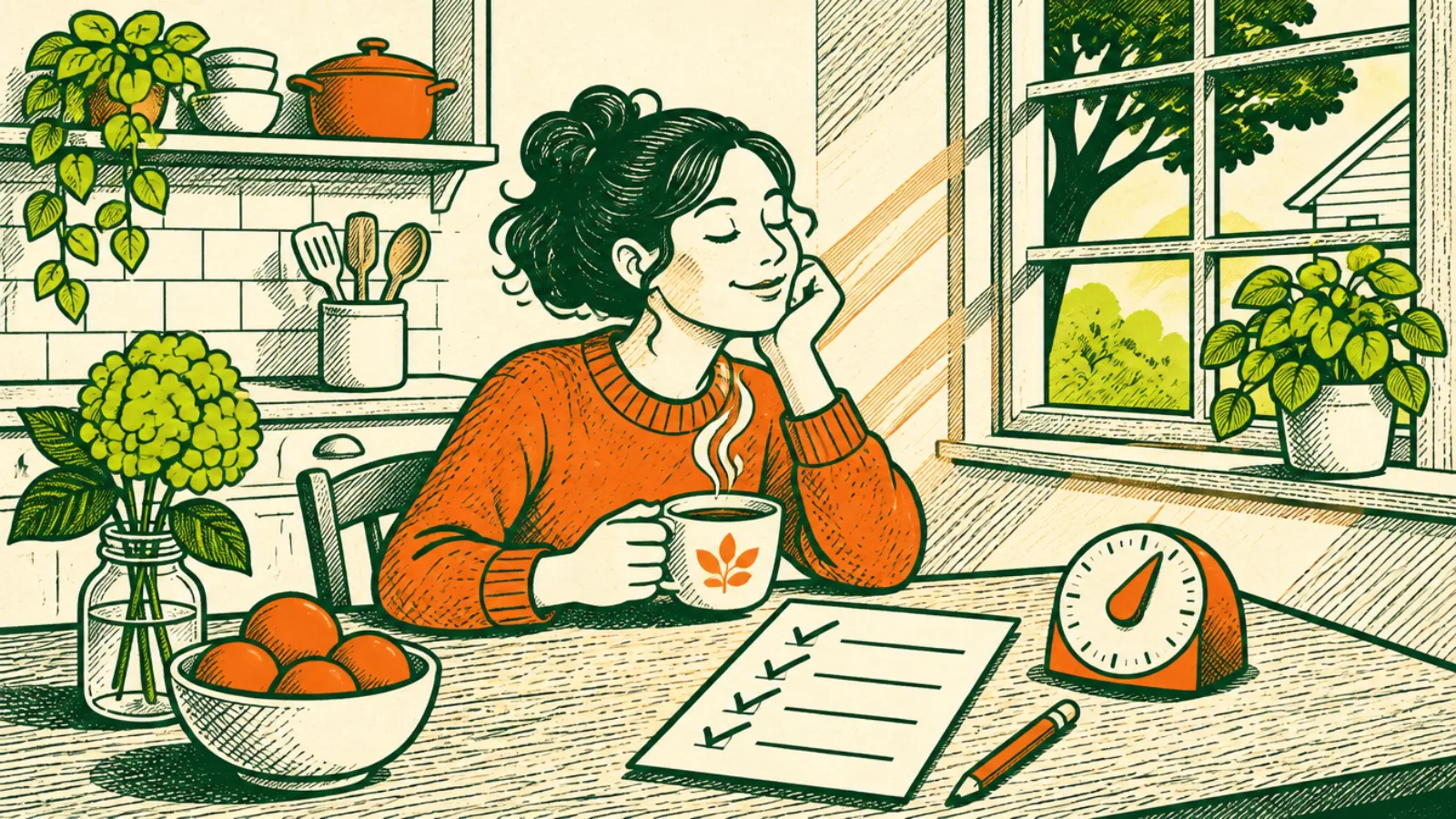
A lot of these fixes work best as habits. Here’s a short weekly routine that pulls them together. Pick one day, like Sunday, and set a 20-minute timer.
Kitchen (5 minutes)
- Check the fridge: eat or freeze leftovers within 3 to 4 days of cooking, and toss anything older than four days, or sooner if it wasn’t stored properly.
- Glance at the fridge thermometer.
- Write next week’s grocery list by meal, after checking what you already have.
Money and paperwork (5 minutes)
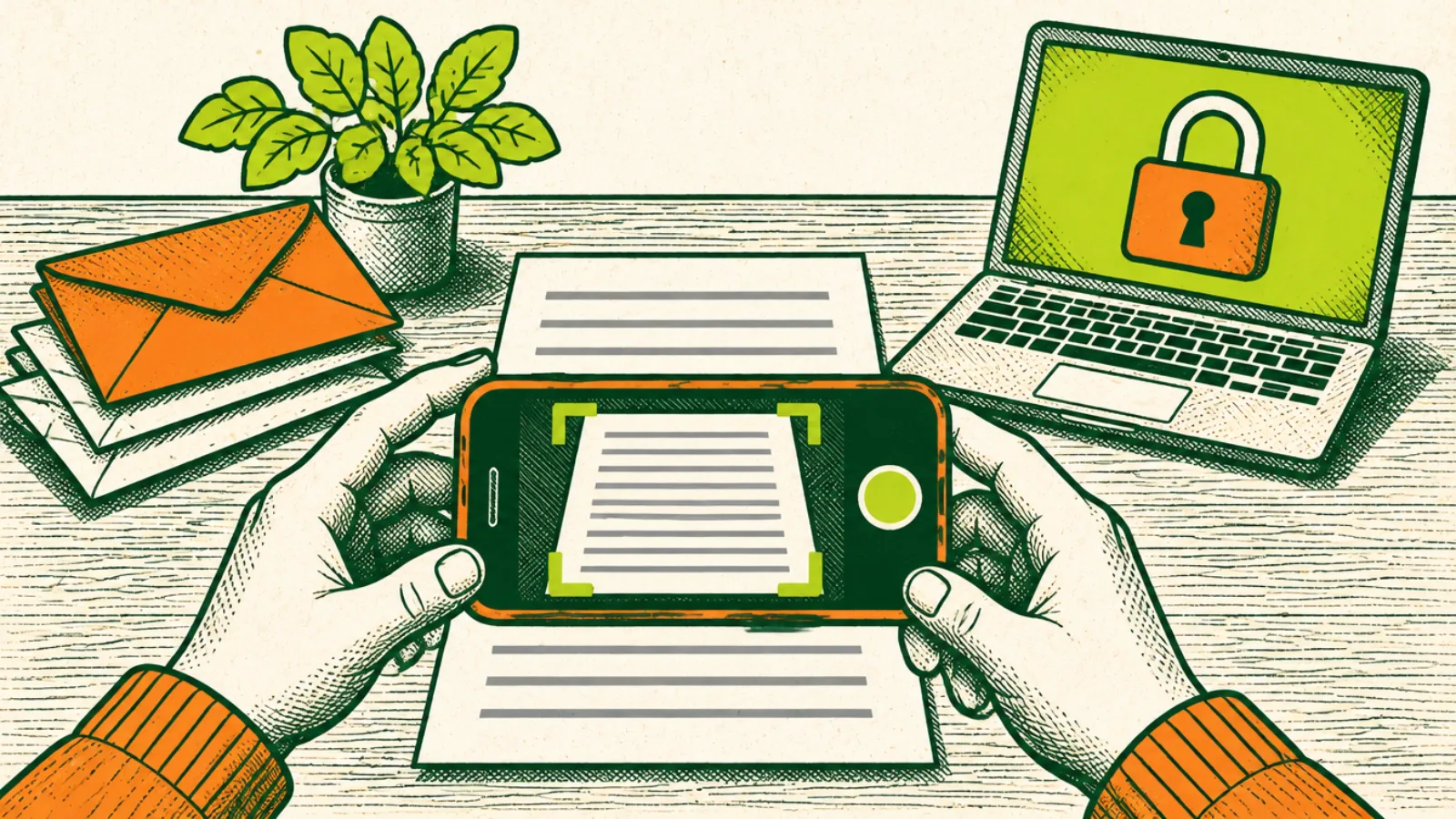
- Scan this week’s receipts or forms with your phone.
- Look over card and bank activity for subscriptions you canceled or don’t recognize.
- Note any renewals or bills due next week.
Home (5 minutes)
- Wipe the lint around the dryer and behind it. (The filter itself gets cleaned before and after every cycle, not just weekly.)
- First weekend of the month: test the smoke alarms and look at the HVAC filter.
Out the door (5 minutes)
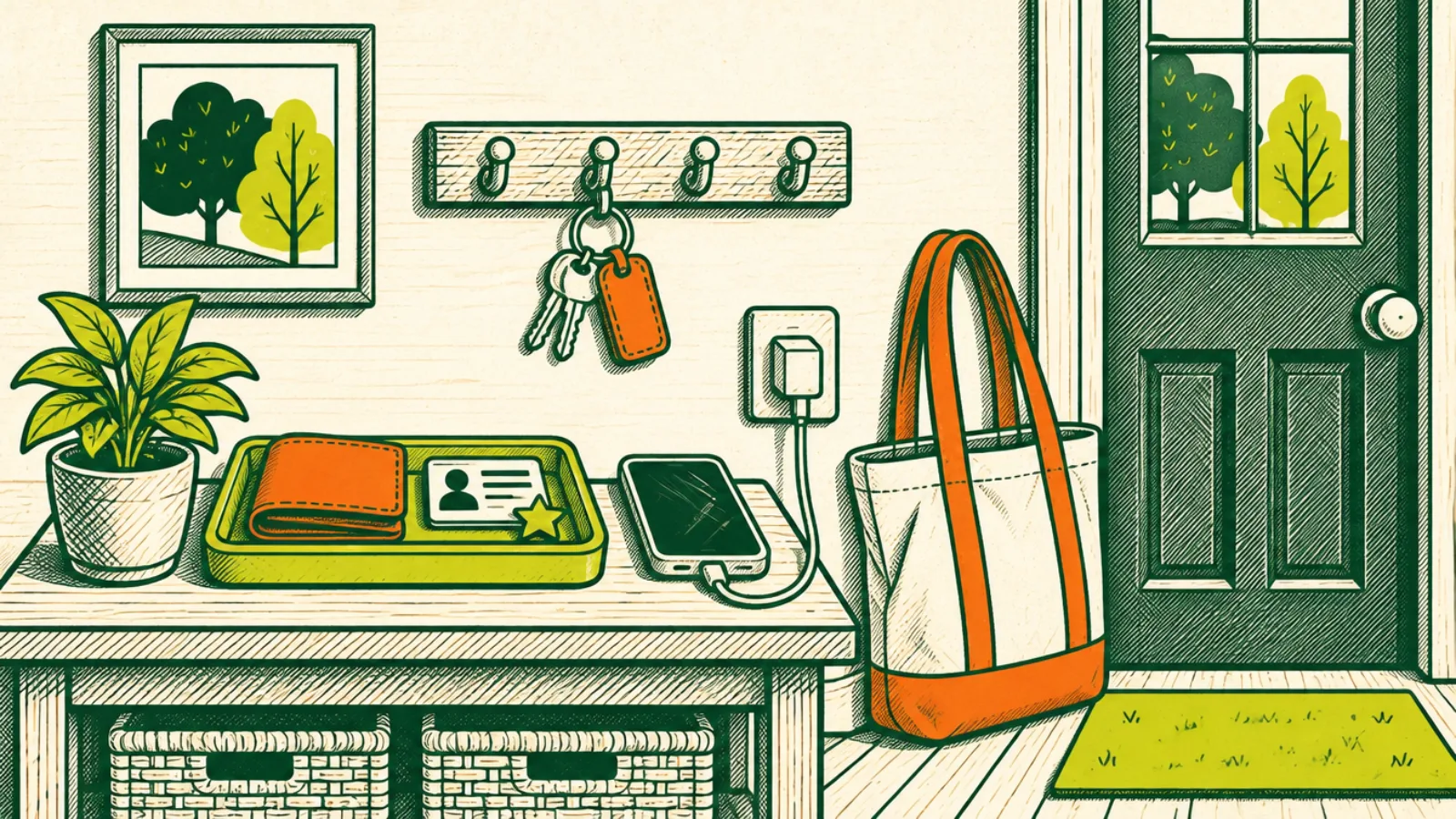
- Charge devices and put keys, wallet and ID in one spot.
- First weekend of the month: check tire pressure.
- Traveling soon? Check your ID and download offline maps.
How to use “My fixes”
- Save: tap “Save to My fixes” under any fix you want to do. It’s saved only in this browser on this device, with no account.
- Check off: your list appears in the box near the top. Check items off as you finish them.
- Print: tap Print my list for a paper copy for the fridge.
- Clear: start over any time.
Every fix stays fully readable without saving anything. The list just keeps your picks in one place.
FAQ
What are some easy ways to make life easier at home?
Start with the fixes that take minutes and prevent bigger problems: the toilet dye test, cleaning the dryer lint filter every cycle, testing smoke alarms monthly, checking the HVAC filter monthly, and dating leftovers.
How do I check if my toilet is leaking?
EPA says to put a couple of drops of food coloring in the tank, wait 10 minutes without flushing, and see if color appears in the bowl. If it does, you have a leak. Flush afterward.
Is checking my credit report free?
Yes. The FTC says you can check your report from each of the three nationwide bureaus once a week for free at AnnualCreditReport.com.
Does it cost money to freeze my credit?
No. The FTC says there’s no cost to place or lift a credit freeze, and it doesn’t affect your credit score.
How much does a USPS change of address cost?
USPS says the online request has a $1.25 authentication fee, and it warns that third-party sites charge $40 or more for the same thing. If you’d rather not use a card, USPS says you can fill out PS Form 3575 from your local post office, but that request still has to be verified, either online or in person at a post office that offers in-person identity proofing, so bring your photo ID.
How long is food safe in the fridge without power?
FoodSafety.gov says up to 4 hours. A full freezer holds a safe temperature for about 48 hours, a half-full one about 24 hours, if you keep the doors closed.
How do I find unclaimed money in Maryland or DC?
Search free on the Comptroller of Maryland’s unclaimed property site or DC’s Unclaimed Property site, run by the Office of the Chief Financial Officer.
Where is “My fixes” saved?
Only in your browser on this device. There’s no account, and nothing is sent to Kalm Kode. Clearing your browser data clears the list.
Sources
Checked November 10, 2026:
- EPA WaterSense: Home Maintenance
- U.S. Fire Administration: Clothes Dryer Fire Safety
- NFPA: Smoke Alarms
- ENERGY STAR: Maintenance Checklist
- Google: Where to place your Wifi devices
- Apple: Scan documents on iPhone
- Google Maps: Download areas for offline use
- Apple: Turn on Find My
- FTC: Spam Text Messages
- FTC: Do Not Call Registry FAQs
- FTC: Free Trials, Auto-Renewals and Subscriptions
- FTC: Free Credit Reports
- FTC: Credit Freezes and Fraud Alerts
- USPS: Change of Address Basics
- Comptroller of Maryland: Unclaimed Property
- DC Unclaimed Property
- FSIS: Leftovers and Food Safety
- FSIS: Freezing and Food Safety
- FoodSafety.gov: Food Safety During a Power Outage
- NHTSA: Tires
- TSA: REAL ID