
How to Dispose of Household Batteries, Including Rechargeables
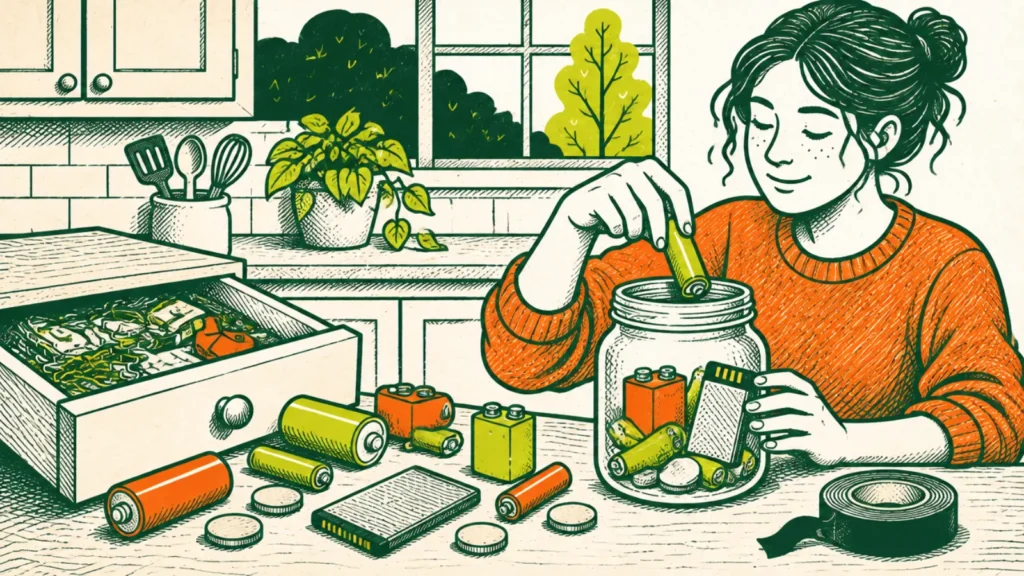
Short answer: it depends on the chemistry. Everyday alkaline batteries (AA, AAA, C, D, 9-volt) can go in the household trash in most communities, though EPA still recommends recycling them where you can. Some places go further: Prince George’s County says never to put any battery, alkaline included, in regular trash or recycling. Rechargeable batteries, lithium batteries of any kind, button and coin cells, and lead-acid batteries don’t belong in the trash or the recycling bin. Tape the terminals or bag each one, then take them to a battery drop-off, a retailer that collects them, or household hazardous waste collection.
In Prince George’s County or DC? The county takes household batteries at its mobile hazardous waste events, and DC takes them at DPW’s special waste events (details below).
Last checked November 10, 2026, against EPA, The Battery Network (formerly Call2Recycle), DC DPW and Prince George’s County sources (listed at the bottom). Kalm Kode is an independent guide. Your local program has the final word on what it takes.

The 30-second version
- Read the label. The battery’s chemistry decides where it goes, not its size.
- Alkaline AA to D and 9-volt: trash is OK in most places; recycling is better.
- Lithium, rechargeable, button and coin cells: never trash, never curbside recycling.
- Tape or bag them. Cover the ends with electrical tape or put each battery in its own plastic bag.
- Find a drop-off. The Battery Network’s locator, a participating store, or household hazardous waste collection.
- Leave built-in batteries in the device. Recycle the whole thing as electronics.
- Car batteries go back to the seller or to a local collection program.
Quick answers by battery
- Alkaline AA, AAA, C, D or 9-volt: trash is allowed in most communities; recycling is better. Tape 9-volt tops either way.
- Rechargeable AA or AAA (Ni-MH): battery drop-off or household hazardous waste.
- Lithium AA or AAA (single-use): battery drop-off or household hazardous waste, taped.
- Coin or button cell: taped, then battery drop-off or household hazardous waste.
- Phone, laptop or tool battery that comes out: taped or bagged, then battery drop-off.
- Battery built into a device: leave it in; recycle the device as electronics.
- Swollen, cracked, leaking or damaged battery: keep it apart from other batteries and follow the maker’s or your collection program’s directions. Standard drop-off boxes don’t take damaged batteries.
- Car battery: back to the seller or a local collection site.
- E-bike or scooter battery: a site that takes high-energy batteries, or your local program.
Step 1: Figure out what kind of battery you have
Look for words printed on the battery or its label. Here’s what they mean for disposal, based on EPA’s guidance:
- Alkaline or zinc-carbon (AA, AAA, C, D, 9-volt). Single-use. EPA says that in most communities these can safely go in household trash, but it recommends recycling and checking local rules.
- Lithium, single-use. Also non-rechargeable, and they can look just like alkaline batteries. Look for the word “lithium.” EPA says not to put them in the trash or municipal recycling bins.
- Button and coin cells. The small round batteries in watches, key fobs, calculators and hearing aids. EPA says many are lithium and shouldn’t go in the trash or municipal recycling.
- Lithium-ion (Li-ion). Rechargeable. In phones, laptops, tablets, power tools, vapes, e-bikes and power banks. EPA says never put them in household garbage or recycling bins.
- Nickel-metal hydride (Ni-MH). Rechargeable AA and AAA batteries, often labeled “rechargeable.” Recycle, don’t trash.
- Nickel-cadmium (Ni-Cd). Older rechargeables, cordless tools and phones. Recycle at battery recyclers, participating retailers or household hazardous waste.
- Small sealed lead-acid. In mobility scooters, emergency lighting, alarm systems and battery backups for computers. Recycle, don’t trash.
- Automotive lead-acid. Car, truck and boat batteries. EPA says return them to the retailer or a local collection program, and don’t put them in the trash or recycling.
Can’t read the label? Treat it as one that needs recycling. That’s the safe default for disposal.
Step 2: Prep them so they can’t spark
This is the step most people skip. EPA explains why it matters: lithium batteries can spark and cause fires if they’re damaged or if their terminals touch. Loose batteries rattling around in a jar or a bag can do exactly that.
Before batteries leave your house:
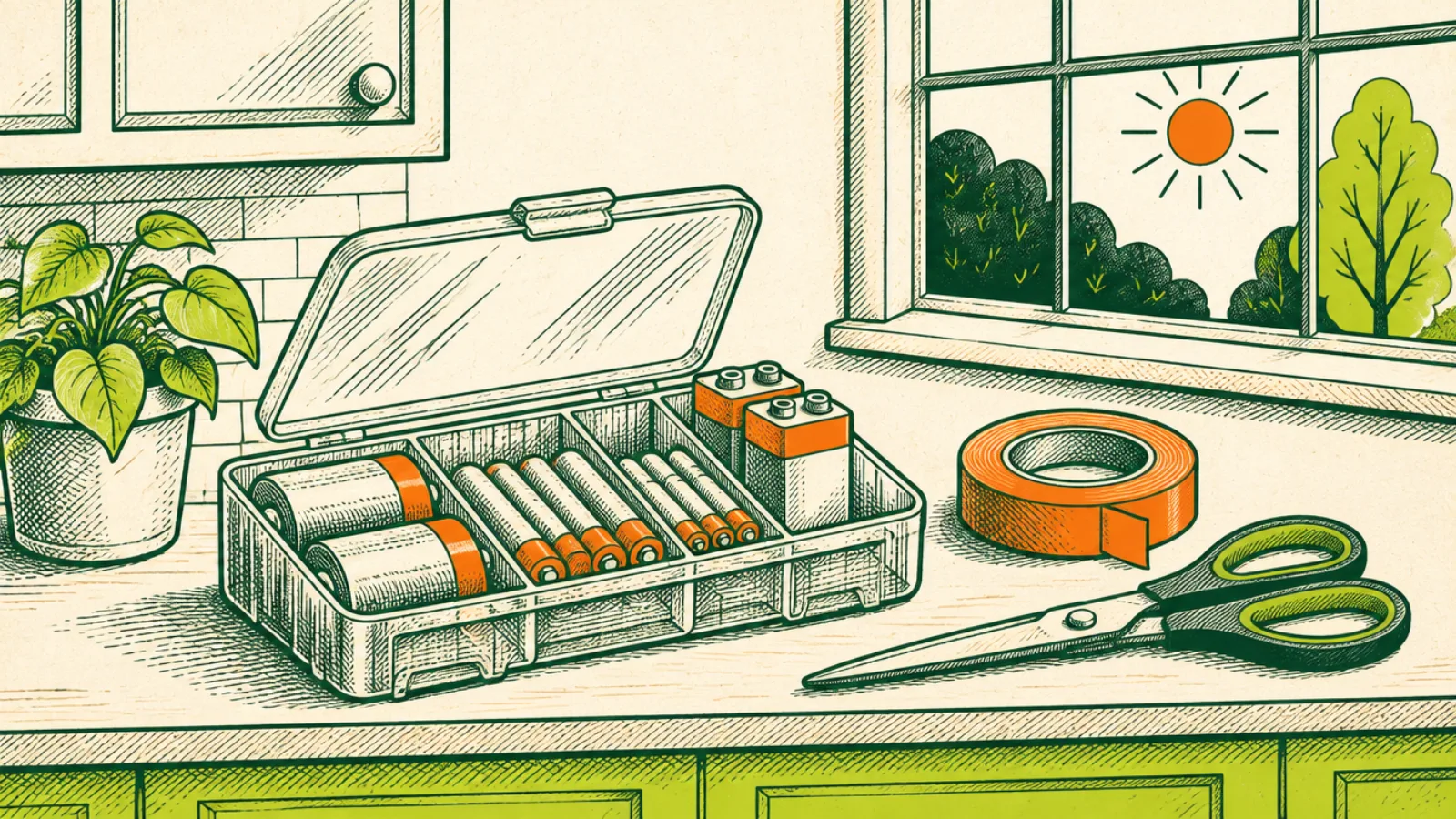
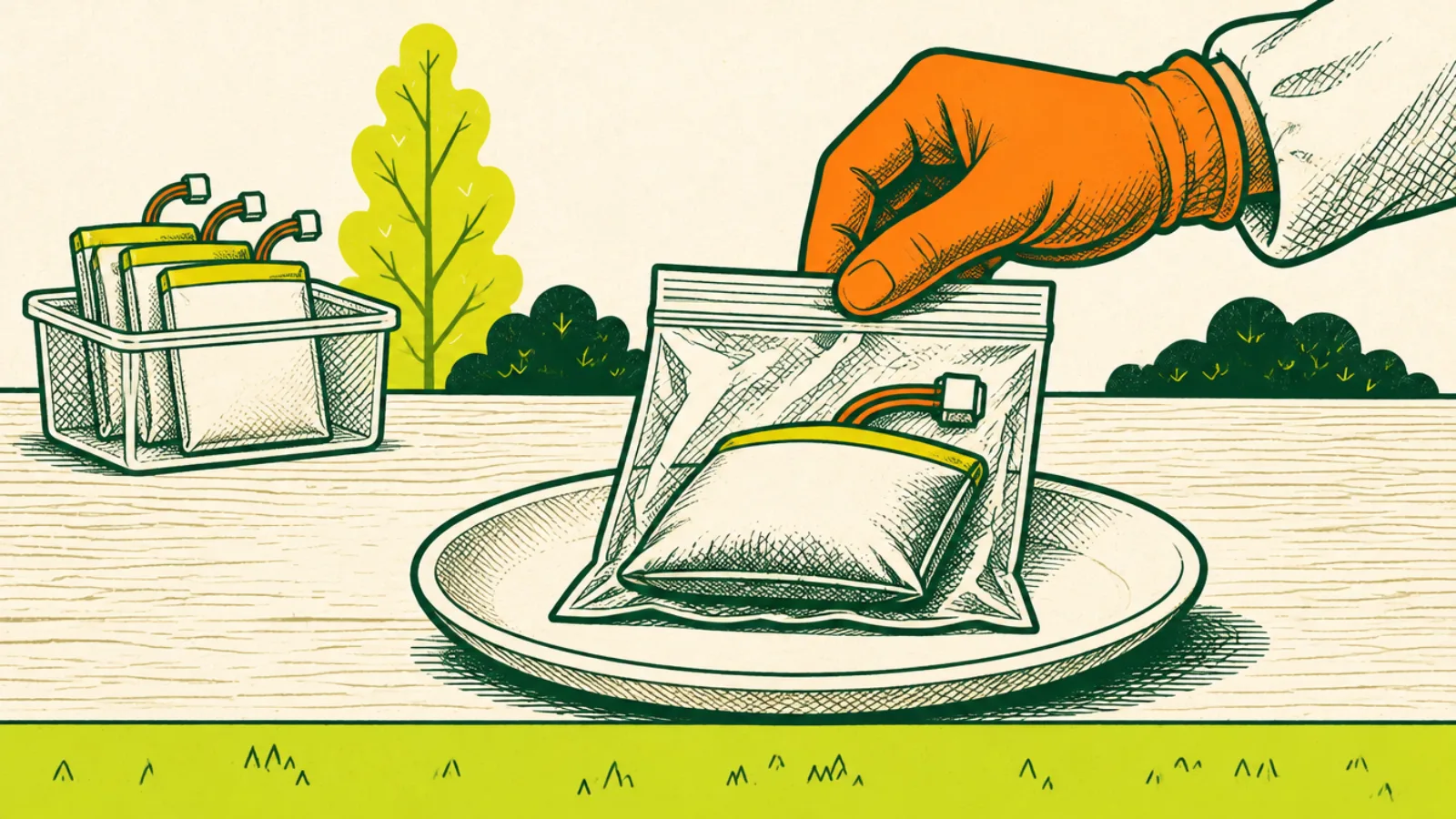
- Bag each one, or tape the terminals. The Battery Network’s first choice is a separate clear plastic bag for each battery. Tape works too: use non-conductive tape, like electrical tape, not masking, painter’s or clear office tape. Cover both ends of cylinder batteries, the flat sides of coin cells and the top of 9-volts.
- Soft-sided batteries get bubble wrap. For soft, pouch-style lithium batteries, like the flat ones from some phones and tablets, The Battery Network says to use bubble-wrap bags.
- Know your local rule for alkalines. The Battery Network says single-use alkalines don’t need terminal protection unless the label says lithium. Prince George’s County asks you to tape all batteries. When in doubt, tape.
- Store them by type, in a container that won’t spark. Prince George’s County suggests a cardboard box or rigid plastic container, and says not to store different types of batteries together.
- Keep damaged batteries out of the batch. Those need their own handling (see below).
The Battery Network says lithium and soft-sided batteries need this kind of preparation before drop-off to prevent sparks and reduce fire risk.
Step 3: Pick the right drop-off
Once the batteries are sorted and taped, here’s where each type can go:
- Battery drop-off sites. The Battery Network, the program formerly called Call2Recycle, says it has more than 20,000 drop-off locations. Enter your ZIP code in its locator or call 1-877-2-RECYCLE. Most sites take common household and rechargeable batteries. Some also take specialty batteries, like e-bike or high-energy batteries, so check each site’s details.
- Household hazardous waste collection. EPA says waste batteries can always be recycled or taken to household hazardous waste collection points.
- Retailers. EPA notes participating retailers take some rechargeable batteries. The locator shows which stores near you take what.
- Electronics recyclers. For batteries built into devices.
- Battery sellers and auto shops. For car batteries.
EPA also notes some states have their own battery recycling laws, and The Battery Network keeps a state-by-state map.

Why batteries stay out of the trash and recycling bins
The rule isn’t about being fussy. EPA explains that a lithium-ion battery tossed in the trash or recycling may be damaged or crushed in transport or by processing and sorting equipment, creating a fire hazard. It points to an increase of fires at recycling and waste facilities across the country. A battery that’s fine in your drawer can be crushed in a truck an hour after you toss it.
Lithium batteries are also in more things than people expect. EPA lists lithium-ion batteries in phones and tablets, laptops and e-readers, cordless power tools, digital cameras, children’s toys, e-cigarettes and vapes, small and large household appliances, wireless headphones, and electric vehicles. It lists single-use lithium batteries in cameras, watches, remote controls, handheld games and smoke detectors.
So when you clean out a drawer, the question isn’t just “Is this a battery?” It’s “Does this thing have a battery in it?” Anything that charges, lights up or makes noise probably does.
Batteries built into devices
Phones, laptops, tablets, earbuds, smartwatches, electric toothbrushes and many toys have batteries that aren’t meant to come out. EPA notes that not all batteries are removable or serviceable by the user.
- Don’t pry them out. Leave a built-in battery in the device.
- Recycle the whole device as electronics: an electronics recycler, a take-back program, or your local electronics collection.
- Vapes and e-cigarettes are the exception. EPA says they contain nicotine and lithium batteries, which makes them hazardous waste. Take them to household hazardous waste collection, not electronics recycling or the trash.
- Removable batteries (a camera battery, a power-tool pack) can come out and go to a battery drop-off on their own, taped or bagged.
Getting rid of a phone or computer? Wipe it first. See Before You Get Rid of a Phone or Computer.
Damaged, swollen or leaking batteries
An ordinary spent battery and a damaged one are two different jobs. A battery that’s puffed up, cracked, dented, leaking or recalled doesn’t go in the battery jar or a standard drop-off box.
- Damaged or defective batteries. The Battery Network says to isolate the battery and put it in non-flammable material, like sand or kitty litter. It says these batteries should never go in the trash, home recycling bins or its regular collection boxes. Contact the manufacturer for handling instructions, or use a recycling kit sold for damaged batteries. In Illinois, New York, Vermont and DC, it says some trained drop-off locations may accept them.
- Handle with care. EPA says to handle any damaged battery with care and appropriate protective equipment.
- Recalled batteries. The Battery Network says recalled batteries aren’t accepted at its collection sites. Follow the recall notice and contact the manufacturer for disposal and replacement.
- A battery that’s hot, smoking or on fire isn’t a disposal question. Get away from it and call 911.
- Ask before you bring it in. Your household hazardous waste program or the maker will tell you how they want it packed.
Button and coin cells
These little batteries are easy to lose track of. A few things specific to them:
- Many are lithium. EPA says not to put button, coin or lithium single-use batteries in the trash or municipal recycling bins.
- Tape both sides before they go in your collection jar.
- Store them up high. EPA points out that button and coin cells can be a swallowing hazard for young children, so keep used ones out of reach until drop-off.
Car batteries
Car, truck, motorcycle and boat batteries are lead-acid, and they contain sulfuric acid and lead. EPA says:
- Return them to the battery retailer or your local solid or household hazardous waste collection program.
- Don’t put them in the trash or recycling.
- Follow the warnings on the battery.
Buying a new one? Ask the store whether it will take the old battery when you pay.
Electric and hybrid vehicle battery packs are a different case. EPA says they may not be removable by consumers and to contact the dealer, shop or salvage yard, or the battery maker or installer.
E-bike and scooter batteries
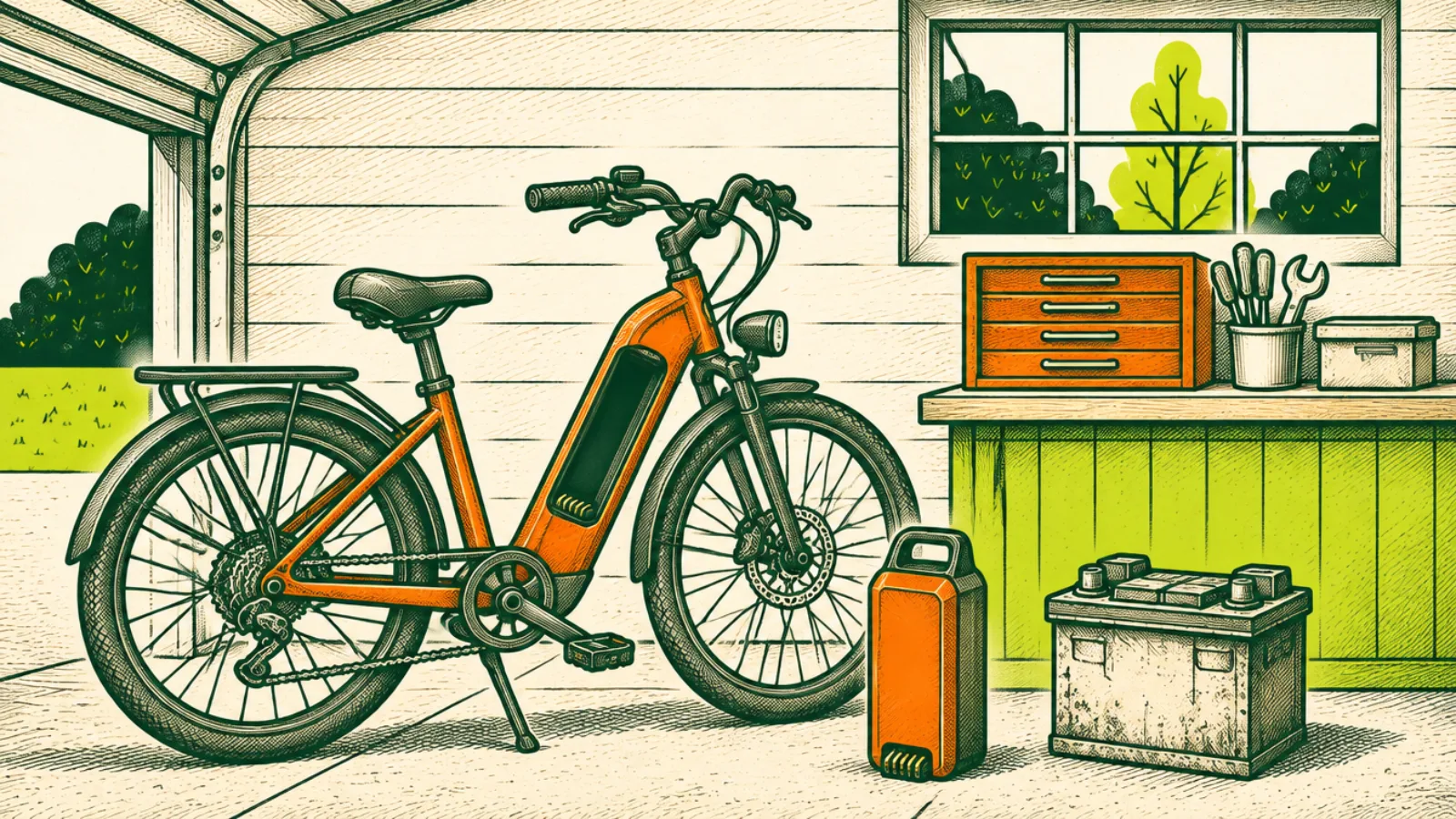
E-bike, e-scooter and hoverboard batteries are large lithium-ion packs.
- Check for a specialty drop-off. The Battery Network says some of its sites accept e-bike and high-energy batteries over 300 watt-hours. Use the locator and check the site’s details.
- Separate it if your program asks. DC DPW, for example, accepts e-bike and scooter batteries at its special waste events only if the battery is separated from the device.
- Damaged pack? Treat it like any damaged lithium-ion battery and call ahead.
Swapping batteries around the house
Most dead batteries come out of everyday devices one at a time. A small routine for each keeps them from piling up loose.
- Smoke and carbon monoxide alarms. EPA lists smoke detectors among devices that use single-use lithium batteries. When you change one, check the label. If it says lithium, tape it and put it in the jar.
- Remotes, clocks and toys. Usually alkaline. Check the label, then follow your local rule or recycle them with the rest.
- Key fobs, watches and scales. Coin cells. Tape both sides right away, before they get lost in a drawer.
- Game controllers and headphones. Often rechargeable lithium-ion. If the battery isn’t meant to come out, the whole device goes to electronics recycling when it dies.
- Cordless tools. Removable packs go to a battery drop-off; ask whether the site takes larger packs.
Clearing out a whole house, or a relative’s home? Expect batteries in every room: drawers, closets, the garage and old electronics. Give them their own box from the start, taped as you go, so they don’t end up mixed into donation bags or trash.
Set up a battery jar at home
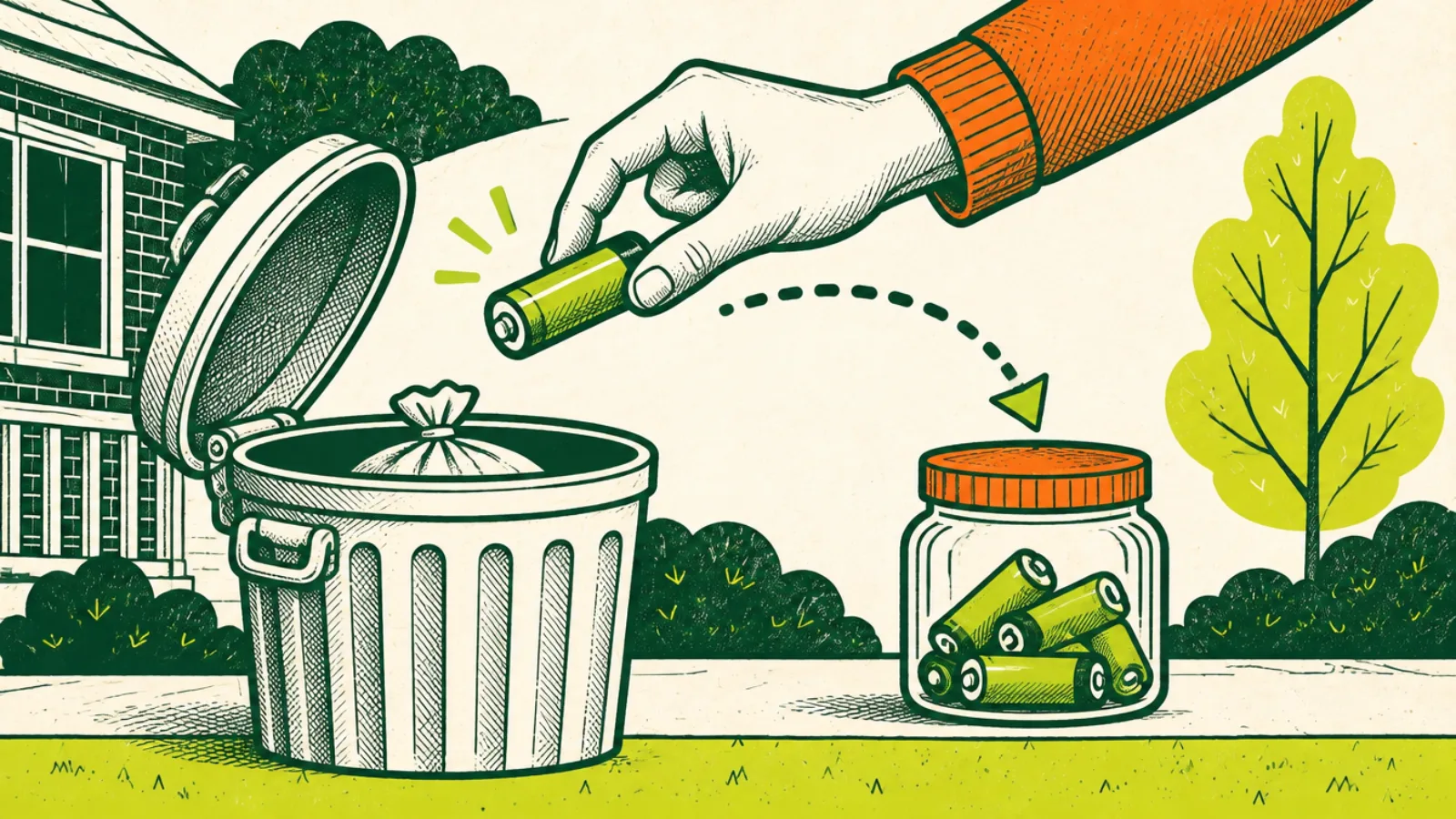
The easiest way to keep batteries out of the trash is to give them a spot.
- Pick containers that won’t spark, like a cardboard box or a rigid plastic tub, and use one per battery type, since Prince George’s County says not to store different types together. A jar for rechargeables and lithium, another for alkalines, works.
- Keep tape next to it. A roll of electrical tape in the junk drawer makes taping a five-second habit.
- Tape or bag each battery before it goes in. Damaged ones never go in.
- Store it somewhere cool and dry, out of reach of kids.
- Empty it on a schedule. Every few months, or when it’s half full, take it to a drop-off. Put the date on your calendar.
Alkalines get their own container. Recycle them with the rest, or follow your local rule: in Prince George’s County, that means no trash.
Keeping the jar from becoming a new junk drawer
A battery jar only works if it keeps moving. A few habits help:
- One jar per home, not one per room. Put it next to the tape, where batteries usually get swapped.
- Batteries only. Dead cables, chargers and old earbuds go to electronics recycling, not the jar.
- No guessing. If you can’t read a label, tape it and treat it like a battery that needs recycling.
- Pair the drop-off with an errand you already run, like a hardware store trip or a county collection event you’re already going to.
- Restart the clock. After each drop-off, put the next one on your calendar.
A worked example: the junk drawer
Here’s how the steps play out on a typical kitchen junk drawer. It’s an illustration, not a client story.
What’s in the drawer: a dozen loose AA and AAA alkalines, four rechargeable AAs, two 9-volts, a handful of coin cells from old key fobs, a swollen phone battery from an old cordless phone, a vape and a camera battery.
Sort it.
- The alkalines are labeled “alkaline.” They get taped and go in their own container for recycling. (In Prince George’s County, the trash isn’t an option for any battery.)
- The rechargeable AAs, the coin cells and the camera battery are taped and stored by type.
- The 9-volts get tape across the top.
- The vape goes to household hazardous waste. EPA says e-cigarettes contain both nicotine and lithium batteries, which makes them hazardous waste.
- The swollen phone battery is isolated in a container of kitty litter, away from the others, and the household hazardous waste program gets a call first.
Find the exits.
- The battery locator shows a store nearby that takes household and rechargeable batteries.
- The county’s next household hazardous waste event takes the vape, and after a call ahead, the swollen battery.
Go. Two stops, and the drawer is clear.

In Prince George’s County, Maryland
- The county rule: Prince George’s County says never to put batteries in regular trash or recycling, including alkaline and rechargeable batteries, because they contain harmful materials and can cause fires. It asks you to tape all terminals, collect batteries in a container that won’t spark, and store different types separately.
- Mobile household hazardous waste events: the county lists household batteries and acid car batteries among items accepted at its mobile household hazardous waste and electronics events. The county’s Household Hazardous Waste Acceptance Site has been closed to the public since April 15, 2024.
- Car batteries: the county’s facilities list says the Brown Station Road Residential Drop-Off Convenience Center, 3501 Brown Station Road in Upper Marlboro, takes auto batteries. Hours are Monday to Saturday, 7:30 a.m. to 3:30 p.m.
- Store drop-off: the county’s reuse page notes that MOM’s Organic Market takes batteries, along with a few other items.
- More household items: try Can They Take This?
In Washington, DC
- DPW special waste events: DPW lists household batteries, including lithium-ion and alkaline, among accepted items, and says lithium-based batteries must have their terminals taped. E-bike and scooter batteries are accepted only if separated from the device.
- How the events work: registration is free and required. Bring your registration and proof of DC residency. DPW says no entry is allowed after 2 p.m. Check DPW’s current schedule for dates and locations.
- Battery drop-offs: use The Battery Network’s locator for stores and sites in DC.
Clearing out more than batteries? See How to Declutter Your Home Without Just Moving the Piles.
Fewer dead batteries next time
- Switch to rechargeables for things you use often, like game controllers, remotes and kids’ toys.
- Buy the size you need. A 48-pack of AAs that sits in a drawer for years isn’t a bargain.
- Store spares in their packaging, so loose batteries don’t touch each other in a drawer.
- Label the battery jar and keep tape beside it, so the habit sticks.
- Note what your devices take. A quick list on your phone saves buying the wrong kind.
Your battery checklist
Sort
- ☐ Each battery’s type read off the label
- ☐ Alkalines separated from everything else
- ☐ Damaged or swollen batteries isolated; maker or program called
Prep
- ☐ Terminals taped, or each battery in its own bag
- ☐ Stored by type in containers that won’t spark, cool, dry and out of reach
- ☐ Built-in batteries left in their devices
Drop off
- ☐ Drop-off site found with the locator, or a hazardous waste event picked
- ☐ Damaged batteries: called ahead
- ☐ Car battery returned to the seller or a collection site

Common mistakes
- Tossing lithium or rechargeable batteries in the trash. EPA says they don’t belong in household garbage or recycling bins.
- Putting batteries in the curbside recycling bin. Not the place for them.
- Dumping loose batteries in a jar. Tape or bag them first.
- Prying out a built-in battery. Recycle the whole device.
- Mixing a swollen battery in with the rest. Keep it separate and call ahead.
- Forgetting the vape or power bank. Both have lithium-ion batteries inside. Vapes go to household hazardous waste.
- Leaving coin cells where kids can reach them.
FAQ
Can I throw AA batteries in the trash?
If they’re alkaline, EPA says that in most communities they can safely go in household trash, but it recommends recycling where you can. Rechargeable or lithium AAs shouldn’t go in the trash.
How do I tell if a battery is lithium?
Look for the word “lithium” or “Li-ion” on the battery or its label. Lithium single-use batteries can look just like alkalines, and many button and coin cells are lithium.
Why do I need to tape batteries?
EPA says lithium batteries can spark and cause fires if they’re damaged or their terminals touch. Taping the ends or bagging each battery keeps the terminals from touching.
Where can I drop off rechargeable batteries?
At a battery drop-off site (use The Battery Network’s locator), a participating retailer, or household hazardous waste collection.
What do I do with a swollen battery?
Don’t put it in the trash, recycling or a standard battery drop-off box. Isolate it in non-flammable material like sand or kitty litter, then follow the maker’s or your household hazardous waste program’s directions. If it’s hot or smoking, get away from it and call 911.
How do I get rid of a car battery?
Return it to the battery retailer or a local solid or household hazardous waste collection program. In Prince George’s County, the Brown Station Road convenience center lists auto batteries.
What is Call2Recycle now called?
It’s now The Battery Network. Its drop-off locator works by ZIP code, or you can call 1-877-2-RECYCLE.
Where can I recycle batteries in DC?
At DPW’s special waste events. Register in advance (free), tape lithium battery terminals, and bring your registration and proof of DC residency.
Sources
Checked November 10, 2026:
- EPA: Used household batteries
- EPA: Used lithium-ion batteries
- EPA: How to safely dispose of e-cigarettes
- The Battery Network: Battery safety
- The Battery Network (formerly Call2Recycle): Drop-off locator
- DC DPW: Acceptable and prohibited special waste items
- DC DPW: Household hazardous waste, e-cycling and document shredding
- Prince George’s County: Household hazardous waste
- Prince George’s County: Waste, recycling and disposal facilities
- Prince George’s County: Recycling/Reuse Alternatives