
Donate Pet Supplies in DC & PG County: Food and Crates
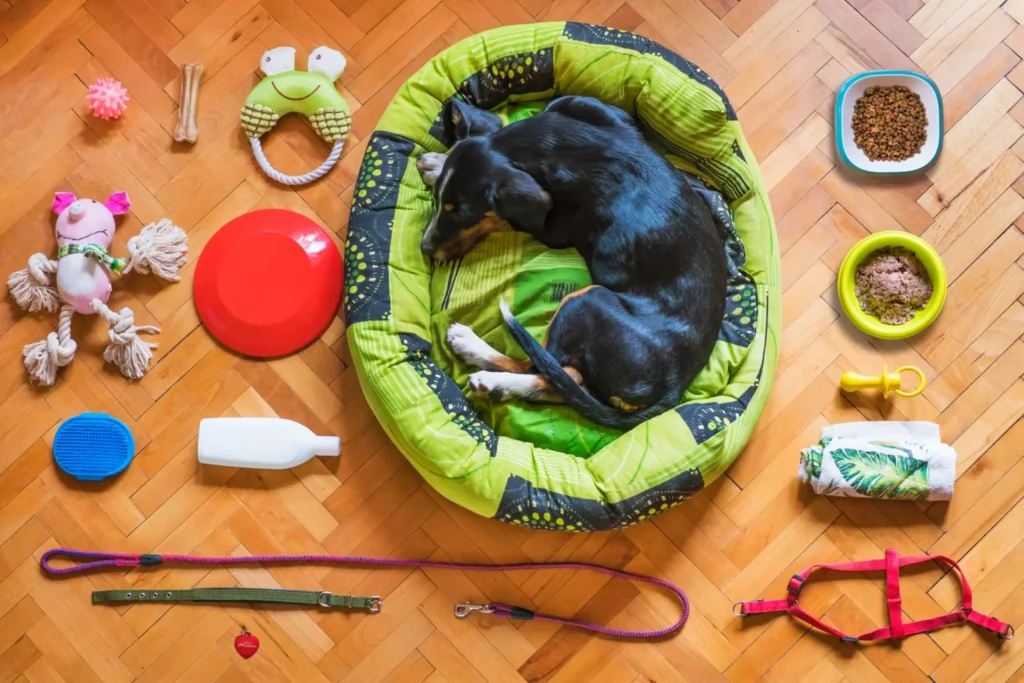
When a pet dies, moves on or simply outgrows something, the leftovers pile up fast: half a bag of food, a crate in the garage, leashes, bowls, beds, toys. They’re too good to throw away, and they feel strange to keep.
Shelters, rescues and pet food pantries can often use them. But “donate it to the shelter” isn’t always as simple as it sounds. Some places can’t take opened food. Some need towels more than toys. Some would rather have money than a crate.
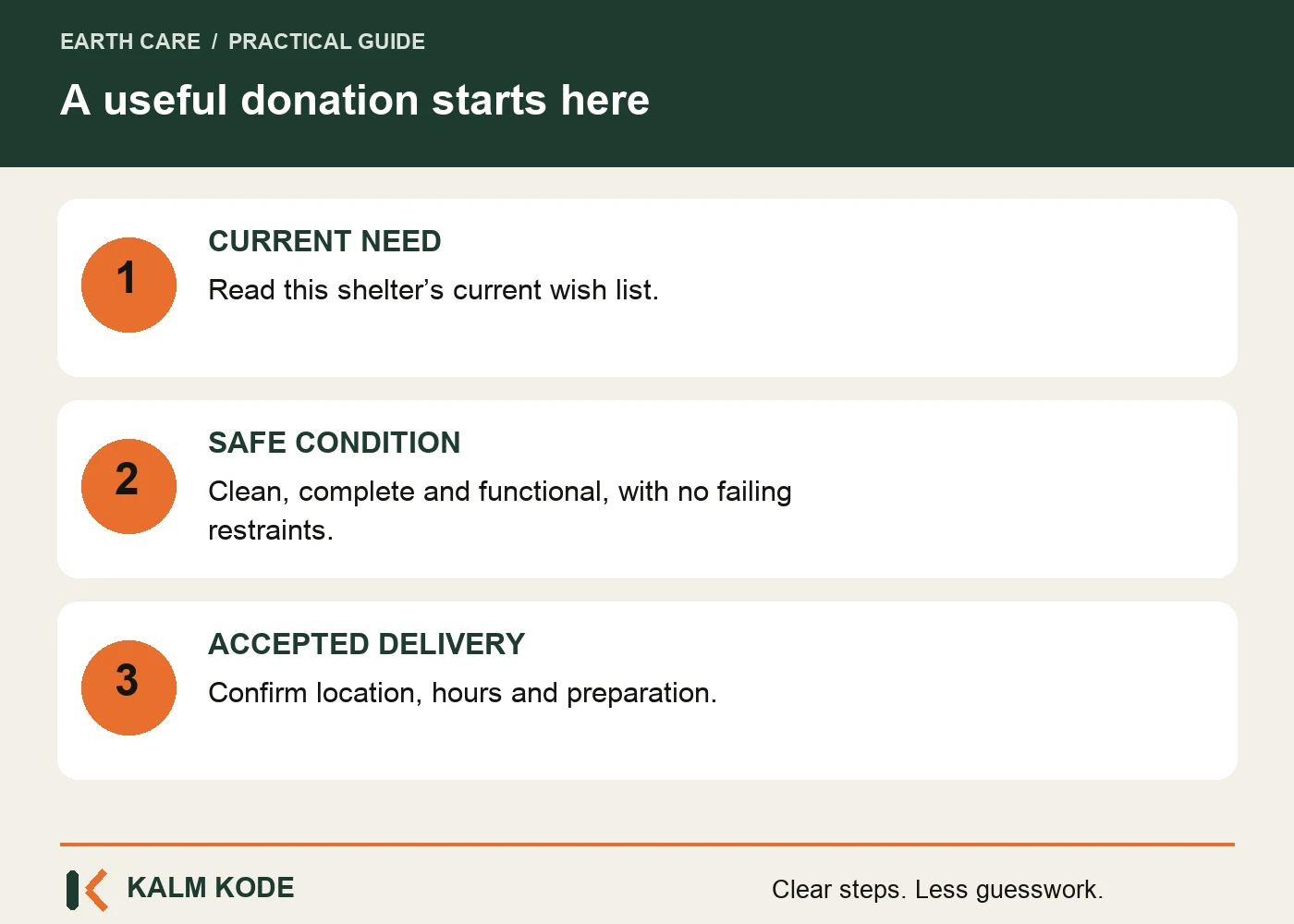
This guide covers where to donate pet supplies in DC and Prince George’s County, what local shelters say they need most, how to prepare items so they’re actually useful and what to do with things no one can take. Shelters’ needs change week to week, so check each organization’s current list before you drop anything off.
Short answer: In Prince George’s County, the county’s Animal Services Facility and Adoption Center at 3750 Brown Station Road in Upper Marlboro takes donations in its front lobby, no appointment needed, and says “the best thing to donate is funds,” with new supplies, towels and bedding also welcome. In DC, the Humane Rescue Alliance asks for blankets, sheets, bedding and unopened, non-prescription food, and says it can’t accept fitted sheets. Its Pet Pantry, which gives free pet food to DC residents in need, accepts unexpired dry and canned food, treats and toys. Donate food unopened and in date. Ask before bringing used crates, beds or large items. For breed rescues like Basenji Rescue and Transport (BRAT), money and specific campaigns such as Fanconi testing often help most.
What Shelters Actually Need
It’s easy to assume a shelter wants whatever you have. In reality, shelters plan around specific needs, limited storage and strict health rules. The best donation is the one they asked for.
Money first, when you can
Prince George’s County’s Animal Services Division is direct about it: “The best thing to donate is funds.” Funds can go “to the best service of the animals in our care at that specific time.” A shelter that has plenty of leashes but no kitten milk replacer can use money to buy exactly what’s short.
That doesn’t mean supplies aren’t welcome. The county adds that new supplies, towels and bedding are also welcome, and that “all donated items are appreciated.” If you are choosing between buying something and giving money, ask the organization which would be more useful for its current needs.
Bedding and towels
Towels, blankets and sheets are among the most useful things you can give a shelter. They’re used for kennel bedding, bathing, cleaning and comfort. The Humane Rescue Alliance says it’s “always grateful for donations of blankets, sheets, bedding, and unopened non-prescription food.” Prince George’s County lists bath towels on its donation list.
One catch: the Humane Rescue Alliance says it “cannot accept fitted bed sheets.” Check which flat sheets, blankets and towels the specific recipient accepts. Wash and dry everything first.
Food: unopened and in date
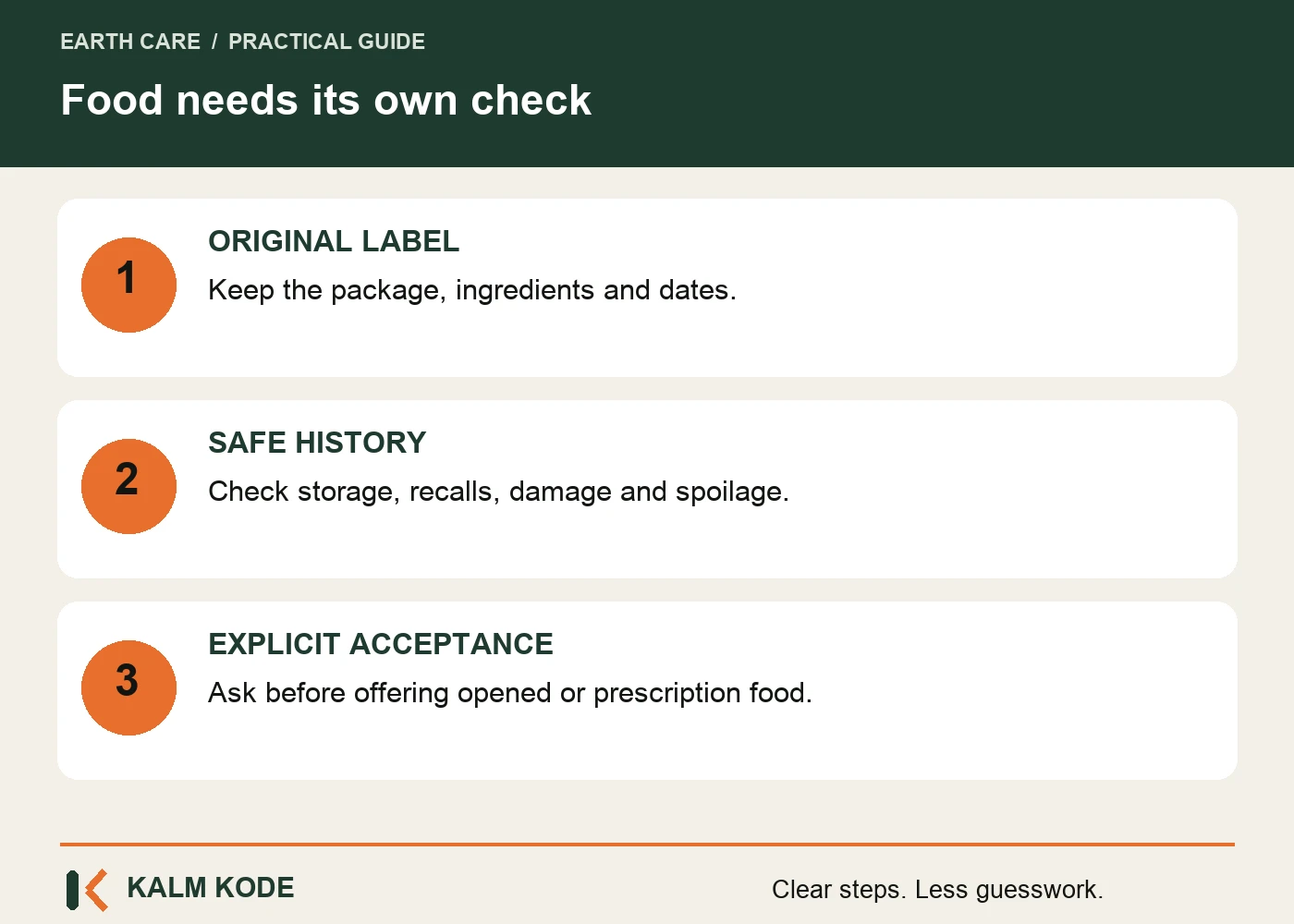
Shelters and pet pantries generally need food that’s sealed and not expired. The Humane Rescue Alliance asks for unopened, non-prescription food. Its Pet Pantry accepts unexpired dry food, canned food, treats and toys.
Why so strict? An open bag could be contaminated, stale or mislabeled, and shelters can’t take the risk with animals who may have health issues. Prescription diets need particular handling and suitability checks; do not donate them unless the organization specifically requests and accepts them.
Enrichment: toys and chews
Shelter animals spend a lot of time in kennels. Toys, chews and puzzle feeders help keep them calm and engaged. Prince George’s County says it runs low on enrichment items such as toys and treats, and its list includes specific toys, treats and enrichment products. That is the county shelter’s own wish list, not a veterinary recommendation that every product is safe or suitable for every pet.
Specific items on a local list
Prince George’s County’s donation list is a good example of how specific shelters’ needs can be. It includes:
- Scratch bricks, cat castle carriers and cat resting shelves
- AA and AAA batteries
- Pine litter
- Bath towels
- Collars and leashes
- Canned whipped cream and Frosty Paws
- Enrichment toys and treats specifically requested on the current shelter list
- Small mammal items: Timothy hay, Oxbow products and fresh fruits and fibrous vegetables such as lettuce, greens, carrots and squash
The county notes that kitten milk replacer, puppy milk replacer and bottles for underage animals are on its Amazon wish list.
Cat supplies
Cats are easy to forget when people think “pet donations,” but shelters often care for many of them. Prince George’s County’s list includes scratch bricks, cat castle carriers, cat resting shelves and pine litter. Other cat items that are often useful, if a shelter’s list includes them:
- Unopened cat food, wet and dry
- Litter, in the type the shelter uses
- Scratchers and cat toys
- Carriers that close securely
- Clean towels and small blankets for cages
Ask before bringing used litter boxes or cat trees. They can be hard to clean thoroughly and take up a lot of space.
Small animals
Shelters take in rabbits, guinea pigs and other small animals too. Prince George’s County lists Timothy hay, Oxbow products and fresh fruits and fibrous vegetables, such as lettuce, greens, carrots and squash, for small mammals. Fresh produce spoils quickly, so ask when to bring it, or choose shelf-stable items from the wish list instead.
Questions to ask before you drop off
A two-minute call or email can save a wasted trip. Ask:
- What do you need most right now?
- Do you accept opened food, used beds or used crates?
- Where and when should I drop off?
- Is there anything you have too much of?
- Can I ship items to you instead, or buy from your wish list?
- Do you give donation receipts?
Giving on a small budget
You don’t need to spend much to help. A single bag of the right litter, one pack of towels from a dollar store, or a few dollars toward the shelter’s most urgent need all count. Check the wish list for low-cost items like tennis balls, AA and AAA batteries or small toys. If you shop online, buying from a shelter’s own wish list sends exactly what it asked for straight to the door.
Where to Donate in Prince George’s County
Prince George’s County Animal Services Facility and Adoption Center
- Address: 3750 Brown Station Road, Upper Marlboro, MD 20772
- Drop-off hours (per the county’s donation page): Tuesday through Friday, 11 am to 7 pm, and Saturday, 10 am to 4 pm
- How: no appointment needed. Donation bins are in the front lobby. You can also ship items to the same address.
- Money: the county’s page links to an online donation tool. You can also mail a check or money order to the Animal Services Division at the address above, payable to Prince George’s County, with “donation” in the memo line.
- Wish list: the county links to an Amazon wish list, which it says includes enrichment items, critter supplies, kennel supplies and milk replacer.
Your local rescue groups
Many small rescues in the county work through foster homes rather than a building, so they may not have a drop-off spot. Ask what they need before you buy or bring anything. Foster-based rescues often need specific items for specific animals, like a certain size crate, a food for a sensitive stomach or supplies for a litter.
Where to Donate in DC
Humane Rescue Alliance
The Humane Rescue Alliance (HRA) is an animal-welfare organization with its own adoption, medical and pet-pantry programs. It is not the current operator of DC’s government animal-care and control services. DC Health confirms that Brandywine Valley SPCA took over those services on January 1, 2025. Confirm which organization’s program you want to support before arranging a delivery.
- What it asks for: blankets, sheets, bedding and unopened non-prescription food. It points donors to its wish lists and supply lists for the full list.
- What it can’t take: fitted bed sheets.
- Where: HRA’s help center says donations go to its 71 Oglethorpe Street NW address in Washington, DC 20011.
HRA’s Pet Pantry
HRA’s Pet Pantry “provides free pet food and supplies to community members in need.” HRA says the pantry can provide food for up to 900 cats and dogs each month, and that it accepts unexpired dry food, canned food, treats and toys. You can also send food through HRA’s Amazon wish list. Questions go to 202-723-5730 or HOPE@humanerescuealliance.org.
If you or someone you know needs help feeding a pet, use HRA’s current pantry enrollment instructions before travelling. The published requirements include initial proof of DC residency and enrollment, with vaccination and spay/neuter documentation required within six months. Locations and eligibility arrangements can differ, and availability depends on donations. An ID alone should not be presented as a guarantee that a person qualifies or that a particular food will be available.
Breed Rescues: Basenji Rescue and Transport
Breed-specific rescues place dogs of one breed, often through volunteers and foster homes across many states. They usually don’t have a central drop-off for supplies. Basenji Rescue and Transport (BRAT), for example, lists ways to give on its home page: general donations, a fund for Fanconi syndrome DNA testing for dogs under 10, its annual calendar fundraiser and replacement BRAT ID tags.
That Fanconi testing fund is a good example of a targeted donation. Fanconi syndrome is an inherited kidney disease in Basenjis, and a direct DNA test reports the tested variant and a risk classification; it does not diagnose whether a dog currently has Fanconi syndrome. Our sister site King The Kemist explains why it matters in Basenji Fanconi Syndrome: What Owners Should Know and Ask Their Vet, and the Basenji Corner collects more Basenji resources.
If you have a Basenji-specific item, like a sturdy crate or a well-fitted harness, ask a breed rescue whether a foster home could use it before passing it on.
How to Prepare Your Donation
A few minutes of prep makes your donation useful instead of a problem.
Food
- Keep it sealed. Unopened bags and cans only, unless an organization specifically says it accepts opened food.
- Check the date. Out-of-date food usually goes in the trash at the shelter.
- Check recalls. The FDA posts pet food recalls. Don’t donate recalled food.
- No prescription diets unless the organization asks for them.
- Keep the label. Shelters need to know exactly what’s in it.
Bedding and towels
- Wash and dry everything. Shelters can’t use items that smell of smoke, mildew or another animal’s accident.
- Skip fitted sheets for HRA, and check other organizations’ lists.
- Fold and bag them. It makes sorting easier.
Crates, carriers and beds
- Ask first. Large items take storage space, and shelters may not need them right now.
- Clean thoroughly. Wash crates, carriers and pans with soap and water and let them dry.
- Check for damage. Bent wires, broken latches and cracked plastic can injure animals or let them escape. Don’t donate a crate that doesn’t close securely.
- Include all parts: dividers, pans, pins and doors.
- Beds must be clean, intact and free of stuffing coming out. Many places prefer new beds or blankets instead of used beds.
Leashes, collars and harnesses
- New is best, but clean, sturdy used ones are often welcome.
- Check buckles and clips for wear. A broken clip is a lost dog.
- Flat collars and leashes are usually more useful to shelters than specialty gear.
Medications and supplements
Don’t donate leftover pet medications to a shelter. Prescription medications were prescribed for a specific animal. Ask your vet about how to dispose of unused medicine safely.
Needs Change Through the Year
A shelter’s list in January may look nothing like its list in July. Weather, intake and events all shift what’s short. In cold months, blankets and warm bedding may run low. When a shelter takes in young animals, it may suddenly need milk replacer, bottles and small bedding, which Prince George’s County keeps on its wish list for underage animals. After a big adoption event, it may need to restock basics.
That’s why checking the current list matters, and why money is so flexible. If you donate regularly, ask the shelter how it prefers to hear from donors, whether by newsletter, social media or its website, so you see urgent needs when they come up.
Keep Pets With Their People
Some of the most effective help keeps pets out of shelters in the first place. When someone loses a job, gets sick or hits a rough month, pet food is often one of the first things that’s hard to afford. A pet pantry like HRA’s lets people keep their animals fed through a hard stretch instead of surrendering them.
You can support that directly by donating to a pet pantry, and indirectly by sharing pantry information with people who might need it. If you’re a landlord, a social worker, a teacher or just a good neighbor, knowing where the nearest pet pantry is can make a real difference to someone.
Ask for a Receipt
If you itemize deductions, ask for a donation receipt when you drop off. Prince George’s County’s page describes how to give money to the county’s Animal Services Division; for items, ask at the front desk what documentation it provides. Nonprofit shelters and rescues can usually give you a receipt for items or money. For anything beyond a simple receipt, check IRS guidance or ask a tax professional.
What If No One Will Take It?
Some items are too worn, too specialized or too used to donate. They can still have a second life.
- Offer it to neighbors. A free listing on a neighborhood app or group can find someone who needs a crate, carrier or bowls.
- Ask your vet’s office or groomer. Some can use towels or blankets.
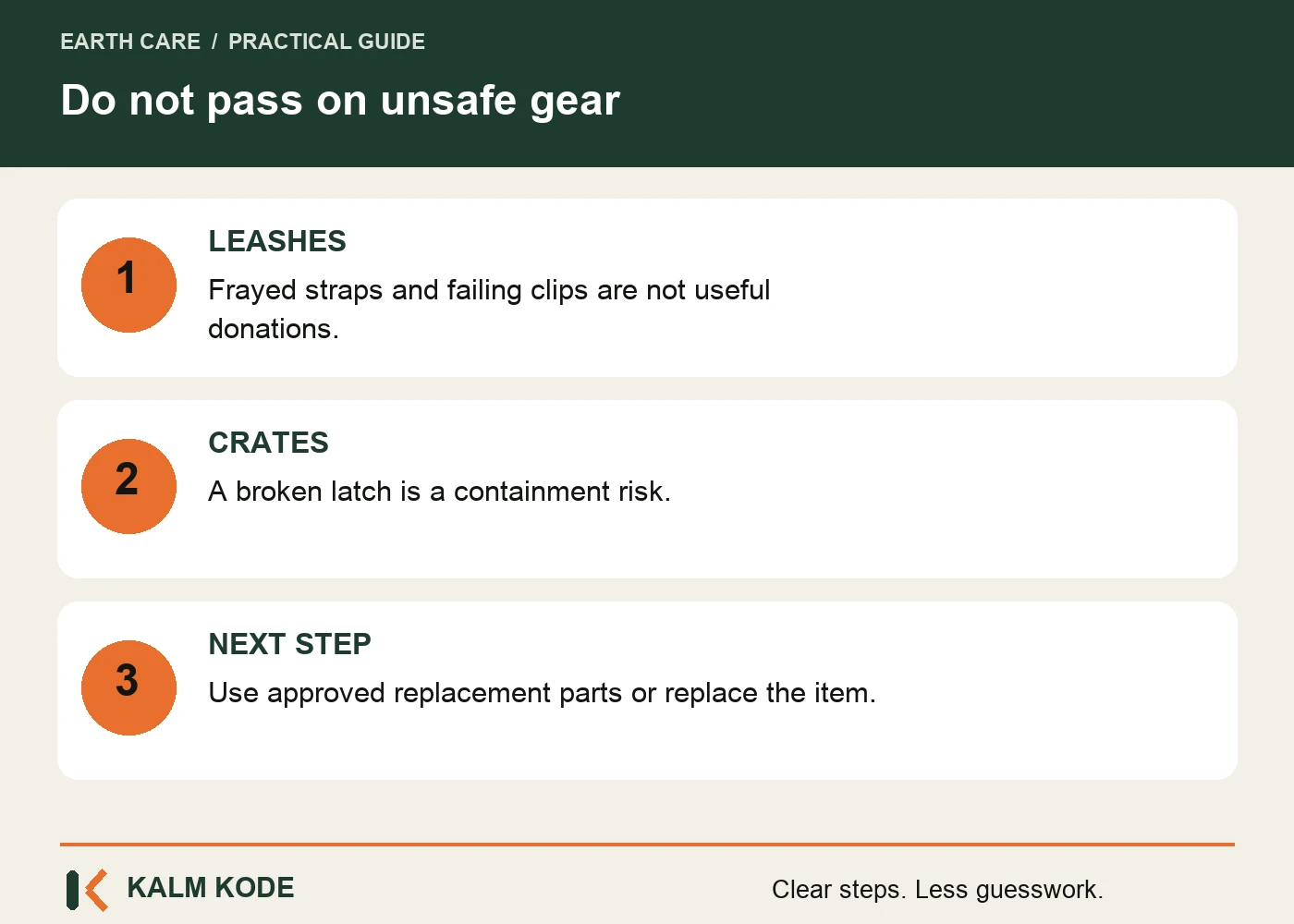
- Separate ordinary repair from safety equipment. Do not donate a frayed leash, a crate with a failing latch or other damaged containment gear. Ask the manufacturer about approved parts or replace the item. A casual repair is not proof it can restrain an animal. For appropriate non-safety household items, our repair café guide explains how to ask about a repair.
- Recycle or dispose correctly. Metal crates can often go to scrap metal recycling. Check your local rules. Our Can They Take This? tool covers common items in Prince George’s County.
Other Ways to Help Pets in Need
Supplies are one way to help. There are others:
- Volunteer. Shelters need help with walking dogs, socializing cats, cleaning, laundry and events. Laundry alone keeps many shelters running.
- Foster. Fostering frees up shelter space and gives an animal a quieter place to wait for a home.
- Share adoptable pets. A share on social media can help an animal find a home.
- Help a neighbor. Sometimes the person who needs pet food is right next door. If you know someone struggling, point them to a pet pantry.
Run a Pet Supply Drive
A supply drive multiplies what one person can give. Schools, offices, places of worship and apartment buildings are good places to run one.
- Pick one organization and ask what it needs most right now. Get the list in writing.
- Set a short window. One to two weeks keeps energy up.
- Share the exact list. Specific asks, like “unopened dry dog food” or “flat sheets and towels,” bring in useful items. Vague asks bring in random stuff.
- Set up a clearly labeled box in a spot people pass every day.
- Sort before delivery. Remove anything opened, expired, damaged or not on the list.
- Call ahead to arrange a drop-off time, especially for a large load.
- Share the result. A photo of the delivery, and a thank-you to everyone who gave, makes the next drive easier.
If you’d rather collect money than items, ask the organization whether it has a fundraising page you can share, so donations go straight to it.
A Worked Example
Here’s a hypothetical. Say your senior dog passed away a few months ago, and you’re finally ready to clear out the supplies: half a bag of kibble, six unopened cans, a large wire crate, two dog beds, four towels, a leash and some toys.
- Check the lists. You look at Prince George’s County’s donation page and HRA’s help center for what each needs.
- Food. The half bag is opened, so you check the recipient’s rules. You do not pass it on unless someone specifically accepts it, the original label and storage history are known, and recalls or spoilage are ruled out. Otherwise it is discarded appropriately. The six cans are unopened and in date, so they go in the donation box.
- Towels. You wash and fold them. They go in the box.
- Crate. You call a local rescue. They have a foster who needs one, so you clean it, check the latches and drop it off.
- Beds. One is in great shape and goes to the rescue too. The other is flat and torn, so it goes to the trash.
- Leash and toys. The leash is sturdy, so it goes in the box. The toys are well-loved and chewed, so you throw them out and buy two new Kongs for the shelter instead.
In this example, most of what you had found a new home, and the rest went out the right way.
Donating After a Pet Dies
Clearing out a pet’s things can be hard. There’s no rush. Some people find it comforting to donate in their pet’s name. Some keep one item, like a collar or tag, and pass on the rest. Others aren’t ready for months.
If you donate in memory of a pet, many shelters and rescues accept memorial gifts. It’s a way to turn loss into something that helps another animal.
Common Mistakes
Assuming rejected food is safe for someone else. Ask whether the recipient accepts opened food, keep the original label, disclose opening and storage details and check recalls and spoilage. If its history or safety is uncertain, do not pass it on.
Dropping off without checking the list. Needs change. A quick look saves you a trip and saves the shelter storage space.
Donating damaged crates or worn leashes. Broken gear can hurt an animal or let it escape.
Leaving items outside after hours. Donations left outside can get wet, damaged or taken. Drop off during open hours.
Donating leftover medications. Ask your vet about disposal instead.
This guide is part of Earth Care & Community Help, where Kalm Kode helps neighbors keep good things in use. See also Before You Throw It Away.
Give the recipient a clear inventory
For a mixed donation, make a simple list before asking where to take it. Separate sealed food, washable textiles, intact equipment and items that need a decision. Include quantities and sizes where useful: three medium bowls is more informative than “a box of dog things.” Do not unpack sealed food into smaller unlabelled bags to make the donation easier to carry.
For a crate, photograph its assembled condition and include dimensions, the type of door and whether the tray, divider and pins are present. Do not assume a photograph alone proves that its latches work. Inspect it carefully and disclose any wear. The recipient may decline a safe, usable crate simply because it is the wrong size or there is no storage space.
If you are organizing a group drive, agree on what happens to items that do not meet the list before collections start. Tell donors the boundaries clearly and do not leave rejected goods at the shelter for staff to sort out. A smaller delivery that matches the request is more useful than a large pile that creates extra work. Keep any photographs of the handover honest: do not imply a partnership or an impact total that the organization has not confirmed.
About this guide
Written and edited for Kalm Kode by King. This is a practical guide compiled from the linked public sources, not a claim that Kalm Kode operates these programs or has a partnership with them. Provider rules can change; use the official contact or event page to confirm the details for your own item, address or visit.
Frequently asked questions
Where can I donate dog food in DC?
The Humane Rescue Alliance asks for unopened, non-prescription food, and its Pet Pantry accepts unexpired dry and canned food, treats and toys. Check HRA’s current wish list first.
Where can I donate pet supplies in Prince George’s County?
The county’s Animal Services Facility and Adoption Center, 3750 Brown Station Road in Upper Marlboro, takes donations in its front lobby without an appointment. The county lists Tuesday–Friday 11 am–7 pm and Saturday 10 am–4 pm for drop-offs.
Can I donate opened pet food?
Follow the recipient’s rules. A shelter’s refusal does not make opened food automatically suitable for a neighbor. Ask first, retain the original label, disclose when it was opened and how it was stored, and check recalls and spoilage. Do not pass it on if its safety or history is uncertain.
Do shelters take used crates?
Some do, if they’re clean, undamaged and have all their parts. Ask first; shelters have limited storage.
What’s the most helpful thing to donate?
Prince George’s County Animal Services says “the best thing to donate is funds,” because money can go to whatever the animals need most at the time.
Can I donate a crate with a broken latch if I repair it?
Do not treat a casual repair as proof that containment equipment is safe. Ask the manufacturer about approved replacement parts or replace the item. The receiving organization must also agree to accept it.
Does HRA operate DC’s government animal-control service?
No. DC Health says Brandywine Valley SPCA assumed those services on January 1, 2025. HRA continues its own animal-welfare programs, so check which organization and program your donation is intended to support.
Can a rescue accept leftover prescription pet medication?
Do not send leftover medication without a lawful, specifically authorized route. Ask the prescribing veterinarian how to handle or dispose of it; it was prescribed for a particular animal.
Sources
- Animal Shelter Donations (Prince George’s County)
- What donations are most impactful to the facility? (Prince George’s County)
- What items can be donated? (Humane Rescue Alliance)
- Pet Pantry donations and Pet Pantry access (Humane Rescue Alliance)
- Basenji Rescue and Transport
- Pet food recalls (US Food and Drug Administration)