
How to Dispose of Paint: Check Reuse and Take-Back Before Trash
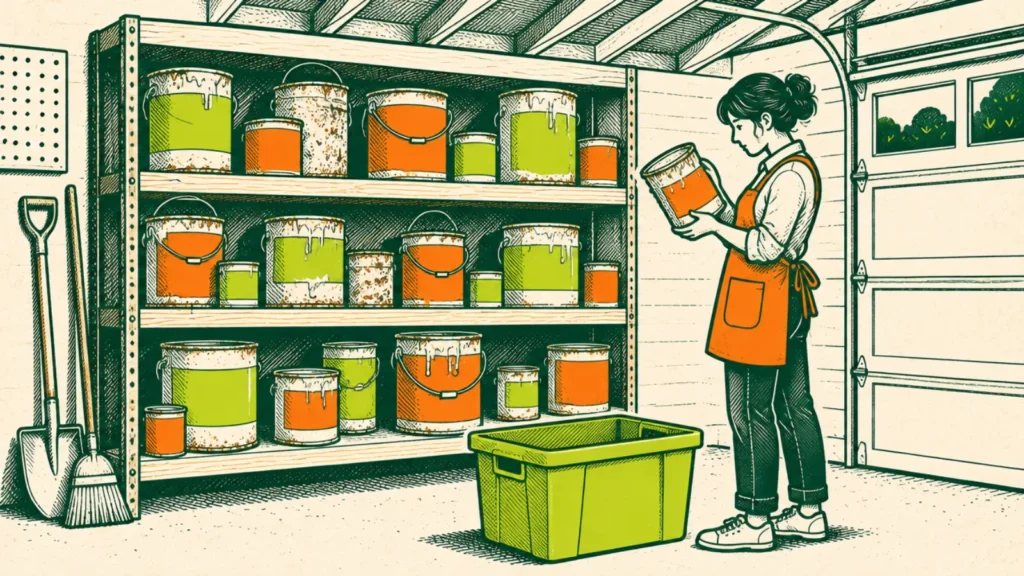
Short answer: first figure out what kind of paint you have and where you live. Usable paint can be used up or given away. In the states with a PaintCare program, plus DC, you can drop off leftover latex and oil-based house paint for free at a PaintCare site. Elsewhere, oil-based paint usually goes to household hazardous waste collection. Some places let you dry out small amounts of latex paint and put it in the trash. Aerosol spray paint, thinners and art paints follow different rules. Never pour any of it down a drain.
In Maryland or DC? Both have PaintCare. Maryland’s program started April 1, 2026, and PaintCare lists 115 year-round Maryland drop-off sites. DC lists 8 (details below).
Last checked November 10, 2026, against PaintCare, EPA, DC DPW, Prince George’s County and other public sources (listed at the bottom). Kalm Kode is an independent guide. Your local program and drop-off site have the final word on what they take.

The 30-second version
- Know your paint. Latex (water-based) and oil-based (alkyd) paints are handled differently. Spray paint is its own category.
- Use it or give it away first. Usable paint is worth more on a wall than in a bin.
- Check for PaintCare. It runs in California, Colorado, Connecticut, DC, Illinois, Maine, Maryland, Minnesota, New York, Oregon, Rhode Island, Vermont and Washington. Drop-off is free.
- No PaintCare? Check your county. Oil-based paint usually goes to household hazardous waste collection. Latex rules vary.
- Keep it in the original can, lid on, label on. PaintCare won’t take open, leaking, empty or unlabeled containers.
- Never down the drain. EPA lists pouring household hazardous products down the drain as improper disposal.
Quick answers by type
- Latex wall paint, still good: use it, store it for touch-ups, or give it away.
- Latex wall paint, done: PaintCare drop-off in program states and DC. Elsewhere, your local collection site, or dry it out only if your area allows that.
- Oil-based paint, stain or varnish: PaintCare drop-off in program states and DC. Elsewhere, household hazardous waste.
- Spray paint: household hazardous waste, not PaintCare.
- Thinner, mineral spirits or solvent: household hazardous waste, not PaintCare.
- Art, craft, auto or marine paint: not PaintCare; check your local household hazardous waste program.
- Unlabeled or leaking can: not PaintCare; household hazardous waste.
- Empty, dry can: check your local recycling rules for metal or plastic paint cans.
Step 1: Figure out what kind of paint it is
Read the label. You’re looking for one of these:
- Latex, acrylic or water-based. Cleans up with soap and water. Most interior wall paint is latex.
- Oil-based or alkyd. Cleans up with mineral spirits or paint thinner. Common for trim, doors, cabinets and older homes.
- Stains, sealers, primers and clear coats. Varnish, shellac, polyurethane and deck stain. Many are accepted by PaintCare; check the label.
- Aerosol spray paint. Pressurized cans. PaintCare doesn’t take them.
- Specialty products. Auto and marine paint, art and craft paint, two-part epoxies, roof patch and repair products, asphalt-, tar- or bitumen-based coatings and traffic paint. PaintCare doesn’t take these either. Other roof coatings need a label check: PaintCare says non-asphalt roof coatings are excluded only when they’re labeled for professional use.
If the label is gone, you can’t easily tell. PaintCare won’t accept unlabeled containers, so unlabeled paint usually goes to household hazardous waste collection.
Step 2: Decide if it’s still usable
A lot of “old paint” is perfectly good. Open the can and check:
- It stirs smooth. Some separation is normal. If it mixes back together, it’s usable.
- No hard lumps or rubbery skin that won’t stir in. A thin skin can be lifted off.
- No sour or rotten smell. That usually means latex paint has spoiled.
- It wasn’t frozen. Latex paint that froze and thawed can turn grainy or stringy.
If it’s good, you have options before disposal:
- Use it up. Touch-ups, a closet, a garage wall, a second coat, a primer coat.
- Mix leftovers of similar colors into a neutral for a utility space. Only mix the same type, latex with latex.
- Give it away. Neighbors, friends, community groups, schools or theater programs may want it. Local Buy Nothing groups and online marketplaces work too.
For storage, cover the opening with plastic wrap, press the lid on firmly, and keep the can somewhere it won’t freeze or bake.

Step 3: Check for PaintCare where you live
PaintCare runs paint drop-off programs in 12 states plus DC:
California, Colorado, Connecticut, the District of Columbia, Illinois, Maine, Maryland, Minnesota, New York, Oregon, Rhode Island, Vermont and Washington.
How it works:
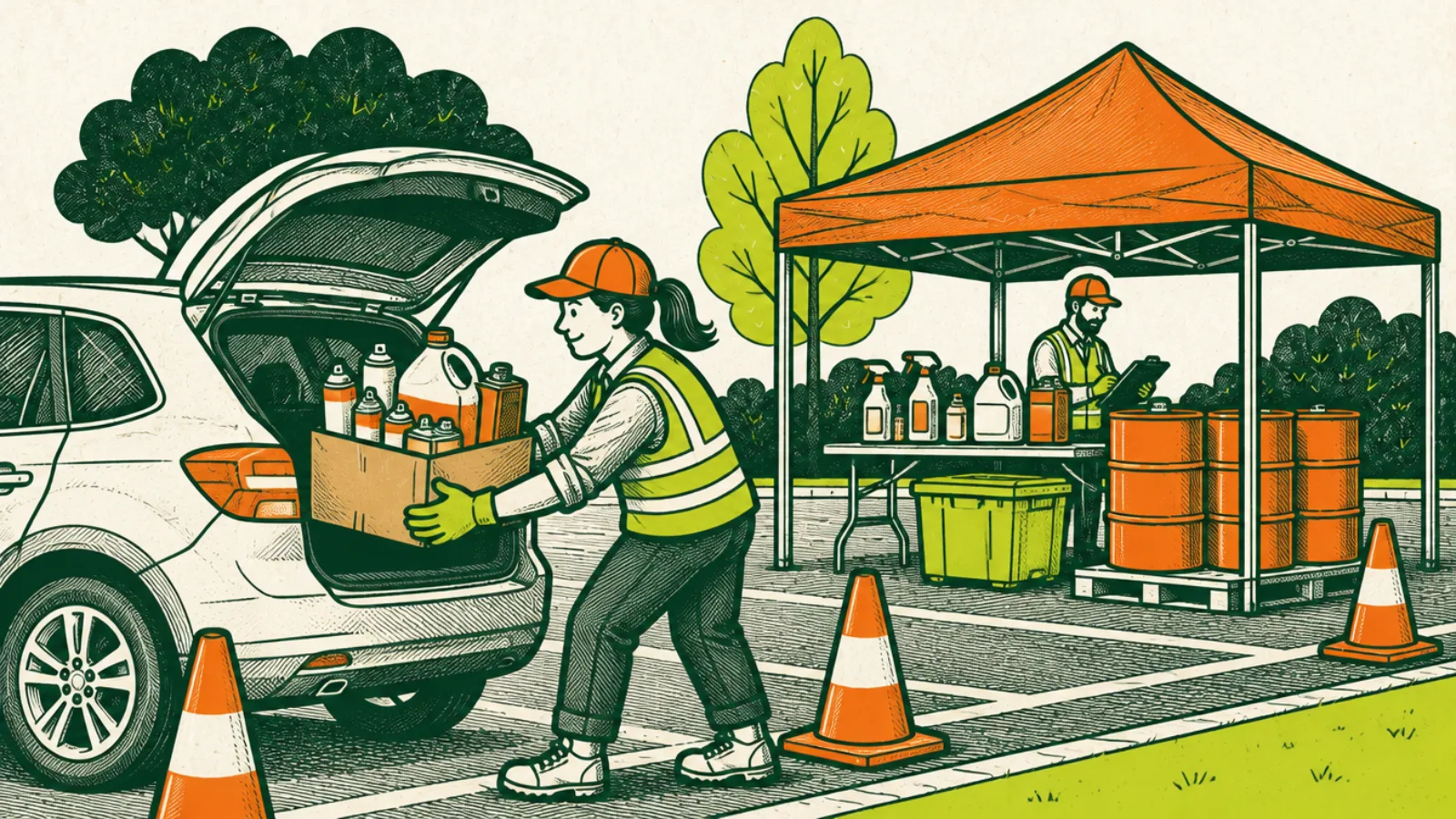
- Free drop-off. PaintCare says there’s no charge for dropping off paint at a PaintCare site, for households or businesses.
- A fee when you buy paint. The program is paid for by a small fee added to new paint in program states. In Maryland, PaintCare lists $0.50 for containers larger than a half pint and smaller than a gallon, $1.15 for 1 to 2 gallons, and $2.25 for larger than 2 gallons up to 5 gallons. Half pints and smaller have no fee.
- Close-to-home sites. Many drop-off sites are paint and hardware stores, open during normal business hours. Local government facilities also host sites.
- Up to five gallons per visit. PaintCare says all sites accept up to five gallons from each customer, and some accept more. Call ahead to confirm.
- Big amounts. With 100 gallons or more, you may qualify for PaintCare’s free large volume pickup, with some restrictions.
Find a site with PaintCare’s Drop-off Site Locator or by calling (855) PAINT09.
What happens to it: PaintCare says it follows a “highest, best use” order, reuse first and then recycling, and that most of the paint it receives is latex that processors remix into recycled-content paint.

What PaintCare accepts, and what it doesn’t
Accepted (per PaintCare’s list):
- Interior and exterior architectural paint: latex, acrylic, water-based, alkyd, oil-based and enamel
- Deck coatings and floor paints
- Primers, sealers and undercoaters
- Stains
- Single-component shellacs, lacquers, varnishes and urethanes
- Concrete, masonry and wood waterproofing sealers (not tar- or bitumen-based)
- Metal coatings and rust preventatives
- Field and lawn paints
Not accepted:
- Paint thinners, mineral spirits and solvents
- Aerosol coatings (spray paint)
- Auto and marine paints
- Art and craft paints
- Caulks, epoxies, glues and adhesives
- Additives, colorants, tints and resins
- Wood preservatives containing pesticides
- Roof patch and repair products
- Asphalt, tar and bitumen-based products
- Two-component coatings
- Deck cleaners
- Traffic and road-marking paints
- Industrial maintenance coatings
- Factory-applied (OEM) paints and finishes
Container rules: no larger than 5 gallons, original container, original label, lid secured. PaintCare says it can’t accept open, leaking, empty or unlabeled containers.
The items PaintCare turns away still need a home. Most go to your local household hazardous waste program.
Step 4: No PaintCare? Check your local rules
Outside PaintCare states, your city or county decides. A few patterns are common, but check your own program before you act:
Oil-based paint, stains and thinners. These are usually treated as household hazardous waste. Take them to a household hazardous waste site or collection event.
Latex paint. Rules vary the most. Some places want it at a collection site. Others let you dry it out and throw the dried paint away. Chicago’s guidance, for example, says to use kitty litter, shredded paper or sawdust to absorb leftover latex paint, then discard the dried material and recycle the empty can. Illinois also has PaintCare, so Chicago residents can use a drop-off site too; the local drying rule is a fallback, not a replacement. Don’t assume your area works the same way; look it up.
How to dry latex paint where it’s allowed:
- Work outside or in a ventilated spot, away from kids and pets.
- For a small amount, leave the lid off and let it dry.
- For more, stir in an absorbent like kitty litter, shredded paper or sawdust until it’s solid.
- Once it’s dry all the way through, follow your local rules for the dried paint and the can.
Never pour paint on the ground, into a storm drain, or down a sink or toilet.

Why the drain and the yard are off-limits
It’s tempting to rinse the last of a can into the sink or tip it behind the shed. EPA lists pouring household hazardous products down the drain among improper disposal that can pollute the environment and harm human health. Storm drains usually lead straight to local streams, not a treatment plant, and paint poured on the ground stays in the soil.
The fixes are simple. Wipe brushes and rollers on newspaper before rinsing latex tools. Let a latex-only rinse bucket settle and follow your local rules for the sludge. For oil-based cleanup, keep the used thinner in a compatible container with a tight lid, ideally its original labeled container and never a food container, and take it to household hazardous waste. Paint that can’t be used goes to PaintCare or your local program, not into the water.
Spray paint, thinners and other leftovers
These are the leftovers that trip people up, because they don’t go to PaintCare.
- Aerosol spray paint. Not accepted by PaintCare. Check your household hazardous waste program. DC DPW, for example, lists aerosol cans among items it accepts at its special waste events.
- Paint thinner, mineral spirits and solvents. Not accepted by PaintCare. Household hazardous waste. DC DPW lists thinners and mineral spirits among accepted items.
- Brushes and rollers. Clean latex brushes with water. Let oil-based cleanup liquids settle, and take them to household hazardous waste rather than the drain.
EPA’s general advice for household hazardous products applies here: keep them in their original containers, keep the labels on, and never mix leftovers with other products, since some combinations can react.
Transporting paint to a drop-off
A few habits make the trip easy:
- Lids on tight. Tap them down with a rubber mallet if you need to.
- Upright in a box or bin. A laundry basket or plastic tub keeps cans from tipping.
- Nothing loose in the trunk. Wedge cans so they can’t roll.
- Keep labels readable. Sites check them.
- Bring what the site takes. Spray cans and thinners stay home unless the site says it takes them.
- Count your gallons. Most PaintCare sites take up to five gallons per visit. More than that? Call first.

A worked example: clearing a garage shelf
Here’s how the steps play out on a typical garage shelf in a PaintCare state. It’s an illustration, not a real customer.
What’s on the shelf: six gallons of interior latex in three colors, two quarts of oil-based trim paint, a half-empty can of deck stain, a can of polyurethane, three spray cans, a jug of mineral spirits and two cans with the labels peeled off.
Sort it.
- The three latex colors stir smooth. One gallon matches the living room, so it stays for touch-ups, labeled with the room and date.
- Two gallons of latex go to a neighbor repainting a basement.
- Three gallons of latex, the oil-based trim paint, the deck stain and the polyurethane are all on PaintCare’s accepted list.
- The spray cans and mineral spirits aren’t. Neither are the two unlabeled cans.
Find the exits.
- PaintCare: the locator shows a hardware store nearby. A call confirms it takes up to five gallons per visit.
- Household hazardous waste: the county’s next collection event takes spray cans, solvents and unknown paint.
Go.
- Trip one: three gallons of latex plus the two oil-based quarts, about three and a half gallons, to the hardware store.
- Trip two: the stain and polyurethane on the next errand run, still within the limit.
- The spray cans, mineral spirits and unlabeled cans stay in their original containers, lids tight, in a secure, ventilated spot away from heat, flames, children and pets until the collection event, which goes on the calendar.
The shelf is clear in a week, and nothing went down a drain or into the trash by guesswork.
Moving out, selling a house or renting
Paint piles up in garages and basements, and moves are when it finally has to go.
- Selling a home. Leave a labeled can of each wall color if the buyer wants it for touch-ups. Ask first; some buyers would rather not inherit paint.
- Renting. Check your lease before you leave paint behind. Many landlords expect the unit cleared out.
- Moving companies. Ask your mover early whether it will take paint and other liquids, so you aren’t left with cans on moving day.
- Moving out of a PaintCare state. Drop off what you won’t use before you go. It’s free where you are now and may not be where you’re headed.
Landlords, contractors and property managers
PaintCare isn’t just for households, but businesses have limits. PaintCare says a business can use the program for water-based paint, while oil-based paint from a business generally qualifies only if the business is an exempt hazardous waste generator under federal rules (40 CFR 262.14) and any similar state rules. PaintCare notes exceptions: businesses in Illinois aren’t held to that requirement, and in New York non-exempt generators can use the pickup service. Check PaintCare’s business limits before you bring oil-based products.
On cost, PaintCare’s Maryland launch release says there’s no cost to households or businesses when they drop off leftover paint, and PaintCare describes its large volume pickup, for 100 gallons or more, as aimed at painting contractors, property managers and others with large amounts of leftover paint. If you manage several units or finish a big job, that’s often easier than many five-gallon trips. Restrictions apply, so start with PaintCare’s site.
Buying less next time
The easiest paint to get rid of is paint you never bought.
- Measure the room. Most paint cans list coverage per gallon. Divide the wall area by that number, then plan for the number of coats you need.
- Ask for a sample size to test colors before buying gallons.
- Buy one gallon at a time for small jobs instead of a five-gallon bucket.
- Label leftovers. Write the room and date on the lid so you can use it for touch-ups.
- Store it right. Plastic wrap under the lid, lid on tight, somewhere it won’t freeze.
In Maryland
- PaintCare Maryland started April 1, 2026. PaintCare lists 115 year-round drop-off sites. Drop-off is free.
- Find a site with PaintCare’s Drop-off Site Locator or call (855) PAINT09. Call ahead to confirm hours and what they’ll take.
- What you pay: the PaintCare fee is built into the price of new paint in Maryland: $0.50, $1.15 or $2.25 depending on container size.
- Prince George’s County: the county says its Household Hazardous Waste Acceptance Site has been closed to the public since April 15, 2024, because of construction. The county lists paints, latex and oil-based, among the items accepted at its mobile household hazardous waste events. Use those for products PaintCare won’t take.
- Other items: see Can They Take This? for common household items in PG County.
In Washington, DC
- PaintCare DC has run since November 2016, and PaintCare lists 8 year-round drop-off sites. Drop-off is free. The DC fee on new paint is $0.30, $0.70 or $1.60 depending on container size.
- DPW special waste events: DPW lists latex and oil-based paint, aerosol cans, and thinners and mineral spirits among household hazardous waste it accepts. For latex paint, DPW points residents to PaintCare. Events need free advance registration and proof of DC residency, and DPW says no entry after 2 p.m. Check DPW’s current schedule for dates and locations.
- Clearing out more than paint? See How to Declutter Your Home Without Just Moving the Piles.

Your paint checklist
Sort
- ☐ Each can sorted: latex, oil-based, stain or clear coat, spray, specialty
- ☐ Usable paint set aside to use or give away
- ☐ Labels readable and lids on tight
Find the exit
- ☐ PaintCare state or DC? Drop-off site found and hours confirmed
- ☐ No PaintCare? Local household hazardous waste rules checked
- ☐ Spray paint, thinners and specialty products have their own destination
Go
- ☐ Cans upright in a bin, wedged so they can’t tip
- ☐ Within the site’s gallon limit, or called ahead
- ☐ Nothing poured on the ground or down a drain

Common mistakes
- Throwing out good paint. Use it, mix it or give it away first.
- Bringing spray cans to a PaintCare site. PaintCare doesn’t take aerosols.
- Bringing a can with no label. PaintCare won’t accept unlabeled containers.
- Drying oil-based paint for the trash. Oil-based paint is usually household hazardous waste.
- Assuming the latex rule is the same everywhere. It isn’t.
- Mixing leftovers together for disposal. EPA warns against mixing household hazardous products.
- Pouring rinse water from oil-based cleanup down the sink. Take it to household hazardous waste.
FAQ
Can I throw paint in the trash?
It depends on the paint and where you live. Oil-based paint is usually household hazardous waste. Some places let you dry out latex paint and throw it away; others want it at a collection site. In PaintCare states and DC, the simplest route is a free PaintCare drop-off.
Is it free to drop off paint at PaintCare?
Yes. PaintCare says there’s no charge to drop off paint at its sites. The program is funded by a small fee on new paint sold in program states.
Where does PaintCare operate?
California, Colorado, Connecticut, the District of Columbia, Illinois, Maine, Maryland, Minnesota, New York, Oregon, Rhode Island, Vermont and Washington.
How much paint can I drop off at once?
PaintCare says all its sites accept up to five gallons per customer, and some accept more. With 100 gallons or more, you may qualify for a free large volume pickup.
Does PaintCare take spray paint?
No. Aerosol coatings aren’t on PaintCare’s accepted list. Check your local household hazardous waste program.
How do I dry out latex paint?
Where it’s allowed, leave a small amount open to dry, or stir in kitty litter, shredded paper or sawdust until solid. Then follow your local rules for the dried paint and the can.
Where can I drop off paint in Maryland?
At any of PaintCare’s Maryland drop-off sites. PaintCare lists 115 year-round sites. Use its Drop-off Site Locator or call (855) PAINT09.
What do I do with paint thinner?
Take it to household hazardous waste collection. PaintCare doesn’t accept thinners, mineral spirits or solvents. In DC, DPW accepts them at its special waste events.
Sources
Checked November 10, 2026:
- PaintCare: Maryland
- PaintCare: District of Columbia
- PaintCare: Products we accept
- PaintCare: New statewide program makes paint recycling easier in Maryland
- PaintCare
- PaintCare: Drop-off Site Locator
- PaintCare: Business limits
- PaintCare: Product notice on roof coatings
- EPA: Household hazardous waste
- DC DPW: Acceptable and prohibited special waste items
- DC DPW: Household hazardous waste, e-cycling and document shredding
- Prince George’s County: Household hazardous waste
- City of Chicago: How to dispose of latex paint