
Neighborhood Cleanup in DC & PG County: Planning Guide

Every neighborhood has that one spot: the corner where bags pile up, the creek bank full of bottles, the alley nobody claims. Most people walk past it. A neighborhood cleanup is what happens when a few people decide not to.
A small litter pickup can be simple, but an organized event may need permission or agency coordination depending on the land, location and activity. But a little planning turns a good intention into a cleanup that’s safe, actually gets the trash hauled away and makes people want to come back next time.
This guide walks you through it, step by step, with the local programs that can help: DC’s Helping Hand tool loans, Prince George’s County’s Adopt-a-Road program and the Alice Ferguson Foundation’s Potomac River Watershed Cleanup. Program details change, so confirm the current rules with each one before you plan around it.
Short answer: Pick a small, clearly defined area. Set a date at least a few weeks out. In DC, the Department of Public Works’ Helping Hand program supports seasonal Saturday cleanups with tool loans and coordinated collection. Call 311 to confirm the next operating window and application requirements before counting on supplies or pickup. In Prince George’s County, groups can adopt a road, with four cleanups a year and no fees. For a bigger event, join or register a site in the Alice Ferguson Foundation’s Potomac River Watershed Cleanup. Plan where the bags go before anyone picks up a single piece of trash. Bring gloves, grabbers and water, and leave needles, hazardous items and anything heavy for the professionals.
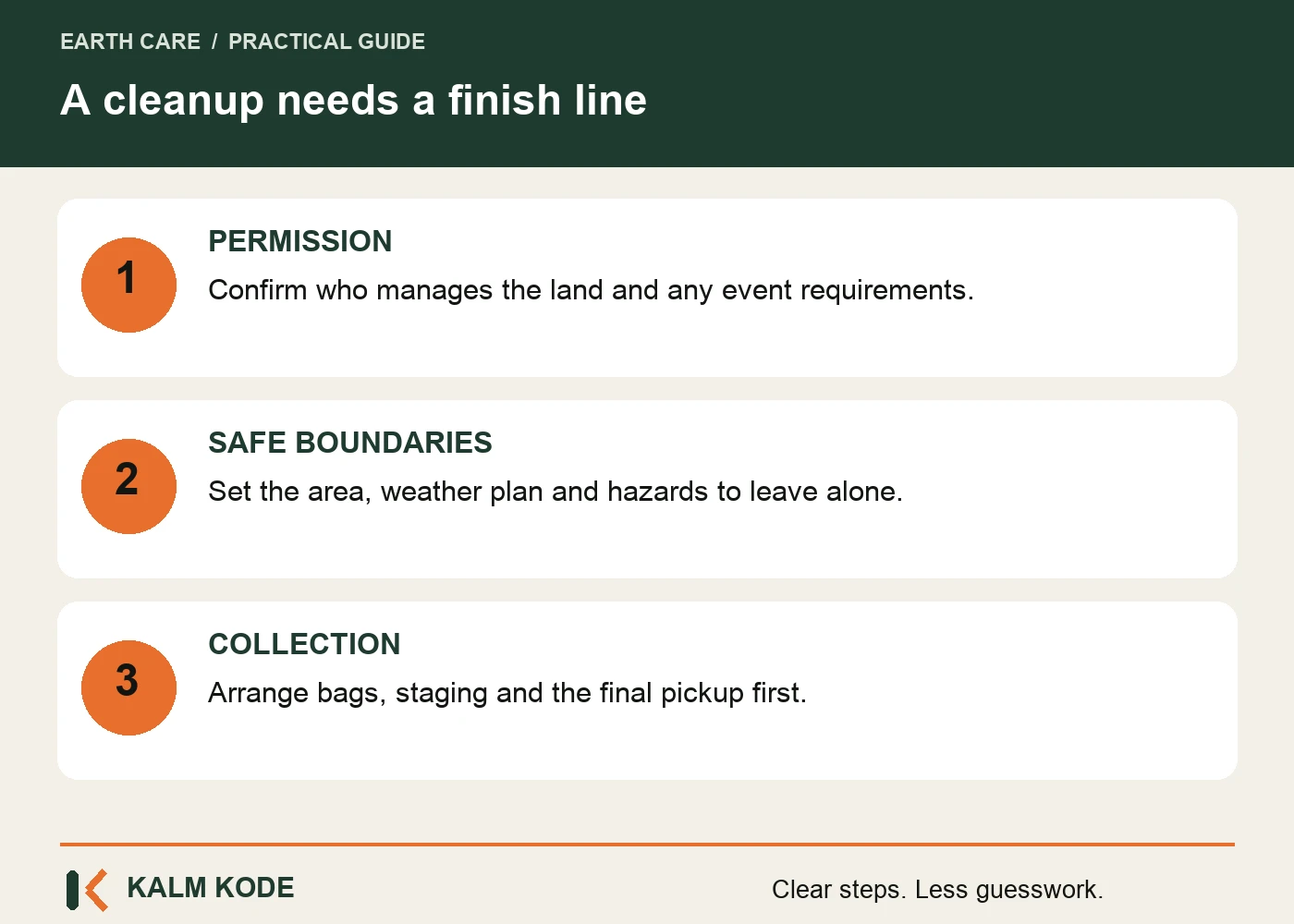
Step 1: Pick a Small, Clear Area
The most common mistake is going too big. A few people with gloves and bags can clear a block, a small park edge or a stretch of stream bank in an hour or two. A whole neighborhood takes a team and a plan.
Start with one spot people care about:
- The corner everyone complains about
- A path to a school, bus stop or rec center
- A storm drain or stream that collects trash after rain
- A playground edge or park entrance
Walk it first, ideally at the same time of day you plan to clean. Note how much trash there is, whether anything is too big or risky to handle, where bags could be staged for pickup and whether there’s traffic you’ll need to manage.
Know who owns the space
Public sidewalks and streets, parks, private lots and land along a stream can all belong to different owners. Picking up litter along a public sidewalk is generally simple. Organized work in a park, on a road shoulder or on private property can need permission. If you’re not sure who owns a spot, call your city or county before you go. In a park, contact the park’s managing agency first.
Step 2: Choose a Date and Make a Pickup Plan
Pick a date at least two to four weeks out. That gives you time to recruit people, borrow tools and, most importantly, arrange for the trash to be hauled away.
The pickup plan comes first
Filling 30 bags is easy. Getting rid of them is the part people forget. Bags left on a corner after a cleanup become the next mess, and in some places, a ticket.
Decide before the day:
- Who’s collecting the bags? A city or county program, your trash service or a volunteer with a vehicle and a legitimate place to take them.
- Where will they be staged? A spot that’s safe, visible to the collector and not blocking sidewalks, driveways or drains.
- When will they be collected? Same day is best. Know what happens if pickup is delayed.
- What won’t be collected? Furniture, tires, construction debris and hazardous items usually need a separate route.
In DC: the Helping Hand program
DC’s current Helping Hand page describes a seasonal Saturday neighborhood-cleanup program with tool kits and coordinated collection. It lists a $20 refundable deposit for a kit and directs residents to 311 to apply. Confirm the kit contents, deposit process, notice period and return arrangements when applying rather than buying supplies on the assumption that a kit is reserved.
DPW’s official pages currently disagree about the season: the Helping Hand page says March 1 to November 1, while its Office of the Clean City page says March 1 to October 1. As of November 12, 2026, both listed windows have ended. Call 311 to confirm the next operating window and ask whether an alternative collection arrangement is available. An old notice saying applications were closed until March 2024 is not reliable evidence of today’s status.
Before recruiting a crew around this program, get the actual collection instructions: the approved location, accepted material, permitted bags or bundles, pickup date and what to do if the truck does not arrive. Do not use an old 1 p.m. deadline, branch-size limit or number of staging points as a current promise. The arrangements confirmed for your event should control the day’s plan.
In Prince George’s County: Adopt-a-Road and county programs
Prince George’s County’s Department of Public Works and Transportation runs an Adopt-a-Road or Median program. The county says it’s a collaboration with civic or business organizations, that “four clean-up activities are required each year” and that there are “no fees involved, just your time.” To start, call the Adopt-A-Road Coordinator at 301-499-8502 for an informational packet and application, which outlines the requirements and procedures.
If you’re cleaning up a single spot rather than adopting a road, contact the county or your municipality before the day to ask how bags can be collected. If your home gets county-contracted trash collection, our bulky trash guide explains how bulky items work on your trash day. Many towns in the county, such as Greenbelt or Hyattsville, run their own trash service and have their own rules.
The county also runs a Comprehensive Community Cleanup Program for some unincorporated communities, working with civic and homeowners associations. During a scheduled two-week cleanup, the county lists services including bulky trash collection, roadside litter collection, storm drain work and code surveys. If your community is scheduled, the county says you’ll hear about it through a flyer from your association or your local newsletter.
Join a bigger cleanup
You don’t have to start from scratch. The Alice Ferguson Foundation has run the Potomac River Watershed Cleanup since 1989. The foundation says it started as a small shoreline cleanup at Piscataway National Park and now covers the whole Potomac watershed, with more than 150,000 volunteers keeping over 8 million pounds of trash out of the river over three decades. You can join an existing site through its Find a Cleanup page or register your own site through its Lead a Cleanup page. A registered site can be as small as your own stream or neighborhood.
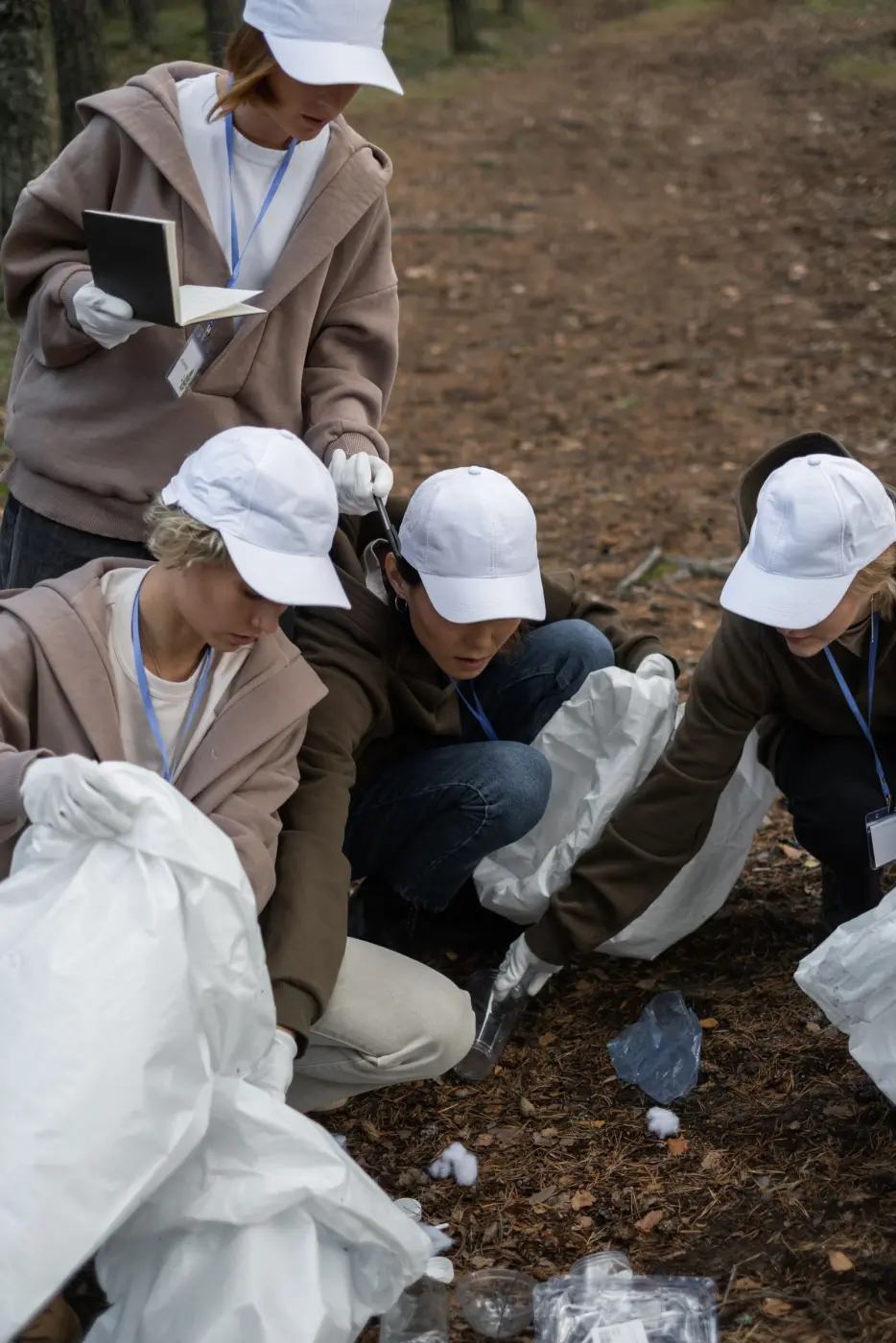
Step 3: Recruit Your Crew
Five committed people do more than twenty who don’t show up. Start small and personal.
- Ask directly. A text or a knock on the door works better than a general post.
- Use the groups you already have: your block, building, civic association, church, school, scout troop or workplace.
- Post with specifics: date, start and end time, meeting spot, what to wear and what you’ll provide.
- Ask people to sign up, even informally, so you know how many gloves and bags to bring.
- Plan for kids. Children can be great helpers with close supervision, but keep them away from traffic, water edges, glass and anything sharp.
Write a simple flyer or post
Keep it to the essentials:
Neighborhood Cleanup: Saturday, [date], 9 to 11 am
Meet at [spot]. Gloves, bags and grabbers provided. Wear closed-toe shoes. Kids welcome with an adult. Questions: [contact].
Give everyone a job
Not everyone can bend, lift or walk a long stretch, and that’s fine. A good cleanup has roles for every ability:
- Check-in host: greets people, hands out gloves and keeps the sign-in sheet.
- Water and snacks: keeps the table stocked and checks on people in the heat.
- Bag runner: carries full bags to the staging spot so pickers can keep going.
- Photographer: takes before-and-after photos and counts bags.
- Spotter: walks the area, flags anything risky and points teams to the worst spots.
- Pickers: the people with grabbers and gloves.
Giving someone a specific role makes them more likely to show up, and it makes the day run smoother.
Bringing a group: schools, churches and workplaces
Groups make great cleanup crews, and many need volunteer hours. A few extra steps help:
- Name one leader for the group who handles sign-ups and communication.
- Check the group’s own rules. Schools and youth programs often need permission slips, a set adult-to-child ratio and their own safety policies.
- Confirm hours paperwork ahead of time if students need service-hour forms signed.
- Keep teams small, with an adult in each team when kids are involved.
- Plan transportation if you’re meeting somewhere other than where you clean.
Step 4: Gather Tools and Supplies
If you’re using DC’s Helping Hand program, it provides rakes, brooms, shovels and bags. Otherwise, gather what you need ahead of time.
Basics:
- Heavy work gloves for everyone, in a few sizes
- Trash bags, plus a separate color or bag for recycling if you’ll sort
- Litter grabbers (reachers), which keep hands away from sharp and dirty items
- The containers and equipment specified by your organizer for ordinary litter; leave sharps to the approved trained response
- Water and a few snacks
- A first-aid kit
- Hand sanitizer or wipes
Helpful extras:
- Bright safety vests if you’re near traffic
- Rakes and brooms for leaves and grit
- Sunscreen and bug spray in warm weather
- A phone with emergency numbers ready
- A sign-in sheet for names and contact info, if your program requires it
Ask local businesses or your civic association to donate supplies. Many hardware stores and groceries are happy to help a block cleanup.
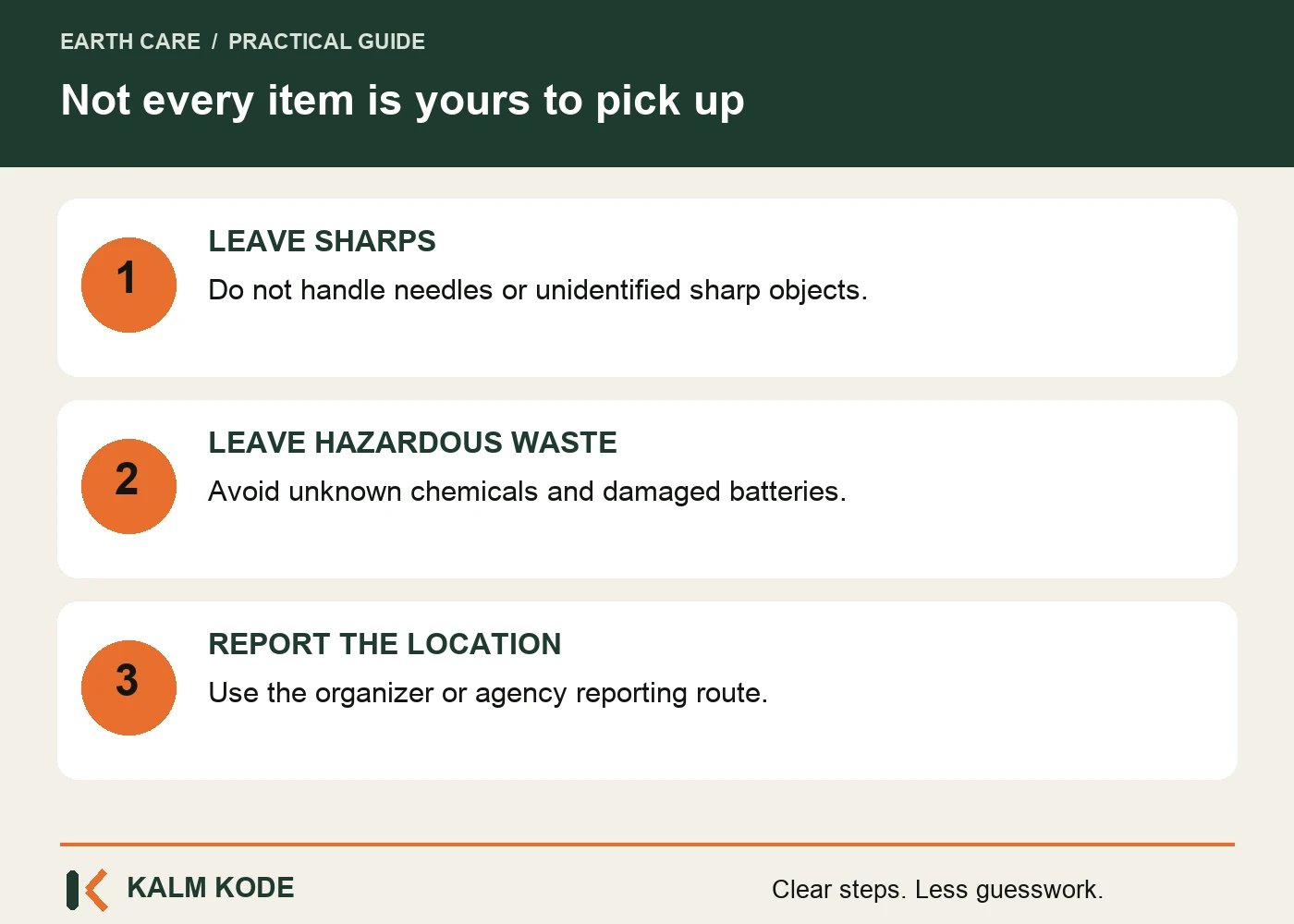
Step 5: Brief Everyone on Safety
Start every cleanup with a five-minute safety talk. It explains boundaries, reporting and the hazards volunteers should avoid. It cannot make every item safe to handle.
Don’t pick up
- Needles and syringes. Don’t touch them. Mark the spot, keep people away and report it to your local government or the police non-emergency line.
- Anything that might be hazardous: containers of unknown liquids, chemicals, car batteries, propane tanks or anything leaking or smelling strongly.
- Large or heavy items: furniture, tires, appliances and construction debris. These usually aren’t collected with cleanup bags and need a separate route.
- Dead animals. Report them to your city or county.
- Anything in or near deep or fast water, or in traffic.
Do
- Wear suitable gloves for the approved work. No bare-hand pickup; gloves and grabbers do not make needles, broken glass or unknown sharp objects safe.
- Wear closed-toe shoes and long pants if there’s brush.
- Stay out of traffic. Follow the agency’s approved work-zone rules. A bright vest does not make an unprotected road shoulder safe for volunteers.
- Lift with your legs and don’t overfill bags. A bag you can’t lift easily is too heavy.
- Work in pairs, especially along streams or wooded areas.
- Take breaks and drink water, especially in summer.
- Wash hands before eating or drinking.
If anyone finds something that worries them, they stop, mark it and tell the organizer. No one should feel pressure to pick up something they’re unsure about.
Plan around the weather
Mild mornings in spring and fall are the easiest time for a cleanup. In summer, start early and keep it short, with plenty of water and shade. In winter, watch for ice and early darkness. After heavy rain, stream banks get slippery and water rises fast, so keep everyone back from the edge. Pick a rain date when you announce the cleanup, and decide the night before how you’ll let people know if it’s moved.
The night-before checklist
- Pickup confirmed, with the time and the exact staging spot
- Tools, gloves, bags and grabbers counted and packed
- Water, snacks, first-aid kit and sanitizer packed
- Sign-in sheet and a pen
- Rain decision made, and volunteers told if the plan changed
- Emergency numbers saved in your phone
- A short list of who’s doing which role
- A reminder text to everyone who signed up, with the meeting spot and start time
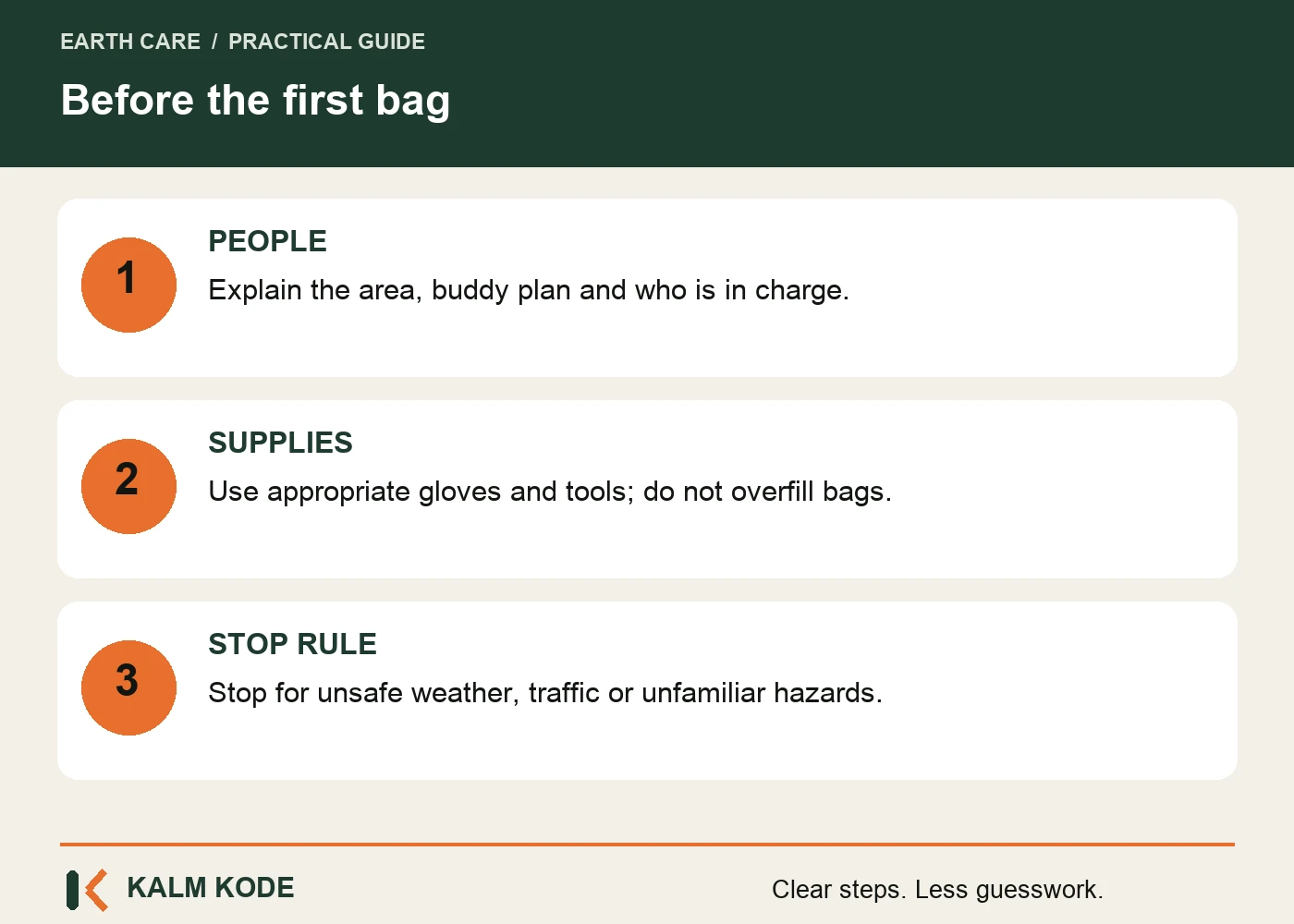
Step 6: Run the Day
A simple run-of-show keeps things moving.
- Arrive early. Set up a check-in spot with supplies, water and the sign-in sheet.
- Welcome and safety talk. Five minutes. Point out boundaries and the bag staging spot.
- Split into small teams. Give each team a defined section and clear stopping boundaries, without a bag-count target that encourages rushing.
- Work within the agreed time and conditions. Set breaks and stop early for heat, weather, fatigue or an unexpected hazard. Finishing the area is less important than safe participation.
- Stage the bags. Tie them tightly and place them at the agreed pickup point, not in the road or on someone’s lawn.
- Count and photograph. Bags filled, any big items reported and before-and-after shots.
- Collect tools and thank everyone. Return borrowed kits promptly so deposits come back.
Sort recycling if you can
If your program or collector allows it, put cans and bottles in a separate bag. Ask your collector first. Mixed or dirty recycling can end up as trash anyway, so only sort if it’ll be handled as recycling.
Step 7: Report What You Couldn’t Pick Up
A cleanup usually turns up things that need a city or county response: illegal dumping, a pile of tires, a broken streetlight, a clogged storm drain.
- In DC: use 311 by phone, online at 311.dc.gov or in the app.
- In Prince George’s County: use PGC311 by phone, online or in the app.
Include the exact location, a photo and a short description. Reporting turns one cleanup into lasting fixes.
Step 8: Share It and Keep It Going
People love a before-and-after photo. Share yours in neighborhood groups, with your civic association and with the people who helped. Tag the program that helped you.
Then think about what’s next:
- Make it regular. Once a season is manageable for most groups. Prince George’s County’s Adopt-a-Road program asks for four cleanups a year.
- Fix the source. If the same corner fills up every week, ask why. A missing public trash can, a broken dumpster lid or illegal dumping may be the real problem, and that’s a 311 report.
- Add one more spot each time.
- Join a bigger day, like the Potomac River Watershed Cleanup, so your crew is part of something regional.
Keep a Simple Record
You don’t need a spreadsheet, but a short record after each cleanup helps you improve and helps you ask for support later. Note:
- The date, the area and how many people came
- How many bags you filled, and whether you sorted recycling
- What you reported, and whether it was fixed
- What went well and what you’d change
- Before-and-after photos
Over a few cleanups, that record shows patterns. Maybe the same corner always fills up after the weekend, or one alley gets dumped on after every move-out season. That’s useful when you ask your city, county or civic association for a trash can, better lighting or enforcement. It’s also useful if you apply to a program like Adopt-a-Road, or want to register a site in a regional cleanup.
A Worked Example
Here’s a hypothetical. Say a few neighbors in a DC rowhouse block are tired of the litter along the alley and a nearby bus stop.
- Four weeks out: One neighbor walks the alley and the bus stop, notes a few bags of loose trash, a pile of bottles and an old mattress. She checks whether DPW’s Helping Hand applications are open.
- Three weeks out: The application goes in, more than two weeks before the date, with her as the contact. She picks one staging point at the end of the alley.
- Two weeks out: She texts neighbors, posts in the block chat and gets eight sign-ups, including two kids with their parents.
- Cleanup day: The crew meets at 9 am, gets a five-minute safety talk and fills 14 bags by 10:30. One volunteer spots a syringe. He doesn’t touch it; the group marks the spot and reports it.
- After: Bags go to the collection point at the time confirmed with the agency; the group checks that collection occurred and follows the agreed reporting plan if it did not. The mattress isn’t part of the cleanup; a neighbor reports it through 311 for bulk collection. Tools go back according to the loan agreement, and the organizer confirms any deposit refund with the program.
- Next time: The group plans a spring cleanup and adds the corner by the rec center.
Common Mistakes
No pickup plan. The biggest one. Arrange collection before the day, or your bags become the next eyesore.
Too big an area. Clear one spot well rather than a whole neighborhood halfway.
Skipping the safety talk. A briefing helps people recognize boundaries and know how to report needles and hazards; it is not a guarantee against injury.
Picking up what you shouldn’t. Needles, chemicals, tires and furniture need separate handling. Report them.
Bags in the wrong place. Blocking sidewalks, drains or driveways creates new problems. Use the agreed staging spot.
Forgetting to thank people. A thank-you and a photo make people come back next time.
Why It Matters
Litter can move with rain and wind rather than stay where it falls. Keeping it out of drains and waterways is one reason to organize a cleanup. Do not enter a drain or reach into water to retrieve it; report locations that require an agency response.
It also changes how a place feels. A corner that’s cared for tends to stay cared for. Neighbors who’ve worked side by side for an hour know each other a little better. That’s community help in its simplest form.
This guide is part of Earth Care & Community Help, where Kalm Kode helps neighbors keep good things in use and keep their streets clean. See also Before You Throw It Away.
Make the plan usable for every volunteer
Before the day, describe the actual terrain and tasks rather than advertising a cleanup as suitable for everyone without checking. A paved meeting point can still lead to a steep bank, uneven ground or a long walk. Tell people about distance, surfaces, toilets, seating, shade and transport options when those are known. Someone who cannot safely pick litter may still help with registration, supply tracking or follow-up from the meeting point.
Give volunteers a clear way to opt out of a task without explaining a medical condition. Do not ask a person to lift a heavy bag simply because they were assigned as a bag runner. Redistribute work or leave the item for the approved collection service. If you need equipment or trained personnel that the group does not have, reduce the scope instead of improvising.
Keep contact details private. Collect only what the organizer needs for arrangements or required reporting, say who will see the list and do not publish phone numbers in a recap. Ask before photographing identifiable volunteers, and follow the group’s permission rules for children. A photograph of the cleared area or safely staged bags can document the work without identifying anyone.
Finally, distinguish results from plans in the recap. Say how many bags were actually collected, not how many you hoped to fill. Note any pickup still pending and any hazards reported, without celebrating those as resolved. A short honest record is more useful to the next organizer than a dramatic claim about an area the team did not inspect.
About this guide
Written and edited for Kalm Kode by King. This is a practical guide compiled from the linked public sources, not a claim that Kalm Kode operates these programs or has a partnership with them. Provider rules can change; use the official contact or event page to confirm the details for your own item, address or visit.
Frequently asked questions
Does DC lend tools for neighborhood cleanups?
DC’s Helping Hand program supports seasonal Saturday cleanups with tool loans and coordinated collection, with a listed $20 refundable deposit. Its official pages disagree on the season end date. Call 311 for the next operating window and requirements before planning around it.
How do I adopt a road in Prince George’s County?
Call the county’s Adopt-A-Road Coordinator at 301-499-8502 for a packet and application. The county says four cleanups a year are required and there are no fees.
What is the Potomac River Watershed Cleanup?
An annual volunteer cleanup run by the Alice Ferguson Foundation since 1989 across the Potomac watershed. You can join a site or register your own on the foundation’s site.
What shouldn’t volunteers pick up?
Needles and syringes, unknown chemicals or containers, car batteries, propane tanks, large items like tires and furniture, and dead animals. Mark them, keep people away and report them.
What do I do with the trash bags afterward?
Arrange pickup before the cleanup. Use the collection point your program or collector agrees to, and don’t leave bags blocking sidewalks, drains or driveways.
Do I need permission for a neighborhood cleanup?
It depends on who owns or manages the land and what you plan to do. Ask the park, road authority, property owner or local government before organizing activity on their land, especially near traffic or water.
Can volunteers collect broken glass if they wear gloves?
Do not assume gloves provide puncture protection. Follow the organizer’s approved sharp-item protocol and leave unidentified sharps for trained personnel. Keep people away and report the location.
Should we set a target number of trash bags?
Use a defined area, safe handling and an agreed collection plan as the goals. Avoid a target that encourages rushing, heavy bags or picking up hazardous material.
Sources
- DPW Helping Hand Neighborhood Cleanup (DC Department of Public Works)
- Adopt-a-Road or Median (Prince George’s County DPW&T)
- Comprehensive Community Cleanup Program (Prince George’s County)
- Potomac River Watershed Cleanup and Lead a Cleanup (Alice Ferguson Foundation)
- Bulk Trash Collection (DC Department of Public Works)