
How to Dispose of Cooking Oil Without Clogging Your Drain

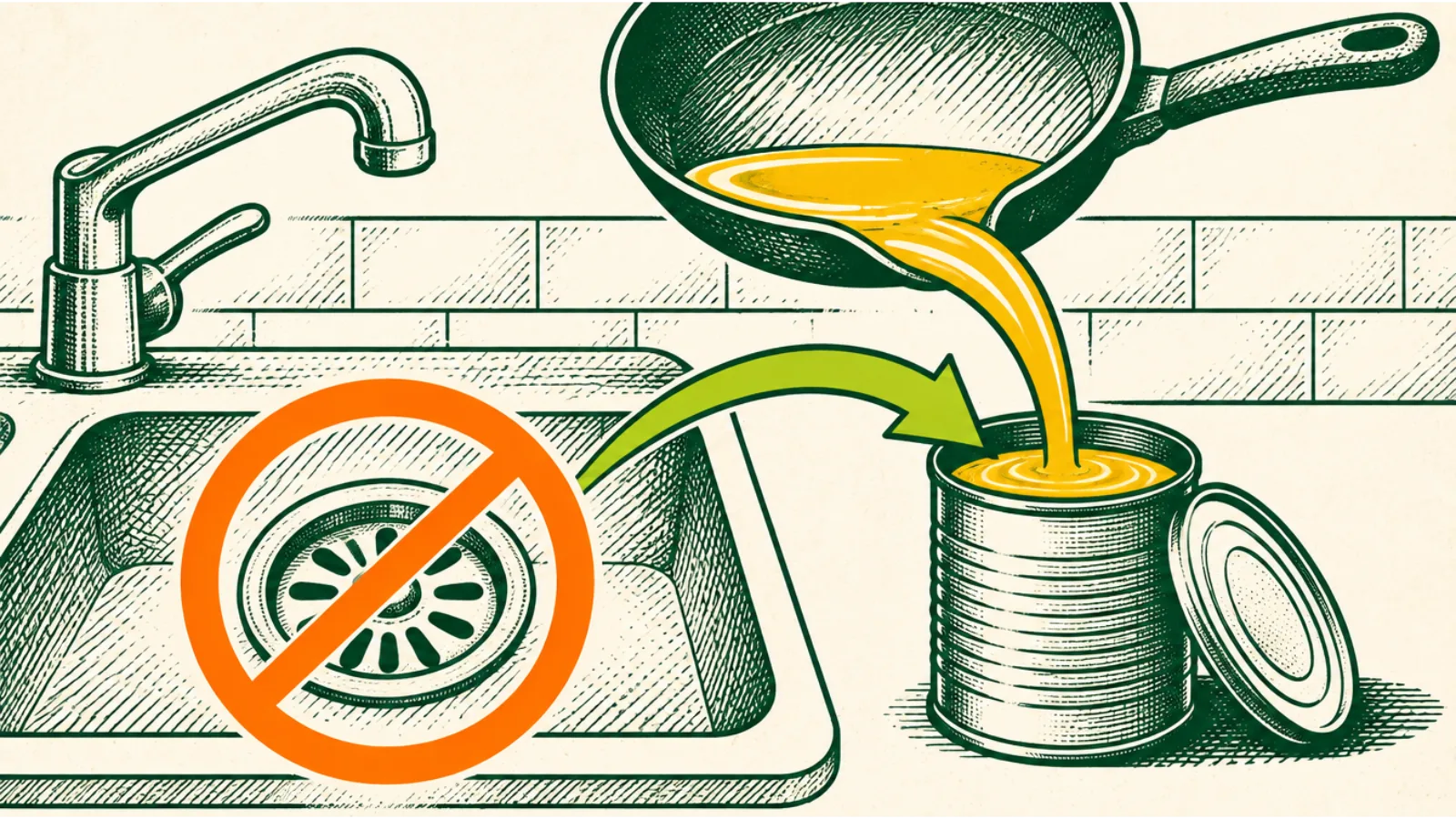
Short answer: never pour cooking oil or grease down the sink, toilet or garbage disposal. For small amounts, let it cool, pour or scrape it into a container with a lid, and put the sealed container in the trash. For big batches, like deep-fryer or turkey-fryer oil, reuse it if it’s still good or take it to a drop-off that accepts used cooking oil. Rules for drop-off vary by county, so check yours.
In Prince George’s County? The county lists used cooking oil drop-off at its Brown Station Road site. In DC, small amounts go in the trash, sealed, and DPW accepts cooking oil at its special waste collection events (details below).
Last checked November 10, 2026, against guidance from WSSC Water, DC Water, Prince George’s County and other public sources (listed at the bottom). Kalm Kode is an independent guide. Your local utility and waste agency set the rules where you live.
The 30-second version
- Not down the drain. Oil and grease cool and harden inside pipes, and that causes backups and sewer overflows.
- Small amounts go in the trash, sealed. Cool it, put it in a can or jar with a lid, and throw the closed container away. WSSC Water calls it “Can it. Cool it. Toss it.”
- Wipe the pan first. Scrape and wipe greasy pans with a paper towel before washing, and toss the towel.
- Big batches: reuse or drop off. Strain good frying oil and reuse it. When it’s done, take larger amounts to a site that accepts used cooking oil.
- Check your county. Some drop-off sites take cooking oil and some don’t.
Why the drain is the one place it can’t go
Liquid oil looks harmless going down the sink. The trouble starts after it’s out of sight. WSSC Water, which serves Prince George’s and Montgomery counties, says fats and oils build up inside pipes and restrict wastewater flow, leading to sewer blockages, backups into homes and overflowing manholes. It calls fats, oils and grease “one of the most frequent causes of sewer clogs.”
DC Water says the same thing in plainer words: “Food and grease should never go down the sink.” New York City’s 311 service warns that grease flushed down drains and toilets can clog residential sewer pipes and lead to flooding, sewer backups and high repair costs.
Two myths keep people pouring:
- “I’ll run hot water and dish soap after it.” Clemson University’s Home and Garden Information Center says hot water and soap don’t remove grease; it can re-form and harden further down the pipes.
- “The garbage disposal handles it.” A disposal chops food. It doesn’t change what grease does once it cools in the pipe below.
If the pipe that clogs is the one under your house, the repair bill is yours. If it’s the sewer main, it’s your neighbors’ problem too.
First, decide: reuse, trash or drop off
Before you reach for a container, ask three questions:
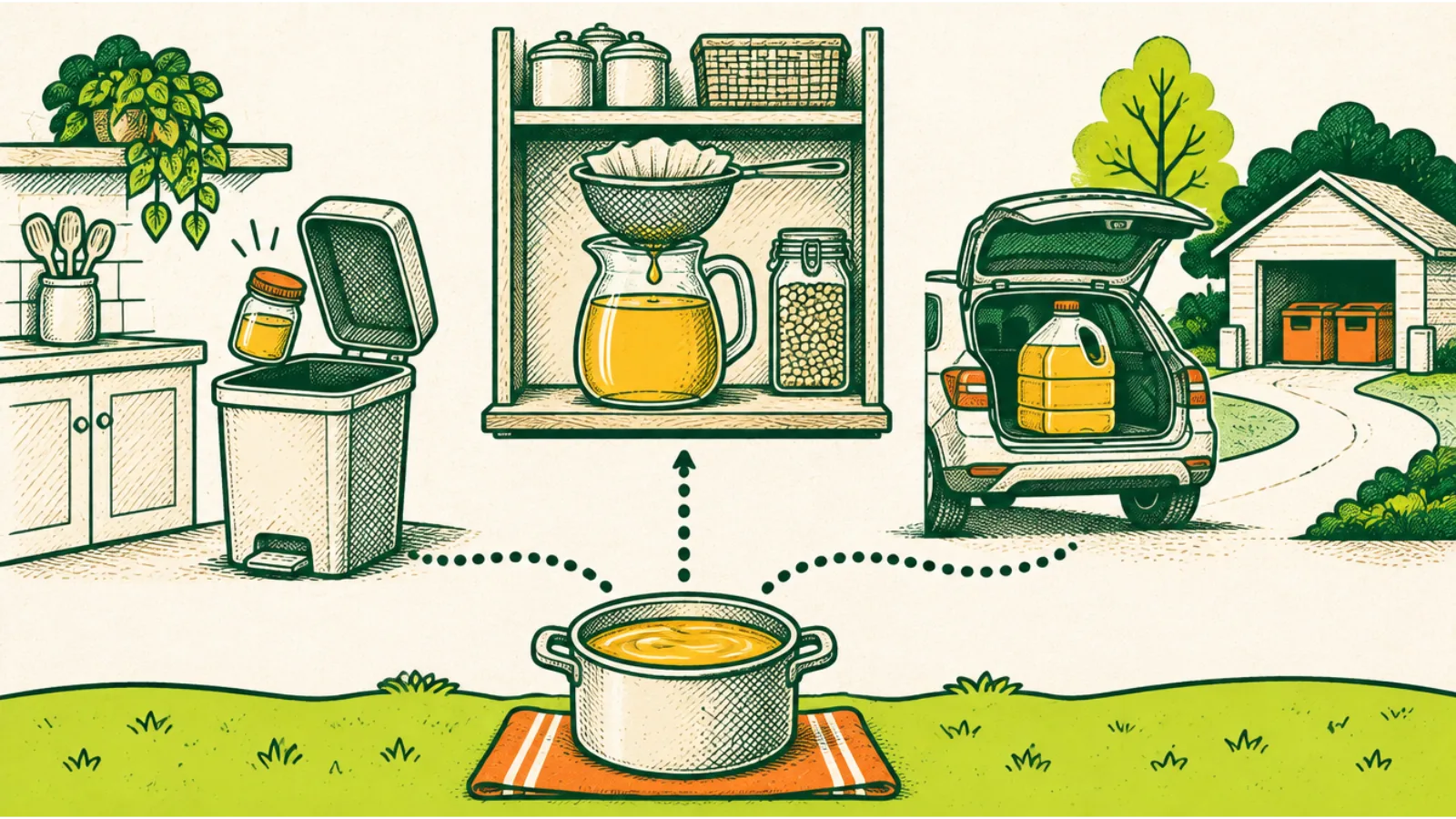
- How much is it? A few tablespoons of bacon fat is a trash job. A pot of frying oil or a turkey fryer’s worth is a reuse or drop-off job.
- Is it still good? Oil used once for fries or vegetables often has more life in it. Dark, smelly, foamy oil is done.
- What does your county accept? If a nearby site takes used cooking oil, that’s the best home for big batches.
Small amounts: cool it, can it, toss it
This is the everyday answer for pan drippings, a little leftover frying oil and grease from cooking meat.
- Let it cool. Never pour hot oil into the trash or a plastic container. Leave it in the pan until it’s safe to handle.
- Pour or scrape it into a container with a lid. A metal can, a glass jar or a sturdy jar with a screw-top lid works. DC Water suggests “a secure, sealable container like a peanut butter jar.”
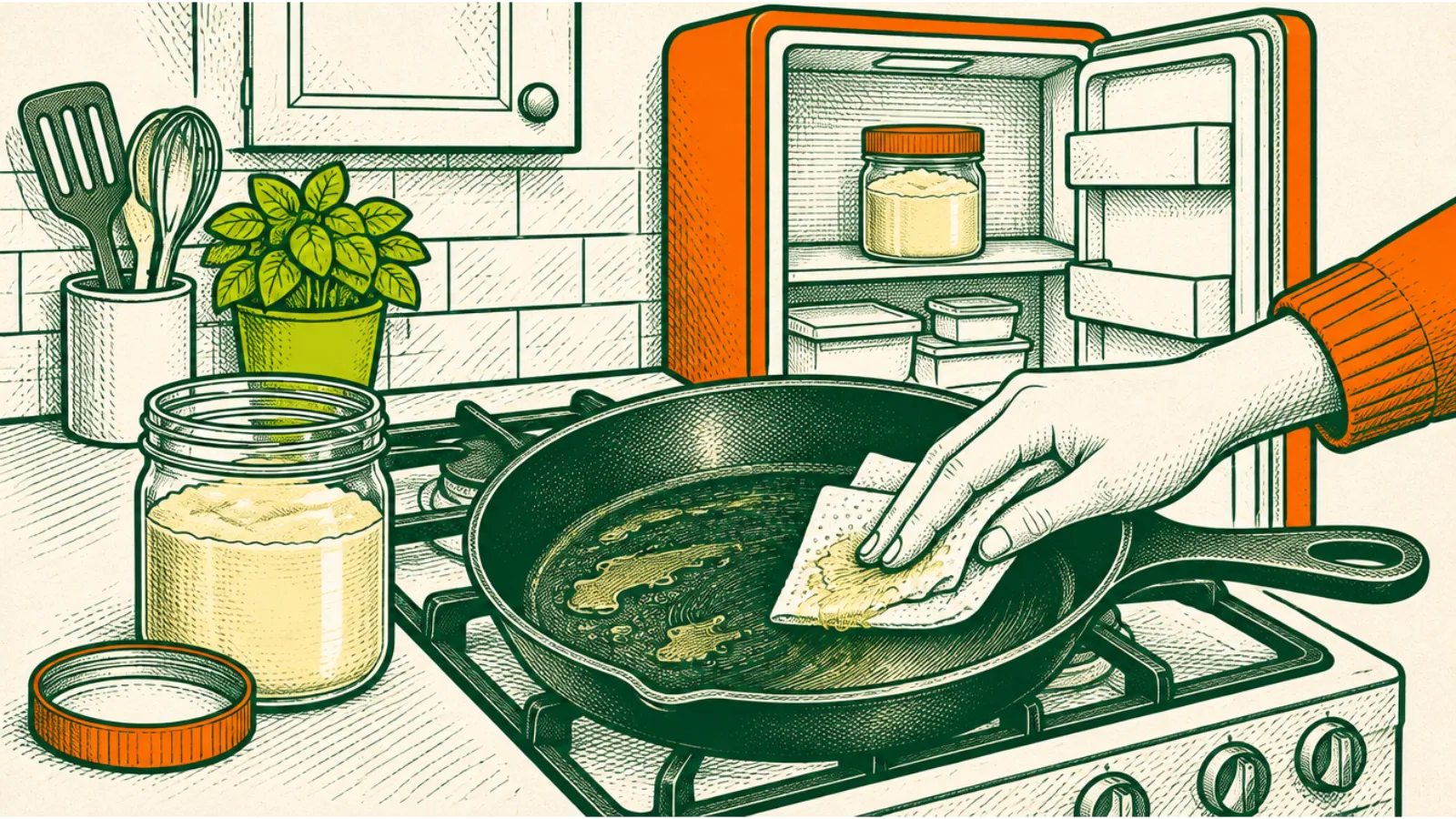
- Wipe the pan. Use a paper towel to soak up what’s left before you wash it. Clemson’s guide suggests the same.
- Seal it and chill it if you can. WSSC Water suggests putting the can in the refrigerator so the grease firms up.
- Toss the closed container in the trash. WSSC Water says to make sure it’s covered so melted grease can’t leak in the bin.
Keep one “grease jar” under the sink or in the fridge and add to it until it’s full. It saves you finding a new container every time you cook bacon.
Liquid oils that don’t harden
Bacon fat and beef drippings turn solid as they cool. Olive, canola, vegetable and peanut oil usually stay liquid, even in the fridge. That changes the method a little:
- Use a container that seals tightly. A screw-top jar or the oil’s original bottle is better than a can with a loose lid.
- Don’t rely on the fridge to firm it up. Liquid oil will still be liquid. A tight lid is what keeps it from leaking.
- Soak up small amounts. For a tablespoon or two left in a pan, a paper towel is enough. Toss the towel.
- Bag it. Put the sealed container in a small bag before it goes in the bin, so a cracked lid doesn’t turn into a greasy trash can.
Bacon grease and pan drippings
Bacon grease is the classic case, and the easiest. Let it cool in the pan until it’s warm but not hot, pour it into your grease jar, and wipe the pan with a paper towel. Once it’s solid, it’s simple to scrape out.
Some people save bacon fat to cook with. If you do, strain it into a clean jar and keep it in the fridge. When you’re done with it, it goes in the trash in its sealed jar, not down the sink.
Big batches: deep-fryer and turkey-fryer oil
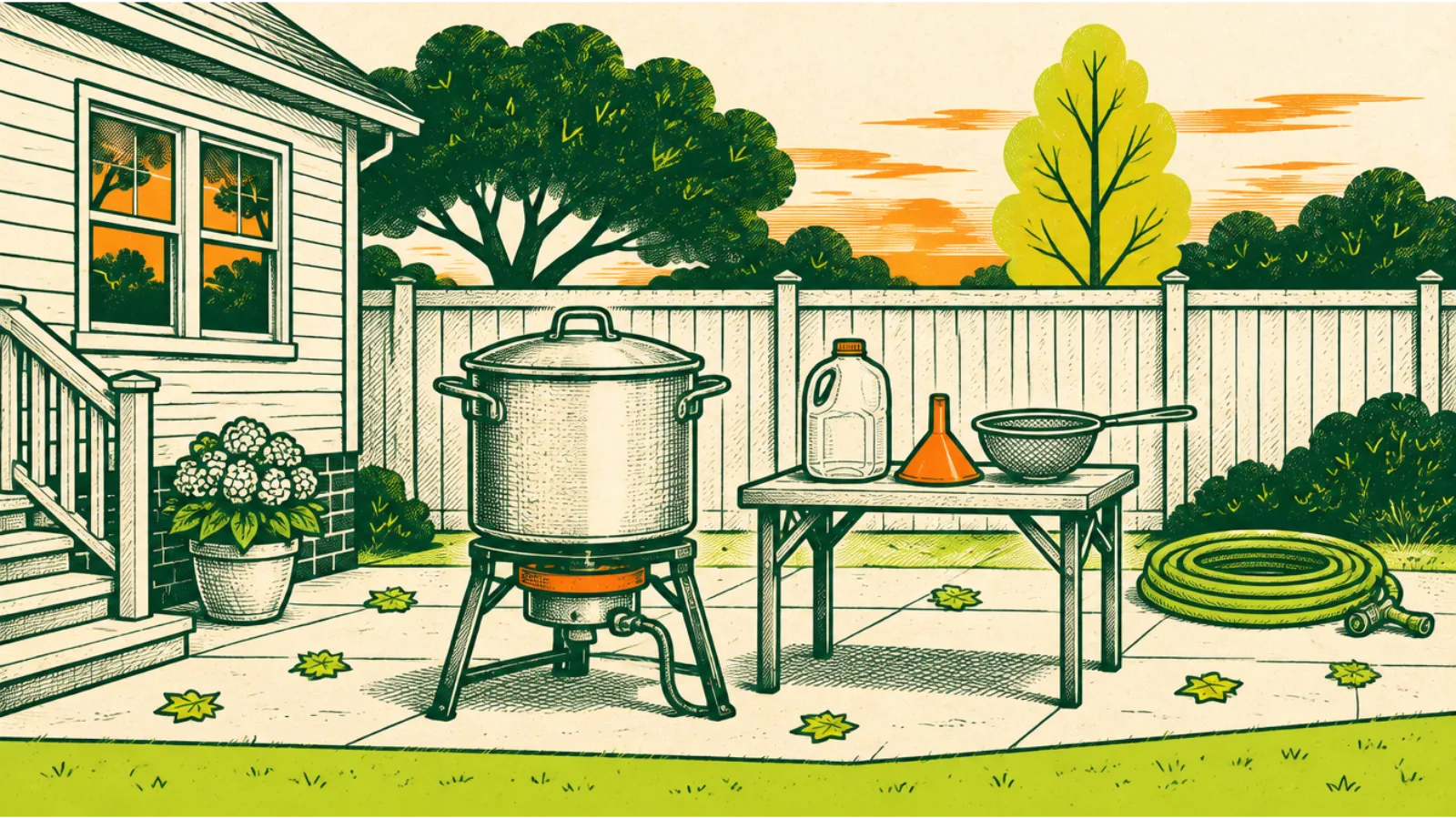
November is the season for turkey fryers, and they use a lot of oil, often gallons. That’s too much for a jar in the trash. Here’s the order to work through:
- Let it cool completely. A big pot of oil holds heat for hours. Leave it covered and out of reach of kids and pets, often overnight, before you move it.
- Strain it if it’s still good. Pour it through a fine strainer or cheesecloth back into its original jug, label it, and store it for the next fry.
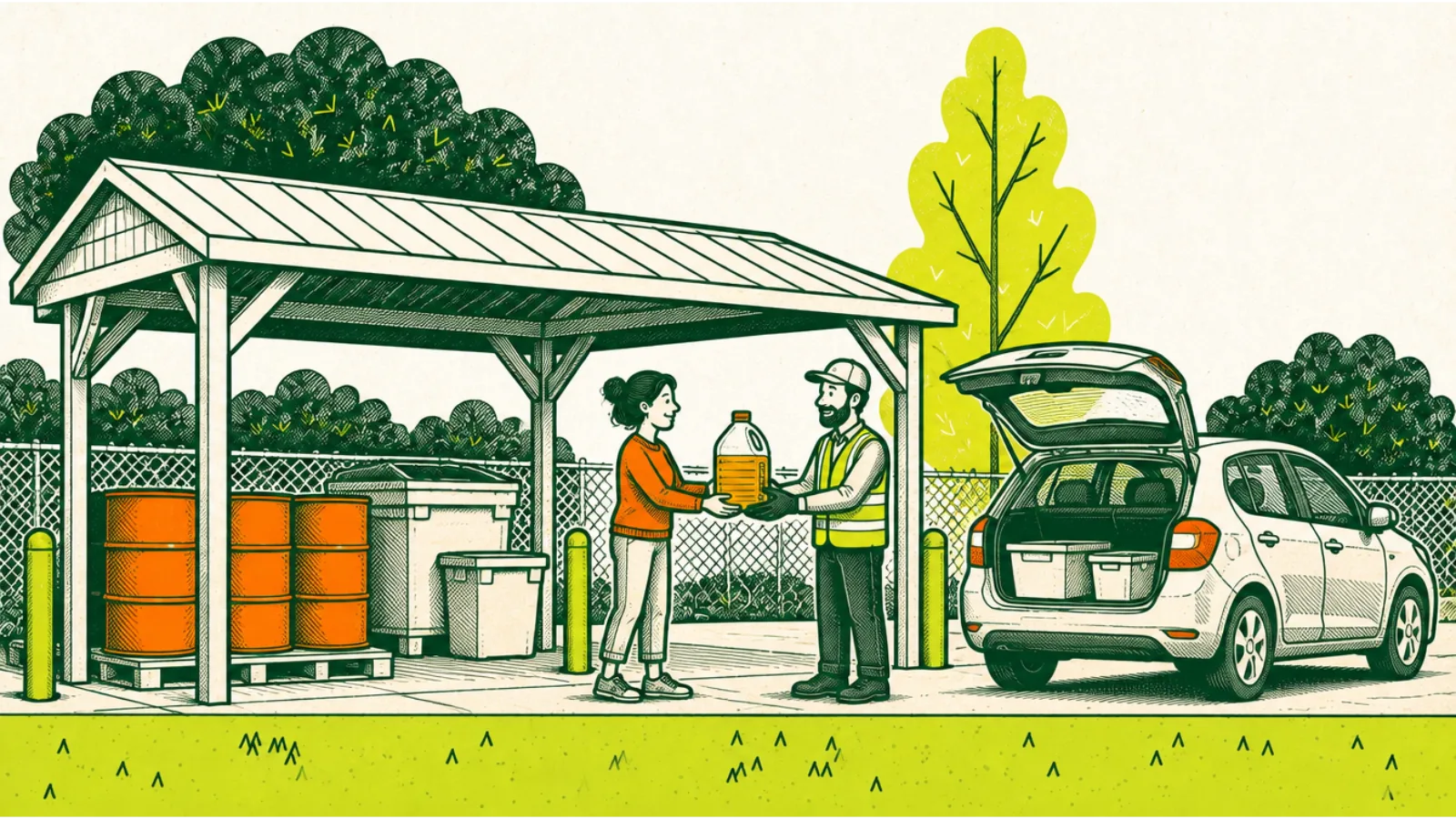
- If it’s done, find a drop-off. Many counties accept used cooking oil at a household hazardous waste site or a drop-off center. Pour the cooled oil into its original jug or another container with a tight lid.
- Only if there’s no drop-off, follow your local waste agency’s guidance for larger amounts. Don’t pour it outside, in a storm drain or in the yard.
Never pour hot oil into a plastic jug or the trash, and never add water to hot oil. Let it cool first, every time.
Reusing frying oil
Frying oil doesn’t have to be one-and-done. America’s Test Kitchen tested reuse and found:
- For breaded and battered foods like fried chicken, oil held up for about three or four uses.
- For cleaner-frying foods like potato chips, it lasted at least eight batches.
Their testers strained the oil after each fry. The signs it’s finished were the ones you’d notice yourself: the oil got darker and smellier with each use, and eventually the food started tasting greasy.
To get the most out of it:
- Strain out crumbs and bits after each use.
- Store it covered, away from heat and light.
- Use it for similar foods; fish oil makes fish-flavored fries.
- When it’s dark, smells off, foams or smokes early, it’s done. Dispose of it.
Recycling: where used cooking oil goes
Used cooking oil isn’t garbage everywhere. Collected oil can be recycled, and some local programs take it from residents. But this is where rules really vary:
- Prince George’s County lists used cooking oil drop-off at its Brown Station Road site in Upper Marlboro.
- King County, Washington, says cooking oil, fats and grease are not accepted at its hazardous waste collection sites.
Same oil, opposite answers. That’s why “check your county” isn’t filler. Search your county’s waste or recycling page for “cooking oil,” or use its “what do I do with” lookup if it has one. If your county takes it, carry the cooled oil in a sealed container, and don’t mix in anything else.
Don’t put cooking oil in your recycling cart. Curbside recycling is for clean containers, not the oil in them.
A holiday cooking plan

Big holiday meals mean more grease than usual, and more chances for it to end up in the drain. A little planning before the cooking starts keeps it out of yours:
- Set out two containers before you start: a jar for grease and a small bag or bin for greasy paper towels.
- Roasting pan drippings: pour off what you want for gravy, let the rest cool in the pan, then scrape it into the jar.
- Gravy and leftover sauces: small amounts can be scraped into the trash with food scraps. Don’t rinse a pot of gravy down the sink.
- Wipe every greasy pan and platter with a paper towel before it goes in the sink or dishwasher.
- Fried turkey or fish fry: decide before the party where the oil is going, whether that’s a stored jug for reuse or a drop-off later in the week.
- Guests helping clean up? Tell them where the grease jar is. Most drain clogs start with a helpful guest at the sink.
Renters and apartment kitchens

In a building, you share the pipes. Grease poured down one kitchen sink can cause a backup in someone else’s unit or in the building’s main line. Some buildings send a reminder before the holidays for exactly this reason.
Use the same method as everyone else: cool it, seal it, trash it. If your building has a trash chute, bag the sealed container first so a leaking lid doesn’t coat the chute. If you notice a slow drain, report it to your building early instead of trying to flush it with boiling water.
Signs grease may already be in your pipes

You can’t see a grease clog forming, but you can sometimes notice it:
- A kitchen sink that drains more slowly over weeks
- Gurgling sounds from the drain
- A sour or stale smell from the sink
- Water backing up into the other side of a double sink
If you see these, stop pouring anything greasy, and call a licensed plumber rather than reaching for harsh chemicals. If a backup involves the sewer line outside your home, contact your water and sewer utility, like WSSC Water or DC Water.
Restaurants and businesses: different rules
Everything in this guide is about home kitchens. Restaurants, cafeterias and other food businesses fall under separate commercial grease programs. WSSC Water and DC Water both run fats, oils and grease programs for businesses, with their own requirements for equipment and used fryer oil recycling. If you run a kitchen for a business, start with your utility’s commercial page.
What not to do
- Pour it down the sink, toilet or garbage disposal.
- Rinse it away with hot water and soap.
- Pour it outside, in the yard or into a storm drain.
- Add it to a compost pile. Prince George’s County says cooking grease, fats and oils are not accepted for composting.
- Put it in the recycling cart.
- Pour hot oil into a trash bag or plastic container.
- Mix it with motor oil, paint or other chemicals for a drop-off. Keep it separate.
In Prince George’s County, Maryland
- Small amounts: use WSSC Water’s “Can it. Cool it. Toss it.” method and put the sealed container in your trash.
- Larger amounts: the county lists used cooking oil drop-off at Brown Station Road, 3501 Brown Station Road, Upper Marlboro. The county’s facilities list shows the Residential Drop-Off Convenience Center there open Monday to Saturday, 7:30 a.m. to 3:30 p.m., closed Sundays and county holidays, and says proof of county residency may be required. Don’t confuse it with the county’s Household Hazardous Waste Acceptance Site, which the county says has been closed to the public since April 15, 2024, because of construction. The county takes household hazardous waste, including cooking oil, at its mobile disposal events (8 a.m. to 1 p.m.) instead.
- Not in compost: the county says grease, fats and oils aren’t accepted for composting.
Getting rid of other things in PG County? Our free Can They Take This? tool covers 22 common household items, and our guides cover bulky trash appointments, mattresses and old TVs.
In Washington, DC
- Small amounts: DC Water’s advice is to let grease cool and harden in the pan, scrape it into a sealable container like a peanut butter jar, and throw the full container and the paper towel in the trash.
- Larger amounts: DC’s Department of Public Works lists cooking oil among the items it accepts at its Special Waste Collection Events. DPW says the events are for DC residents only, you need to register in advance (it’s free), and you should bring proof of residency, like a driver’s license, utility bill or lease. Dates and locations change from event to event, so check DPW’s current event schedule when you register. DPW says no entry is allowed after 2 p.m.
- Not down the drain: DC Water says food and grease should never go down the sink.
In Montgomery County
WSSC Water serves Montgomery County too, so the same “Can it. Cool it. Toss it.” method applies for small amounts. For larger amounts, check Montgomery County’s own recycling and waste pages for a cooking oil drop-off.
Common mistakes
- Pouring “just a little” down the drain every time
- Following it with hot water and assuming that fixes it
- Pouring warm oil into a thin plastic bag or bottle
- Using a can or jar without a lid, then finding grease in the bottom of the bin
- Moving a turkey fryer’s oil before it has fully cooled
- Bringing oil to a drop-off that doesn’t accept it
- Composting grease
Your cooking oil checklist
- Let it cool.
- Small amount? Into a sealed jar or can, then the trash.
- Pan still greasy? Wipe it with a paper towel first.
- Big batch? Strain and reuse if it’s still good.
- Done with it? Check your county for a used cooking oil drop-off.
- Carry it cooled, in a sealed container, with nothing else mixed in.
- Never the drain, the toilet, the yard or the compost.
FAQ
Can I pour cooking oil down the drain if I run hot water with it?
No. Clemson’s Home and Garden Information Center says hot water and soap don’t remove grease; it can re-form and harden further down the pipes. WSSC Water and DC Water both say to keep grease out of the drain.
Can I put cooking oil in the trash?
Small amounts, yes, if it’s cooled and sealed in a container with a lid. WSSC Water and DC Water both describe this method. For large amounts, look for a drop-off first.
What container should I use?
A metal can, glass jar or screw-top jar with a tight lid. DC Water suggests something like a peanut butter jar. Avoid pouring hot oil into thin plastic.
How do I get rid of turkey fryer oil?
Let it cool completely, often overnight. Strain and reuse it if it’s still good. If it’s done, take it in a sealed container to a site that accepts used cooking oil. Check your county first.
Can I compost cooking oil or grease?
Prince George’s County says no: cooking grease, fats and oils aren’t accepted for composting.
How many times can I reuse frying oil?
America’s Test Kitchen found about three or four uses for breaded foods, and at least eight for cleaner foods like potato chips, straining after each use. When it’s dark, smelly or makes food taste greasy, it’s done.
Where can I drop off used cooking oil in Prince George’s County?
The county lists used cooking oil drop-off at its Brown Station Road site, 3501 Brown Station Road in Upper Marlboro. The Residential Drop-Off Convenience Center there takes it Monday to Saturday, 7:30 a.m. to 3:30 p.m. The county’s separate household hazardous waste site is closed to the public; its mobile disposal events also accept cooking oil.
Does olive oil go in the trash the same way?
Yes, but it usually stays liquid, so use a container that seals tightly and bag it before it goes in the bin.
Sources
Checked November 10, 2026:
- WSSC Water: Fats, Oils and Grease
- DC Water: Protect Your Pipes
- Prince George’s County: Can I compost leftover cooking grease and oil?
- Prince George’s County: Waste, recycling and disposal facilities
- DC DPW: Household Hazardous Waste, E-cycling and Document Shredding
- DC DPW: Acceptable and prohibited special waste items
- Clemson HGIC: Kitchen fats, oils and grease
- NYC 311: Cooking grease and sewer backups
- King County: Cooking oils, fats and grease
- America’s Test Kitchen: How many times can you reuse frying oil?
Rules change and vary by place. If anything here doesn’t match what your utility or county tells you, go with them, and message us at @kalmkode so we can update this guide.