
Change of Address Checklist for Maryland and DC: Who to Tell and When

Short answer: when you move, start with USPS mail forwarding, then update the places USPS won’t: your driver’s license, voter registration, the IRS, Social Security, banks, cards, insurance and employer. In Maryland, the MVA says you must report a new address within 30 days, and it’s free to do online. In DC, DC DMV says you have 60 calendar days. Moving in from another state? Maryland gives you 60 days to get a Maryland license, title and registration, and DC gives you 60 days to register your vehicle.
This checklist puts every step in order, with the official rule behind each one. Tap “Add to my move list” on any step to build your own list on this device, check things off, and print it. No account needed.
Last checked November 10, 2026, against USPS, Maryland MVA, DC DMV, IRS and Social Security Administration pages (listed at the bottom). Kalm Kode is an independent guide. The agencies have the final word on their own rules.
My move list
Tap “Add to my move list” under any step below to build your list. It’s saved only on this device.
The 30-second version
- USPS first. File your change of address up to 90 days before you move. Online costs a $1.25 identity check. Skip lookalike sites that charge $40 or more.
- Forwarding has limits. USPS forwards most mail for 12 months, but government agencies and financial institutions don’t forward sensitive documents like driver’s licenses, bank statements and cards.
- Maryland MVA: report your new address within 30 days. Online through myMVA, no fee.
- DC DMV: report your new address within 60 calendar days. Online only if you already have a REAL ID.
- New to Maryland: license, title and registration within 60 days (30 days for a commercial driver’s license).
- New to DC: convert your license, then register your vehicle within 60 days.
- Don’t forget: IRS, Social Security, voter registration, banks, insurance, employer and utilities.
Which steps apply to your move?
Not every step applies to every move. Find your situation:
- Moving within Maryland (say, Hyattsville to Bowie): USPS change of address, then the MVA address change within 30 days. No new license is required, since the MVA mails a Change of Address card to carry with it. Update voter registration, the IRS and everyone else as usual.
- Moving within DC: USPS, then the DC DMV address change within 60 calendar days. DC DMV says it sends the change to the DC Board of Elections, and a residential parking permit is a separate request.
- Moving from DC to Maryland: USPS, then as a new Maryland resident, a Maryland driver’s license and vehicle title and registration within 60 days. Register to vote in Maryland.
- Moving from Maryland to DC: USPS, then convert your license to a DC license, then register your vehicle with DC DMV within 60 calendar days of moving in. Register to vote in DC.
- Moving from another state to either one: the same new-resident rules apply, so start gathering proof of your new address early. A lease, utility bill or bank statement at the new address can take a few weeks to arrive, which is one more reason to set up utilities and update your bank right away.
- Moving across the Maryland–DC line for work: your income taxes may change too. Ask your employer’s payroll team about withholding, and check with a tax professional about the year you move.
The timeline
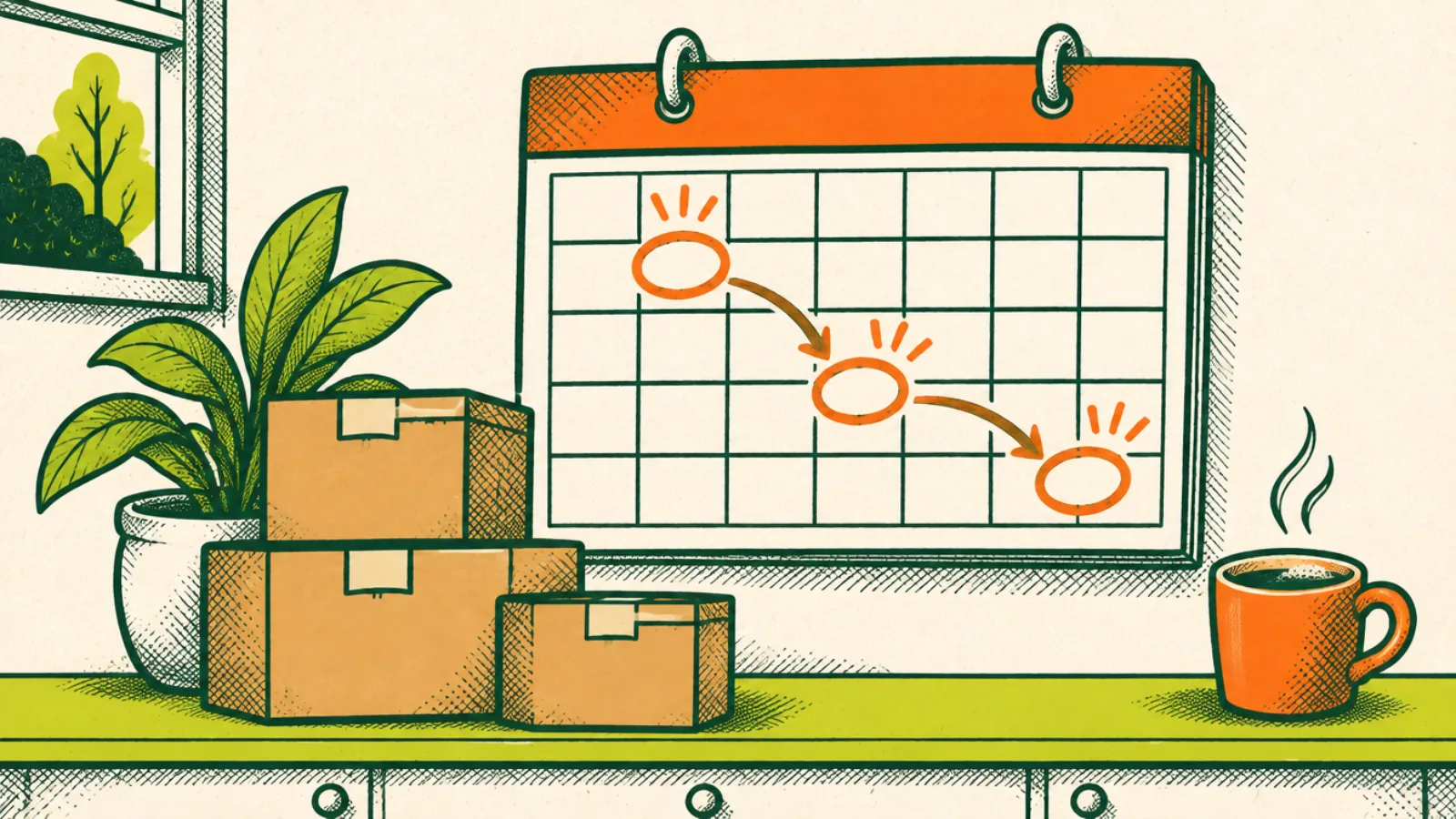
Here’s roughly when each step fits. The numbers match the steps below.
- Four to six weeks before: plan the move day, book the DC truck permit if you need one (step 18), and start using up or clearing out what you won’t take (step 17).
- Up to 90 days before: file your USPS change of address (step 1). Earlier is better, so forwarding is ready on move day.
- The week you move: start and stop utilities (step 16), and update banks, cards and insurance (steps 11 to 13).
- Within 30 days: the Maryland MVA address change, which has a legal deadline (step 4). This is also a good window for the IRS, Social Security and voter registration (steps 8 to 10). If you get SSI, the deadline is tighter: see step 10.
- Within 60 days: DC DMV address change (step 6), and for new residents, Maryland license and registration or DC vehicle registration (steps 5 and 7).
- Within the first few months: catch everything else as mail arrives at the new address with a forwarding label.
Mail first
1. File your change of address with USPS
When: up to 90 days before you move, and up to 30 days after.
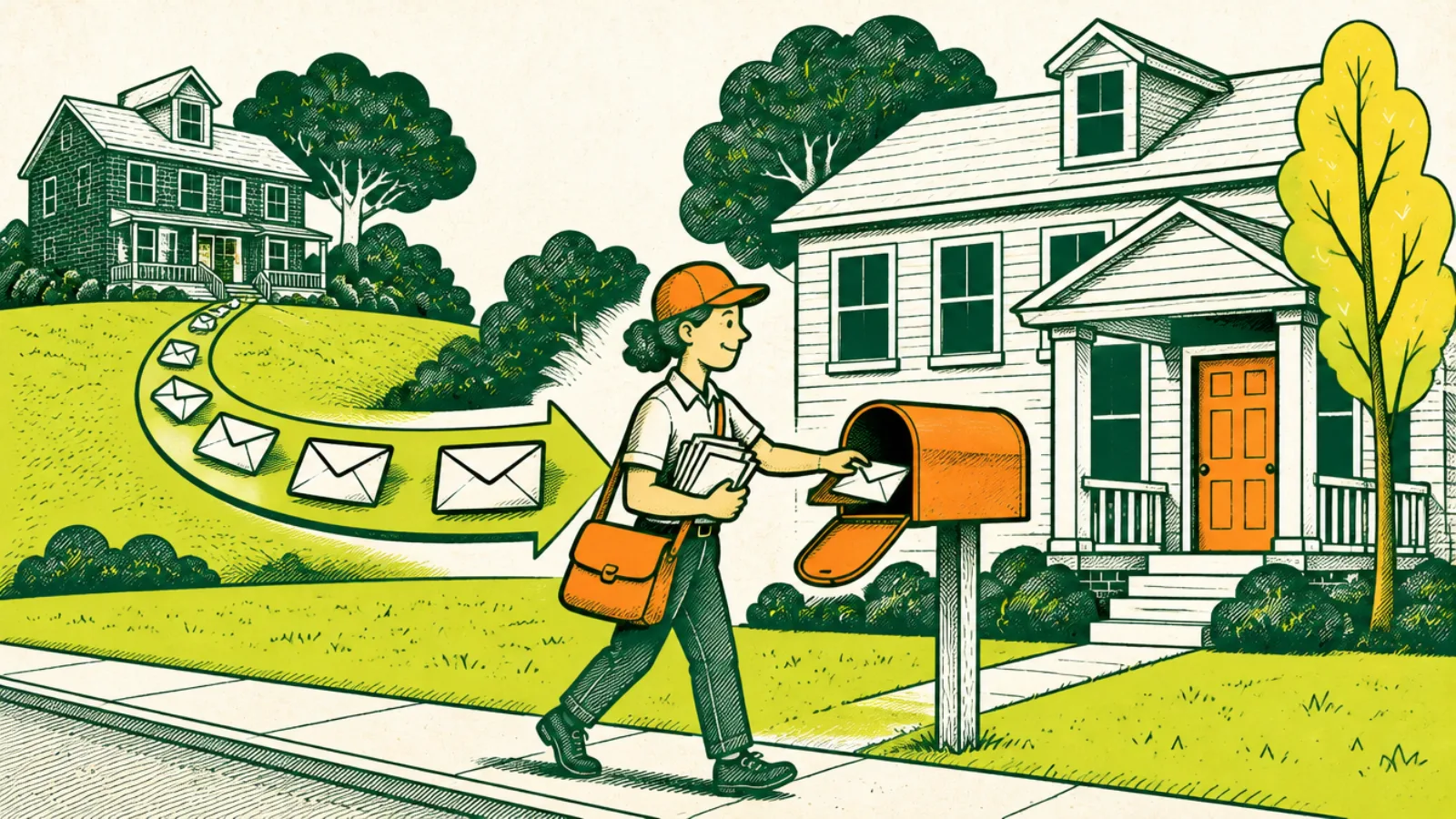
USPS says an online change of address costs a $1.25 authentication fee, charged to a card to verify your identity. It warns that third-party websites charge $40 or more to submit the same request, and that USPS no longer accepts submissions from those businesses. Use USPS.com or a post office.
If you’d rather not use a card, pick up PS Form 3575 at a post office. USPS says that request still has to be verified, either online or in person at a post office that offers in-person identity proofing, so bring your photo ID. Filing for someone else, or with a different last name than your ID, needs extra documents. Source: USPS: Change of Address Basics.
2. Know what USPS won’t forward
USPS says that for security, government agencies and financial institutions don’t allow forwarding of sensitive documents, including:
- Identity documents, especially driver’s licenses and voter registration.
- Credit cards, bank statements, insurance information and other financial or medical information.
- Other personal or sensitive information.
It also says USPS Marketing Mail isn’t forwarded unless the sender paid for it. And USPS is direct about the rest: your change of address only changes your mailing address with the Post Office, and you’re responsible for telling government agencies, companies and others. That’s what the rest of this checklist is for. Source: USPS: Standard Forward Mail.
3. Know how long forwarding lasts
USPS says standard mail forwarding lasts 12 months. First-Class Mail, Priority Mail, Priority Mail Express and USPS Ground Advantage are forwarded free. Periodicals like magazines are forwarded free for 60 days if the sender prepaid them. You can pay to extend forwarding by 6, 12 or 18 more months, with 18 the maximum. Source: USPS: Standard Forward Mail.
Treat the 12 months as a safety net. Every piece of forwarded mail is a reminder to update that sender directly.

Licenses, IDs and government
4. Maryland: update your address with the MVA within 30 days
The Maryland MVA says Maryland law requires you to report a change of address within 30 days of moving. You can do it:
- Online with your myMVA account.
- At an MVA self-service kiosk.
You’ll need your license or ID card number, your date of birth and your MVA PIN or login. The MVA says there’s no fee just to update your address. It mails a Change of Address card to your new address, which you carry with your license or ID. If you want a new card showing the new address, you can order one for a replacement fee, and the MVA says it arrives in 7 to 10 business days. Source: Maryland MVA: Update Name, Address or Other Info.
5. New to Maryland: license, title and registration within 60 days
The MVA says new residents must get a Maryland driver’s license and Maryland vehicle title and registration within 60 days of becoming a Maryland resident. An out-of-state commercial driver’s license (CDL) has a shorter deadline: the MVA says it must be transferred within 30 days of moving to Maryland. Proof of address is the step that trips people up right after a move. Our guide covers what counts: Two Proofs of Address the MVA Accepts. The free Maryland license-transfer readiness check lists what to get, bring and confirm before your MVA visit. Source: Maryland MVA: New Maryland Residents.
6. DC: update your address with DC DMV within 60 days
DC DMV says you must update address changes within 60 calendar days of a move. Key details from its page:
- Online only with a REAL ID. You upload residency documents, DC DMV emails you once it’s approved, and then you pay the fee.
- It covers your license or ID and linked vehicle registrations. DC DMV says the change is also sent to the DC Board of Elections.
- Co-owned vehicles: only the primary owner’s address changes. A District co-owner files separately.
- There’s a fee if you aren’t doing another in-person transaction, like a renewal, at the same time. Check DC DMV’s fee page for the amount.
- Residential parking permits can’t be requested through the online change of address.
Source: DC DMV: Change of Address.
7. New to DC: register your vehicle within 60 days
DC DMV says you have 60 calendar days from the date you begin to live in DC to register your vehicle, and that you must first convert your out-of-state driver’s license to a DC license. Source: DC DMV: Registration for a New or Used Vehicle.

8. Update your voter registration
USPS doesn’t forward voter registration mail, so update your registration directly with the Maryland State Board of Elections or the DC Board of Elections. If you update your address with DC DMV, DC DMV says it sends that change to the DC Board of Elections. Moving across a state or District line means registering where you now live. Check the board’s site for how and when.
9. Tell the IRS
The IRS says you can update your address by:
- Filing Form 8822 (or Form 8822-B for a business).
- Using your new address on your next tax return.
- Sending a signed written statement with your full name, old and new addresses, and your Social Security number, ITIN or EIN, to the address where you filed your last return.
- Calling or visiting, after verifying your identity.
The IRS says a USPS change of address may update its records, but it isn’t guaranteed, and that not all post offices forward government checks. It also says an address change can take four to six weeks to fully process. Source: IRS: Address Changes.
10. Tell Social Security if you get benefits or Medicare
The Social Security Administration says that if you receive Social Security benefits or are enrolled in Medicare, you can change your address in the My Profile tab of your my Social Security account and choose when it takes effect. If you get SSI, have no U.S. mailing address, or can’t do it online, call 1-800-772-1213 (TTY 1-800-325-0778) or visit an office. SSA also says that if you don’t receive Social Security benefits, SSI or Medicare, you don’t need to change your address with it. Source: SSA: How do I change my address?
If you get SSI, report quickly. SSA says SSI recipients must report a change of address or living arrangements as soon as possible and no later than 10 days after the end of the month in which the change happened, and that late reports can bring a penalty of $25 to $100. Move on November 28, for example, and the deadline is December 10. Source: SSA: Reporting Responsibilities for SSI.
Money and accounts
11. Update banks and credit cards directly
USPS says financial institutions don’t allow forwarding of credit cards and bank statements. So update your address with each bank, credit union, credit card and loan servicer, usually in the app or online account settings. A replacement card mailed to your old address is exactly the kind of thing you don’t want sitting in someone else’s mailbox.
12. Update your employer and payroll
Your employer mails tax forms, like your W-2, to the address on file. Update it through your HR or payroll system. If you’re moving between Maryland and DC, ask HR whether your tax withholding needs to change too.
13. Update insurance
Car insurance, renters or homeowners insurance, and health insurance all use your address, and USPS says insurance information isn’t forwarded. Call your insurer before or right after the move, since where you live is part of your policy.

14. Update subscriptions, deliveries and online stores
Change your default shipping address in shopping accounts, subscriptions and delivery apps. USPS says Marketing Mail isn’t forwarded unless the sender paid for it. Moving is also a good time to cancel what you don’t use. Our Make Life Easier page has the FTC’s steps for canceling a subscription so it sticks.
15. Search for unclaimed money under your old address
Forgotten deposits and refunds sometimes end up as unclaimed property. Searching is free on the Comptroller of Maryland’s unclaimed property site and DC Unclaimed Property. Search your old addresses too.
Home and the move itself
16. Start and stop utilities
Set stop dates at the old place and start dates at the new one for electricity, gas, water, trash (if it’s billed separately) and internet. Some utilities need lead time to schedule. In much of Prince George’s County, water service is WSSC Water (301-206-4001). In the District, it’s DC Water. Take a photo of the meters on move-out day.

17. Clear out what you won’t move
Fewer things to move means less to pay for and less to unpack. Our guides help with the big stuff:
- How to Declutter Your Home Without Just Moving the Piles
- How to Get Rid of a Couch
- Do You Need an Appointment for Bulky Trash in Prince George’s County?
- Can They Take This? for household disposal in Prince George’s County
18. Moving in DC? Plan the truck permit
Parking a moving truck on a DC street takes a DDOT permit and posted No Parking signs, and the timing is easy to get wrong. The free DC moving-truck permit planner works out when to apply and when the signs go up, from your move date.
Everything else
19. Update your library card
If you have a Prince George’s County Memorial Library System card, PGCMLS says you can update your contact information at a branch, through its Account Problems form, or under My Account in the online catalog. New to the county? See How to Get a Prince George’s County Library Card.
20. Check your pet’s license
Dog and cat licenses are local, so a move between Prince George’s County, another county or DC can mean a new license. The free Pet license check shows whether your dog or cat needs one where you’re moving.

21. Doctors, pharmacy, schools and everyone else
Update your address with doctors, dentists and your pharmacy, plus your kids’ schools, any professional licenses, memberships, and family and friends who send mail. A useful trick: for the first few months, every time something arrives with a USPS forwarding label, update that sender right then.
A worked example: a move from DC to Prince George’s County
Here’s how the steps fit together for someone moving from a DC apartment to a Prince George’s County townhouse. It’s an illustration, not a real person.
Five weeks out: they check the DC truck permit timing with the planner and book a donation pickup for an old couch.
Three weeks out: they file the USPS change of address online, paying the $1.25 identity check on USPS.com, not a third-party site.
Move week: they set start dates for electricity and internet, set up water with WSSC, update their bank, cards and car insurance, and change their address with their employer.
Within 60 days: as new Maryland residents, they get a Maryland driver’s license and vehicle title and registration, bringing proof of address from the MVA’s list.
Along the way: they update the IRS with Form 8822, register to vote with the Maryland State Board of Elections, and get a free PGCMLS library card.
For the next year: every forwarded envelope becomes a two-minute address update.

Common mistakes
- Using a third-party change-of-address site. USPS says they charge $40 or more. USPS.com costs $1.25.
- Assuming forwarding covers everything. Licenses, voter registration, bank statements, cards and insurance information aren’t forwarded.
- Missing the Maryland 30-day window. The MVA says Maryland law requires reporting within 30 days. Online, it’s free.
- Waiting on DC DMV until the last week. You have 60 days, but the online route needs a REAL ID and an approval email before you pay.
- Forgetting the IRS. A USPS change may not reach it, and the IRS says updates can take four to six weeks.
- Not updating voter registration. USPS won’t forward it.
- Letting forwarding expire with updates still pending. Use the 12 months to catch every sender.
FAQ
How do I change my address with USPS?
Online at USPS.com for a $1.25 identity check, or with PS Form 3575 from a post office, verified online or in person with photo ID. USPS warns that third-party sites charge $40 or more.
How long does USPS forward mail?
USPS says standard forwarding lasts 12 months, and you can pay to extend it by up to 18 more months. Periodicals are forwarded for 60 days if prepaid by the sender.
How long do I have to change my address with the Maryland MVA?
The MVA says Maryland law requires you to report a change of address within 30 days of moving. There’s no fee to update it online or at a kiosk.
How long do I have to change my address with DC DMV?
DC DMV says 60 calendar days. Online changes require a REAL ID, and there’s a fee unless you’re doing another in-person transaction at the same time.
I just moved to Maryland. How long do I have to get a Maryland license?
The MVA says new residents must get a Maryland driver’s license, title and registration within 60 days of becoming a Maryland resident. An out-of-state commercial driver’s license must be transferred within 30 days.
Does USPS change my address with the IRS?
The IRS says a USPS change may update its records but isn’t guaranteed. File Form 8822, use your new address on your return, or send a signed statement.
Do I need to tell Social Security I moved?
If you receive Social Security benefits, SSI or Medicare, yes. SSA says you can do it online in my Social Security unless you get SSI, in which case call or visit, and report no later than 10 days after the end of the month you moved. If you don’t receive any of those, SSA says you don’t need to.
What mail doesn’t USPS forward?
USPS says government agencies and financial institutions don’t allow forwarding of sensitive documents like driver’s licenses, voter registration, credit cards, bank statements and insurance information.
Sources
Checked November 10, 2026:
- USPS: Change of Address Basics
- USPS: Standard Forward Mail and Change of Address
- Maryland MVA: Update Name, Address or Other Info
- Maryland MVA: New Maryland Residents
- DC DMV: Change of Address
- DC DMV: Registration for a New or Used Vehicle
- IRS: Address Changes
- Social Security Administration: How do I change my address?
- SSA: Reporting Responsibilities for SSI
- Maryland MVA: Get a Maryland Driver’s License or ID Card
- Maryland State Board of Elections
- DC Board of Elections
- PGCMLS: Borrowing Policies
- Comptroller of Maryland: Unclaimed Property
- DC Unclaimed Property