
How Much Laundry Detergent to Use (and Why Your Water Matters)

Short answer: use the amount your detergent’s label says for your load size, then adjust for two things: how dirty the load is and how hard your water is. More detergent doesn’t mean cleaner clothes. Too much makes extra suds that cushion clothes, leave residue and can add rinse cycles. In an HE washer, use HE detergent. For pods, put them in the empty drum before the clothes and follow the bag’s count for your load size. And in Prince George’s County, your water may be soft or hard depending on which river it comes from, which changes how much detergent you need.
Last checked November 10, 2026, against WSSC Water, DC Water, USGS, ENERGY STAR, the Consumer Product Safety Commission, the FTC care labeling rule (16 CFR Part 423) and detergent maker Tide’s published guidance (listed at the bottom). Kalm Kode is an independent guide. Your detergent’s label and your washer’s manual have the final word.
The 30-second version
- Start with the label. Every detergent lists its own dose. Brands and concentrations differ, so don’t assume one capful is right for every bottle.
- Adjust for load size and dirt. Bigger or dirtier loads need more. Small or lightly worn loads need less.
- Know your water. Harder water needs more detergent. Softer water needs less and suds more easily.
- HE washer? HE detergent. Regular detergent in an HE machine makes too many suds.
- Pods go in the drum first, before the clothes. Not in the dispenser drawer.
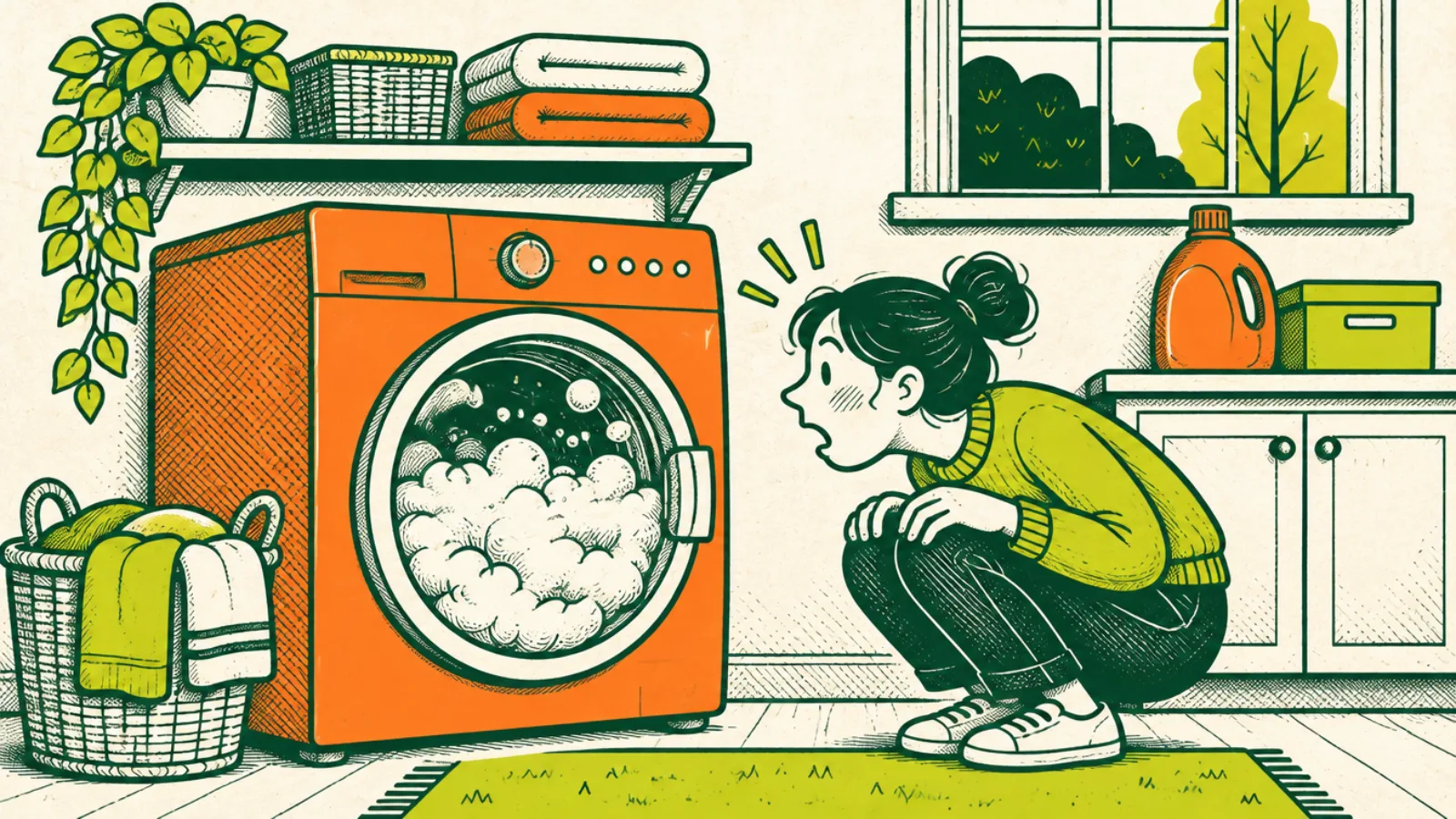
- Too many suds is a sign of too much, not of extra cleaning.
- Cold water works for most loads. ENERGY STAR says heating water is about 90% of a washer’s energy use.
Why more detergent isn’t better
It’s easy to think an extra glug helps. Detergent maker Tide says the opposite happens with too much:
- Suds cushion the clothes. Clothes rub together less, so they come out less clean.
- HE washers fight back. Tide says an HE washer may add extra rinse cycles, adding up to 25 minutes and up to 10 gallons of water.
- Residue builds up. Leftover detergent can cause odors and machine problems.
- Drains can clog. Heavy suds can keep the washer from draining.
Too little isn’t great either. Tide says both under- and overdosing hurt cleaning and stain removal. The goal is the right amount, not the most.
Step 1: Read your detergent’s label, not someone else’s
Detergents vary in concentration. A cap of one brand isn’t the same as a cap of another, and a concentrated formula needs less than a regular one.
How to read it:
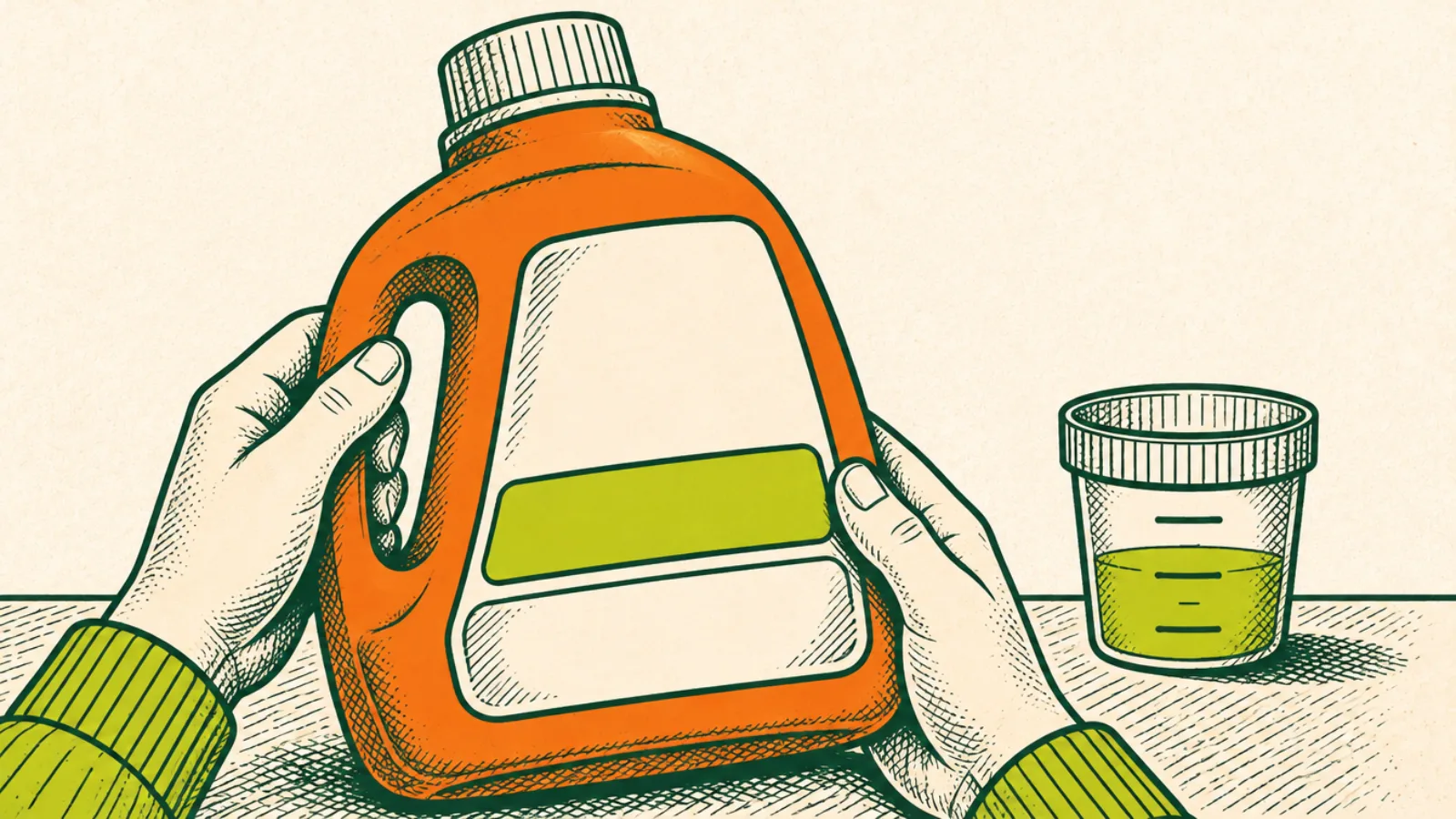
- Find the dosing chart. It’s usually on the back of the bottle or box, matching cap lines or scoop amounts to load sizes.
- Look at the cap lines. Most caps are marked with fill lines. The label tells you which line matches which load.
- Note any hard-water or heavy-soil instructions. Many labels give a separate amount for those.
- Check for the HE symbol if you have a high-efficiency washer (more on that below).
If you switch brands, reread the label. The habit of filling the cap to the top is the most common way people overdose.
Step 2: Match the dose to the load
Tide’s guidance names the factors that change the dose:
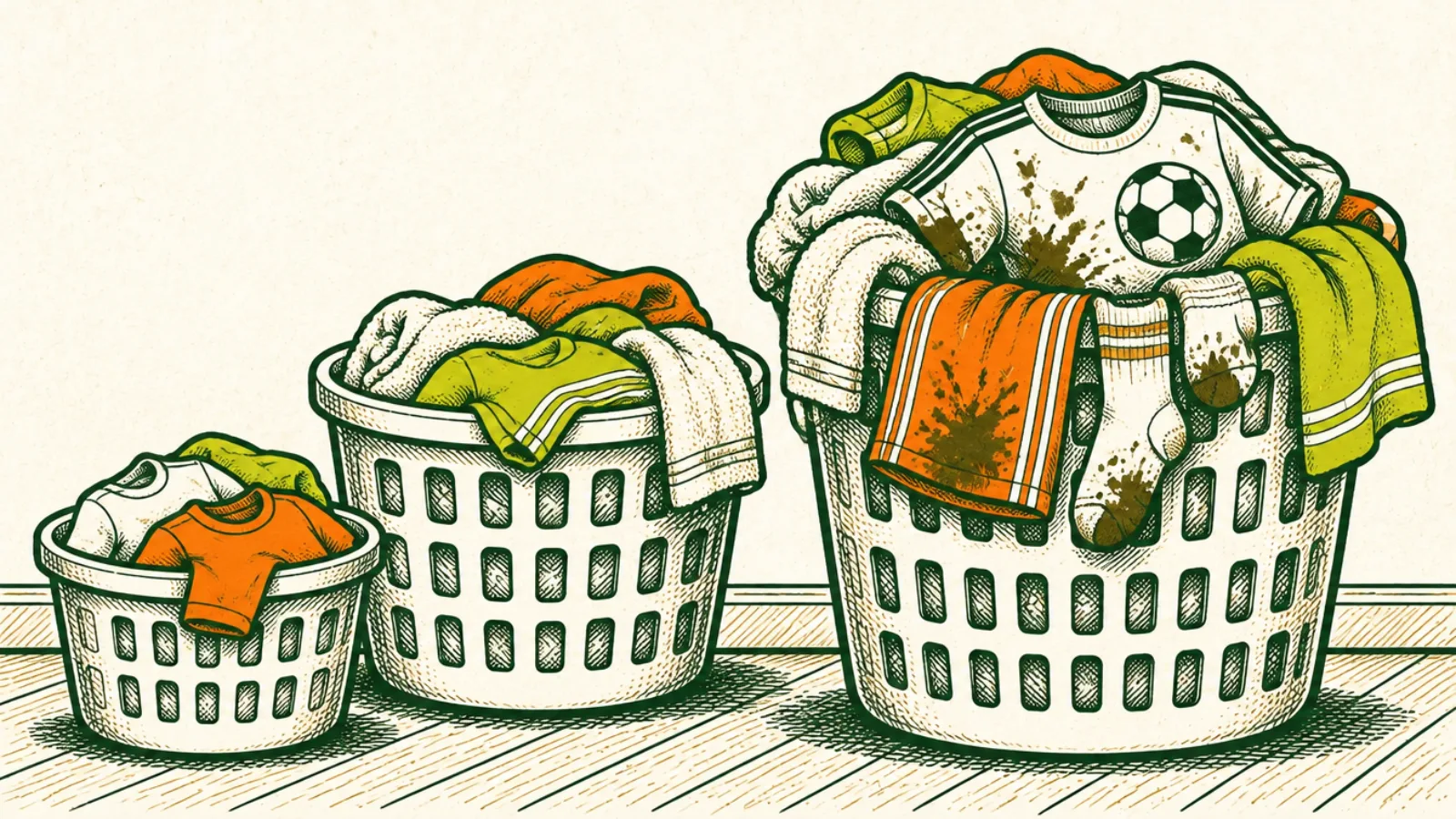
- Load size. Larger loads bring in more dirt and need more detergent. Tide notes its directions are based on a conventional drum, and newer machines may have bigger drums, so check yours.
- How dirty it is. Heavily soiled clothes need more detergent to lift dirt. A load of office shirts worn once needs less than muddy sports gear.
- Don’t overload. Tide says HE machines use less water, so overloading can leave too little water to dissolve detergent fully.
A quick way to size a load: if the clothes are packed tight with no room to tumble, it’s overloaded. Pull some out and run two loads.
Step 3: Know your water hardness (it depends where you live)
Hard water has more dissolved calcium and magnesium. USGS notes that water utilities try to avoid very hard water partly because it brings scaling in equipment and the need for more soap and detergent. Softer water needs less and makes suds more easily, which is why Tide lists “water that is softer than you think” as a cause of too many suds.
The U.S. Geological Survey classifies hardness this way, measured as calcium carbonate:
- Soft: 0 to 60 milligrams per liter (mg/L)
- Moderately hard: 61 to 120 mg/L
- Hard: 121 to 180 mg/L
- Very hard: more than 180 mg/L
Some labels and water softeners use grains per gallon instead. One grain per gallon is about 17.1 mg/L.
Prince George’s County (WSSC Water)
WSSC Water serves most of Prince George’s County from two rivers, and they’re different:
- Around Laurel: water comes from the Patuxent River. WSSC calls Patuxent water soft.
- Lower Prince George’s County: water comes mostly from the Potomac River. WSSC says Potomac water tends to be hard.
- The middle of the county: gets blended water from both plants.
The numbers, from two WSSC sources:
- WSSC’s “Where Does My Water Come From?” page describes Potomac water as typically about 120 to 130 mg/L, and Patuxent water about 60 to 65 mg/L.
- WSSC’s 2025 Tap Water Analysis Report shows a yearly average of 154 mg/L (range 79 to 213) for the Potomac plant and 70 mg/L (range 58 to 86) for the Patuxent plant.
The two pages don’t match exactly, and Potomac water varies a lot through the year. Either way, the pattern is the same: Potomac water is harder, Patuxent water is softer. WSSC’s page has a map of which plant serves which area.
Washington, DC (DC Water)
DC Water says District water is moderately hard, typically around 70 to 120 parts per million, or 3 to 9 grains per gallon. It varies across the city and by season, usually peaking in warmer months and dropping in winter.
What to do with that
- Harder water (lower PG County, much of the Potomac service area): you may need the label’s higher amount or its hard-water instructions, especially for dirty loads.
- Softer water (around Laurel): start at the lower end. If you see lots of suds, cut back.
- Blended water or DC: start with the regular label amount and adjust by results.
- Not sure? Check your water utility’s report, or call WSSC Water customer service at 301-206-4001.

Step 4: HE washer, HE detergent
High-efficiency (HE) washers, both front-loaders and many newer top-loaders, use much less water than older machines. Tide explains why that matters for detergent:
- Regular detergent needs more water. In an HE washer, it makes excess suds that interfere with tumbling.
- The suds don’t rinse well. That leaves residue and reduces stain removal.
- Use detergent labeled for HE, and follow its dose.
Look for the HE symbol on the detergent and in your washer’s manual. Many detergents sold today work in both types, but the label will say.
ENERGY STAR notes certified front-load washers use about 50% less energy and water than a top-load agitator washer, which is part of why HE detergent is formulated to work in less water.
Step 5: Pods, done right
Pods take the measuring out of it, but there are still a few rules. Tide’s instructions for its pods:
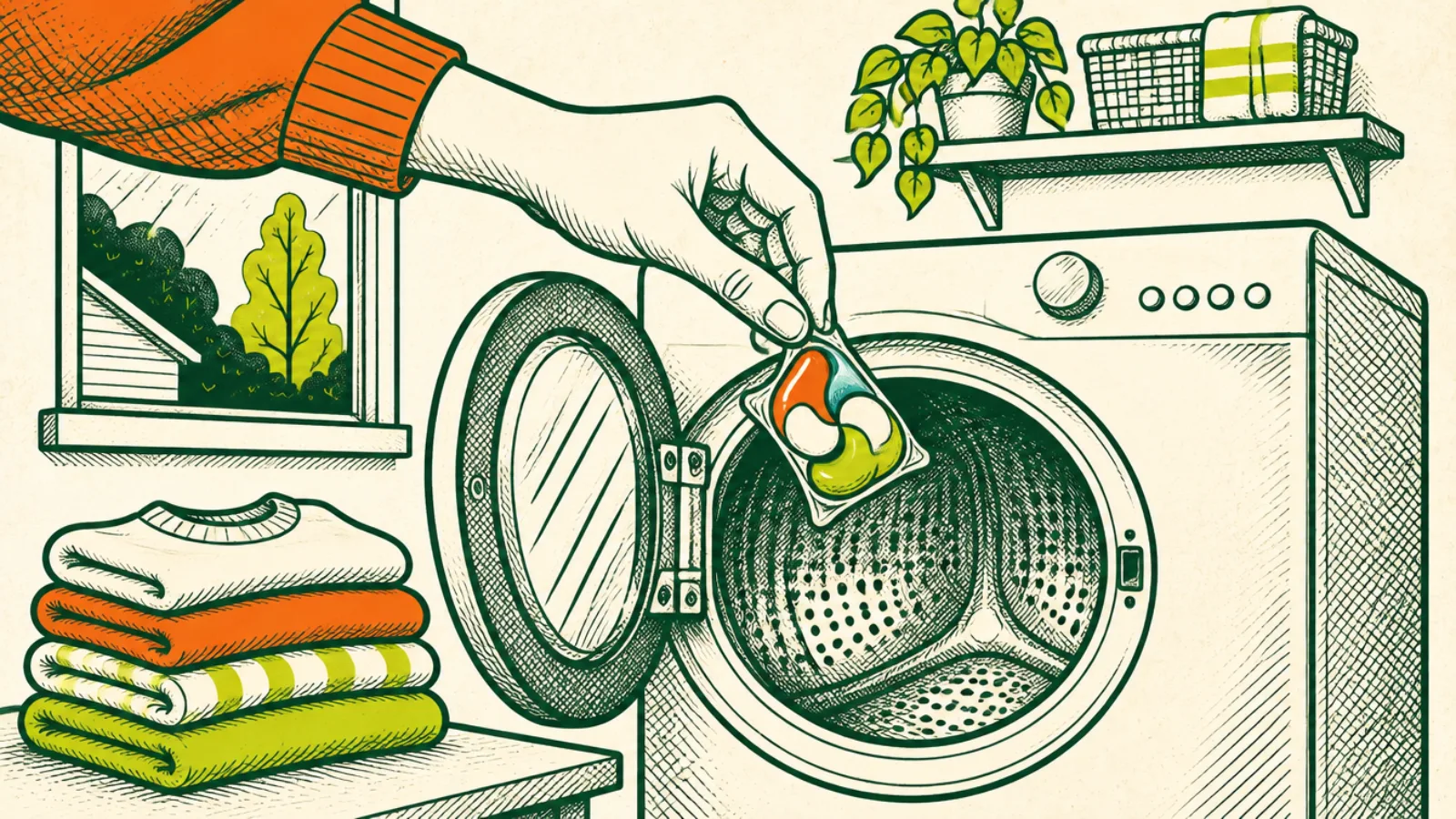
- Pod in first. Put the pod directly in the empty drum, then add clothes on top. Not in the detergent drawer.
- Count by load size. Tide says one pod for small loads, two for standard loads and three for large loads. Other brands may differ, so check the bag.
- Close the container after taking one out.
The Consumer Product Safety Commission says to store laundry packets in their original packaging, closed and dry, up and out of children’s reach and sight. If a child swallows one or gets it in their eyes, call Poison Help at 1-800-222-1222.
Step 6: Choose the water temperature
ENERGY STAR says water heating takes about 90% of the energy a clothes washer uses. It says washing in cold water generally does a good job unless you’re dealing with oily stains, and that switching from hot to warm can cut energy use in half.
Your clothes’ care labels tell you the limit. Under the FTC’s care labeling rule (16 CFR Part 423), the terms on a label mean:
- “Hot”: water from 112 to 145°F
- “Warm”: 87 to 111°F
- “Cold”: up to 86°F
The same rule says that when a label doesn’t give a temperature, hot water up to 145°F can be used regularly.
ENERGY STAR also says washers use about the same energy whatever the load size, so run full loads when you can. Just don’t overstuff them (see Step 2).

Quick guide by type of load
These all start from your detergent’s label. The adjustments come from the factors above: size, dirt, water and the care label.
- Everyday clothes worn once: the label’s regular amount for the load size, often the lower end. Cold water usually does the job.
- Towels and bedding: big and bulky, so make sure they have room to tumble. Use the amount for the load size, not extra “to be safe.” Leftover detergent is a common reason towels feel stiff.
- Work clothes, sports gear, kids’ play clothes: this is where the label’s heavy-soil amount earns its keep, especially with harder water.
- Delicates: follow the care label for temperature and cycle, and any detergent it names. A small load needs a small dose.
- Small loads: a measured liquid or powder lets you scale down. A single pod may be more than a few items need, so check the bag’s guidance for small loads.
- Oily stains: ENERGY STAR notes these are the exception where cold water may not be enough, so check the care label for how warm you can go.
Troubleshooting: what your laundry is telling you
Lots of suds, or the washer runs extra rinses: probably too much detergent, regular detergent in an HE washer, or soft water. Cut back next time. For a one-time fix, Tide suggests adding a cap of fabric conditioner to the dispenser when the machine fills for a rinse.
Clothes feel stiff or have white streaks: often leftover detergent. Use less, and run an extra rinse on that load.
Clothes come out smelling musty, or the washer smells: Tide lists detergent residue as a cause of odors. Use the right dose and follow your washer manual’s cleaning instructions.
Clothes still look dirty: the load may be too big, too dirty for the dose, or your water may be harder than you think. Try a smaller load or the label’s heavy-soil amount.
Pod didn’t fully dissolve: it may have been put on top of the clothes, or the drum was overloaded. Put it in first and leave room for the clothes to move.
Get every load the bottle promises
Detergent labels usually print a number of loads on the front. That count assumes you use the label’s regular dose. Fill the cap past the line every time and the bottle runs out sooner, so you pay more per load without getting cleaner clothes.
A few ways to keep the cost per load honest:
- Compare by loads, not bottle size. A smaller concentrated bottle can do as many loads as a bigger regular one. Divide the price by the number of loads on the label to compare. It’s the same idea as the unit price on a grocery shelf tag, which we cover in How to Save on Groceries in Prince George’s County and DC.
- Keep the cap honest. Pour to the line, not the brim.
- Use the heavy-soil dose only for heavy-soil loads. Everyday loads don’t need it.
- Pods are fixed. You can’t use half a pod, so for very small loads a measured liquid or powder gives you more control.
Keep the washer working with you
ENERGY STAR’s washer tips help the detergent do its job and save energy along the way:
- Run full loads. Washers use about the same energy whatever the load size. Full, not packed.
- Use a high spin speed when it fits the fabric. ENERGY STAR says it leaves less water in clothes, so they dry faster.
- Skip the sanitary cycle unless you need it. It heats water a lot and uses significantly more energy. ENERGY STAR notes some people switch to hot water temporarily when someone in the house is sick.
- Leave a front-loader’s door open after use. ENERGY STAR says the airtight seal can trap moisture and lead to mold, so leave the door ajar for an hour or two.
- Follow your manual’s cleaning routine. ENERGY STAR notes some manufacturers recommend a monthly cleaning cycle. Your manual says what yours needs.
- Air-dry when you can. It saves dryer energy and helps clothes last longer.
Shared machines and laundromats
In an apartment laundry room or a laundromat, you don’t always know the machine:
- Look for an HE label or a front-loading door. If it’s HE, use HE detergent.
- Bring your own measuring cap or pods. It’s easier to dose correctly than guessing from a big jug.
- Watch the first load. If you see a window full of suds, use less next time.
A worked example: two households, same detergent
Here’s how the same bottle can be used differently. It’s an illustration, not a lab test.
Household A, near Laurel (Patuxent water, softer): They’d been filling the cap to the top and noticed suds and stiff towels. They switched to the label’s line for a medium load. Towels softened up, and the HE washer stopped adding extra rinses.
Household B, in lower Prince George’s County (Potomac water, harder): Their work clothes weren’t coming out fully clean on the regular dose. They checked the label, which gives a larger amount for hard water or heavy soil, and used that for the work loads only. Everyday loads stayed on the regular dose.
Same detergent, different water, different answer. That’s why the label and your water both matter.
Your laundry dosing checklist
Once
- ☐ Note how many loads your detergent bottle promises
- ☐ Check whether your washer is HE (manual or the machine itself)
- ☐ Find out your water source: WSSC map, DC Water, or your utility’s report
- ☐ Read your detergent’s dosing chart and cap lines
Every load
- ☐ Size the load: room to tumble, not packed tight
- ☐ Match the dose to load size and how dirty it is
- ☐ Pods in the empty drum first, then clothes
- ☐ Cold water unless the care label or oily stains call for warmer
If something’s off
- ☐ Too many suds or stiff clothes: use less
- ☐ Still dirty: smaller load or the label’s heavy-soil amount
- ☐ Pods: closed container, stored up high
- ☐ Front-loader door left ajar after the last load

Common mistakes
- Filling the cap to the top. The cap holds more than most loads need. Use the line the label says.
- Using regular detergent in an HE washer. It makes too many suds for the amount of water.
- Putting pods on top of the clothes or in the drawer. Pods go in the empty drum first.
- Ignoring your water. Soft water needs less detergent; hard water may need more.
- Overloading. Clothes need room to move, and HE washers need enough water to dissolve detergent.
- Using hot water by habit. Cold works for most loads and uses far less energy.
- Switching brands without rereading the label. Concentrations differ.
FAQ
How much laundry detergent should I use?
The amount your detergent’s label gives for your load size. Then adjust: more for very dirty loads or hard water, less for small loads or soft water.
Does using more detergent get clothes cleaner?
No. Tide says too many suds cushion clothes so they get less clean, can leave residue and odors, and can make an HE washer add extra rinses.
Is my water hard in Prince George’s County?
It depends on your area. WSSC Water says the area around Laurel gets softer Patuxent River water, lower Prince George’s County gets harder Potomac River water, and the middle of the county gets a blend.
Is DC tap water hard?
DC Water says it’s moderately hard, typically about 3 to 9 grains per gallon, and higher in warmer months.
Can I use regular detergent in an HE washer?
Tide says regular detergent makes excess suds in HE washers, which reduces cleaning and leaves residue. Use detergent labeled HE.
Where do laundry pods go?
In the empty drum, before you add clothes. Tide says not in the detergent drawer.
How many pods should I use?
Follow the bag. Tide says one pod for small loads, two for standard and three for large loads.
Is cold water good enough for laundry?
ENERGY STAR says cold water generally does a good job unless you’re dealing with oily stains, and heating water is about 90% of a washer’s energy use.
Sources
Checked November 10, 2026:
- WSSC Water: Where Does My Water Come From?
- WSSC Water: 2025 Tap Water Analysis Report
- DC Water: How hard is the water in the District of Columbia?
- USGS: Water Hardness in the United States
- ENERGY STAR: Clothes Washers
- CPSC: Laundry Packet Safety
- eCFR: 16 CFR Part 423, Care Labeling Rule
- Tide: How Much Laundry Detergent to Use
- Tide: Too Many Suds in the Washer
- Tide: How to Use Tide PODS